Hoi An: What if mass tourism were part of the magic?

Article

Hoi An: What if mass tourism were part of the magic?

“Coco, coco, coco.”

“Banana, banana, banana.”
Sébastien looks at Matthieu.

“It feels like we’re in *The Minions*.” Matthieu bursts out laughing.

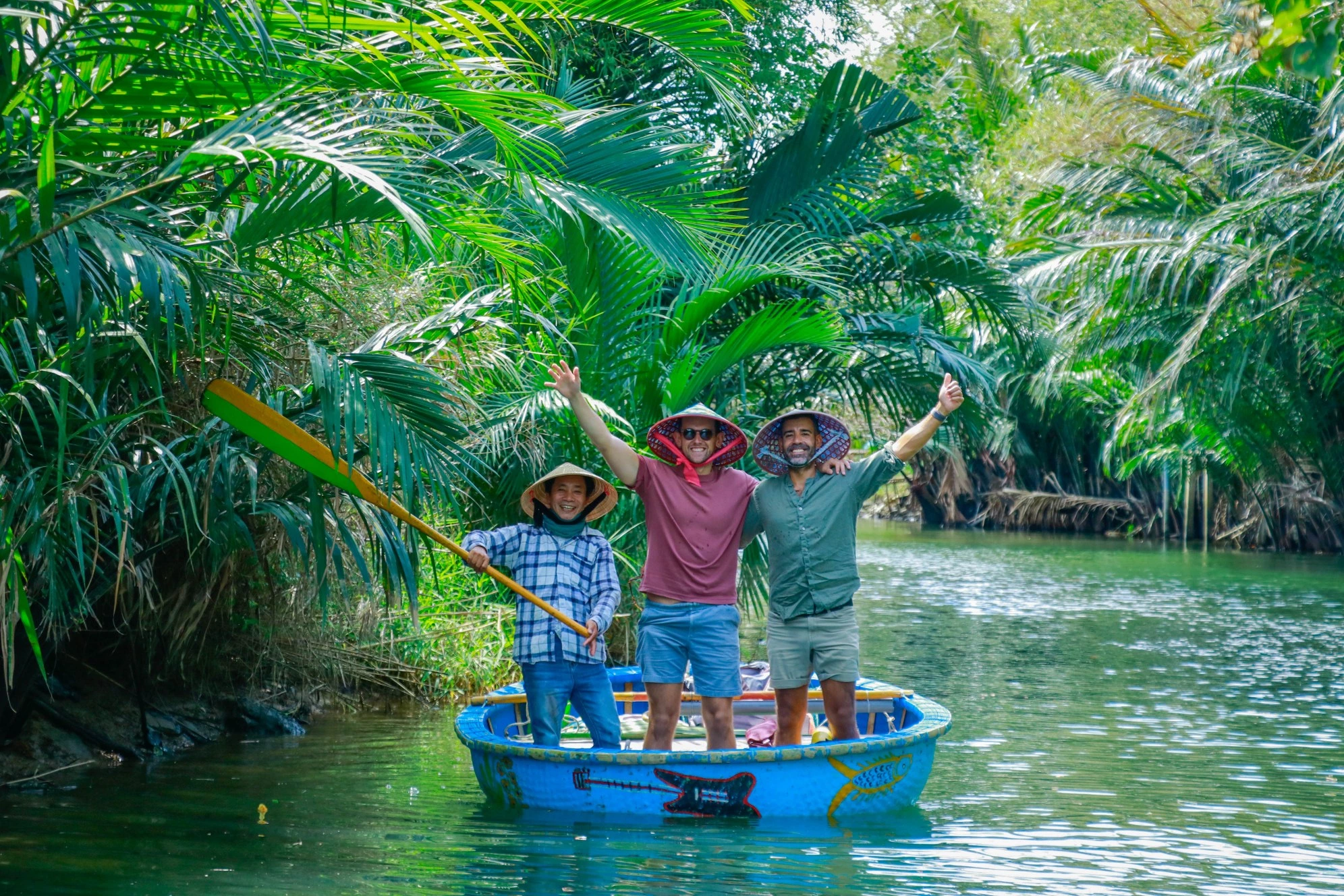
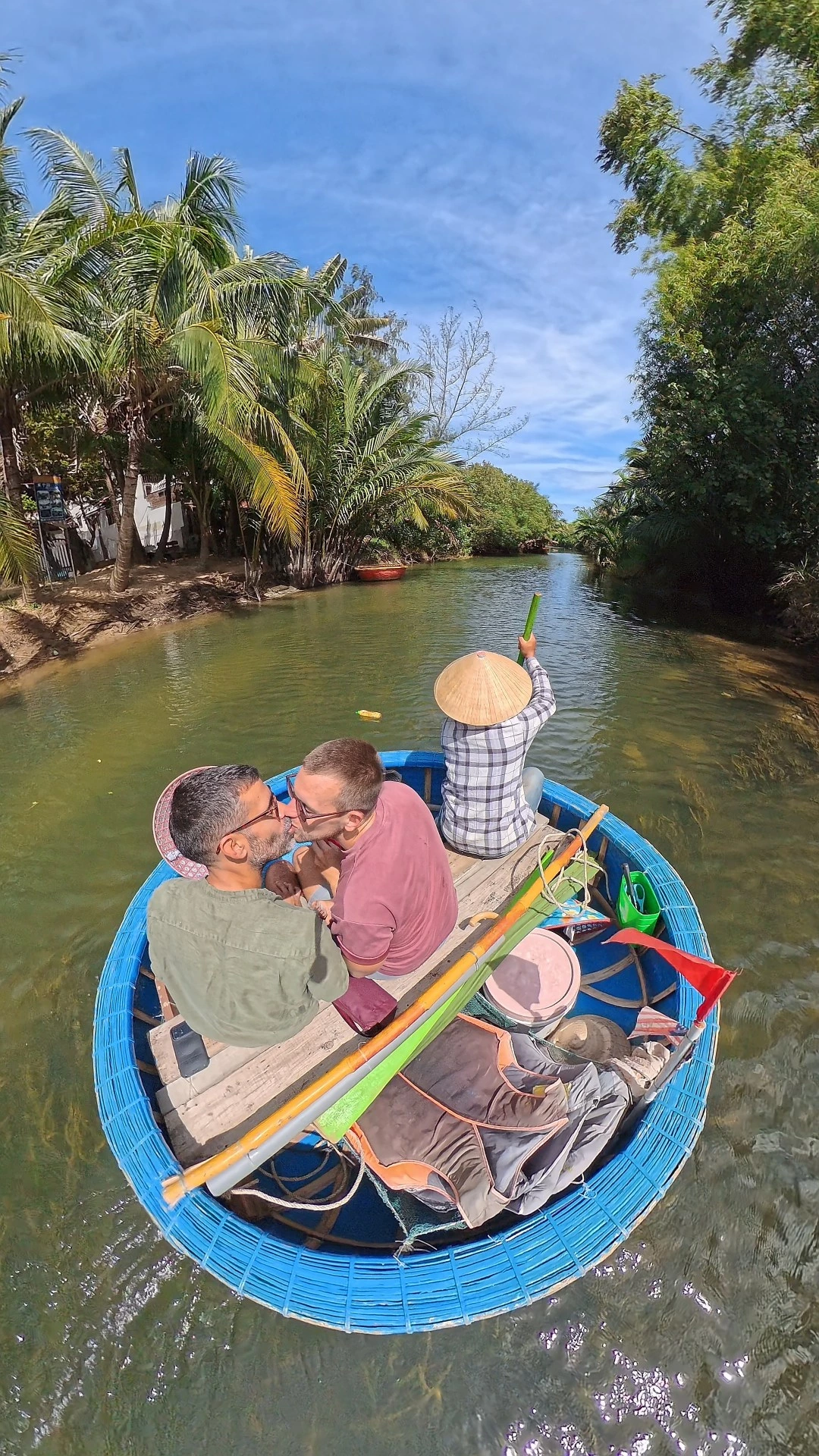
Across from us, our captain smiles from his little round bamboo boat.

His English is limited, and for the past few minutes, our conversation has consisted mainly of “coco,” “banana,” and big gestures.

He takes us through the mangroves, shows us how to catch crabs with a piece of dead fish on the end of a line, and makes a little crown out of leaves.

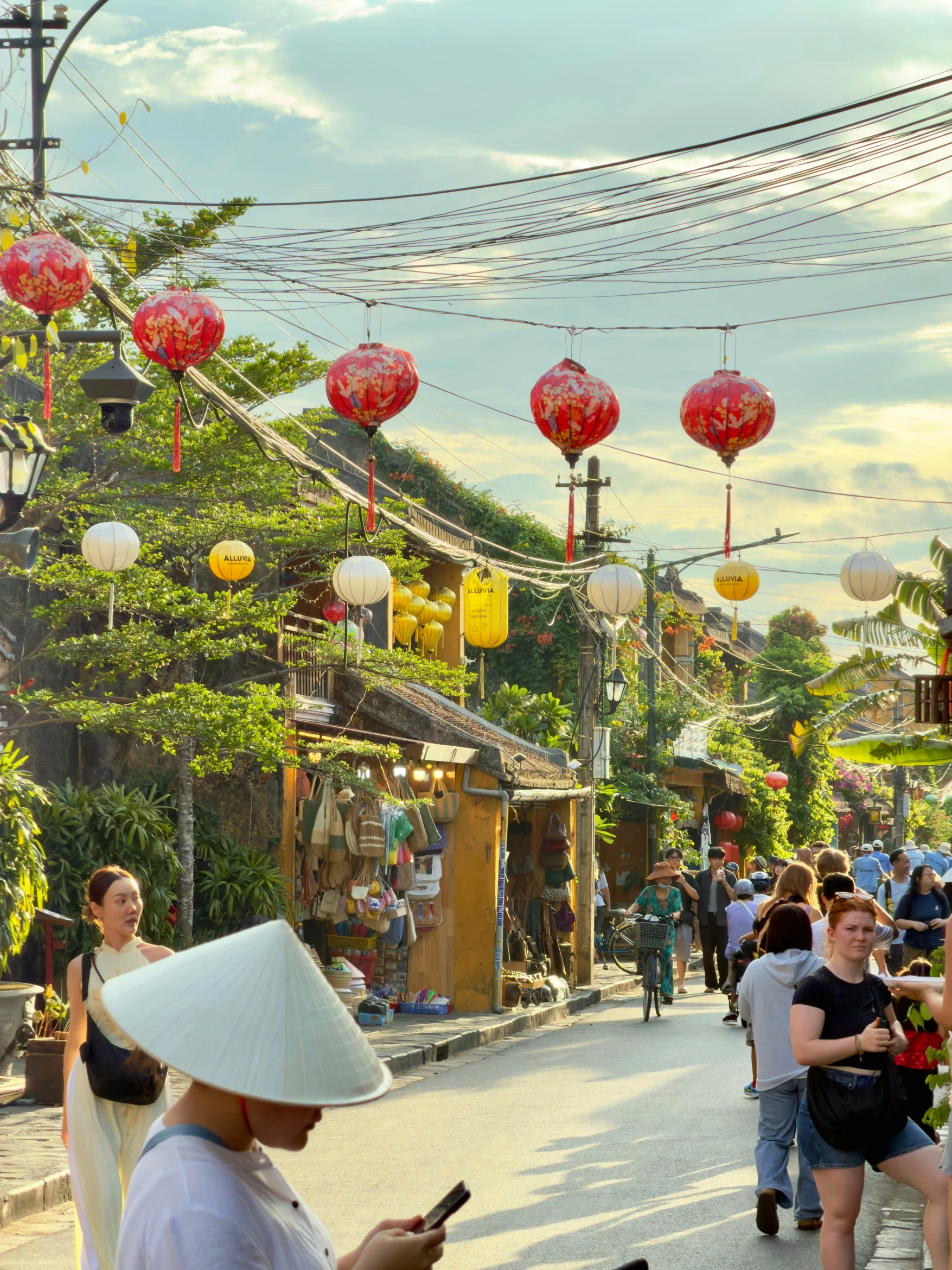
On paper, we’re right in the middle of one of Hoi An’s most touristy attractions. In reality, we’re almost alone and having a blast. A contradiction that ultimately sums up our trip quite well. Hoi An is a few dozen kilometers from Da Nang, and many travelers choose to visit for just the day. We decided to stay for four nights. By the very first evening, we knew we’d made the right choice. After the high-rises and wide avenues of Da Nang, the scenery changes completely. Low-rise houses with yellow facades and wooden shutters line the streets of the old town.

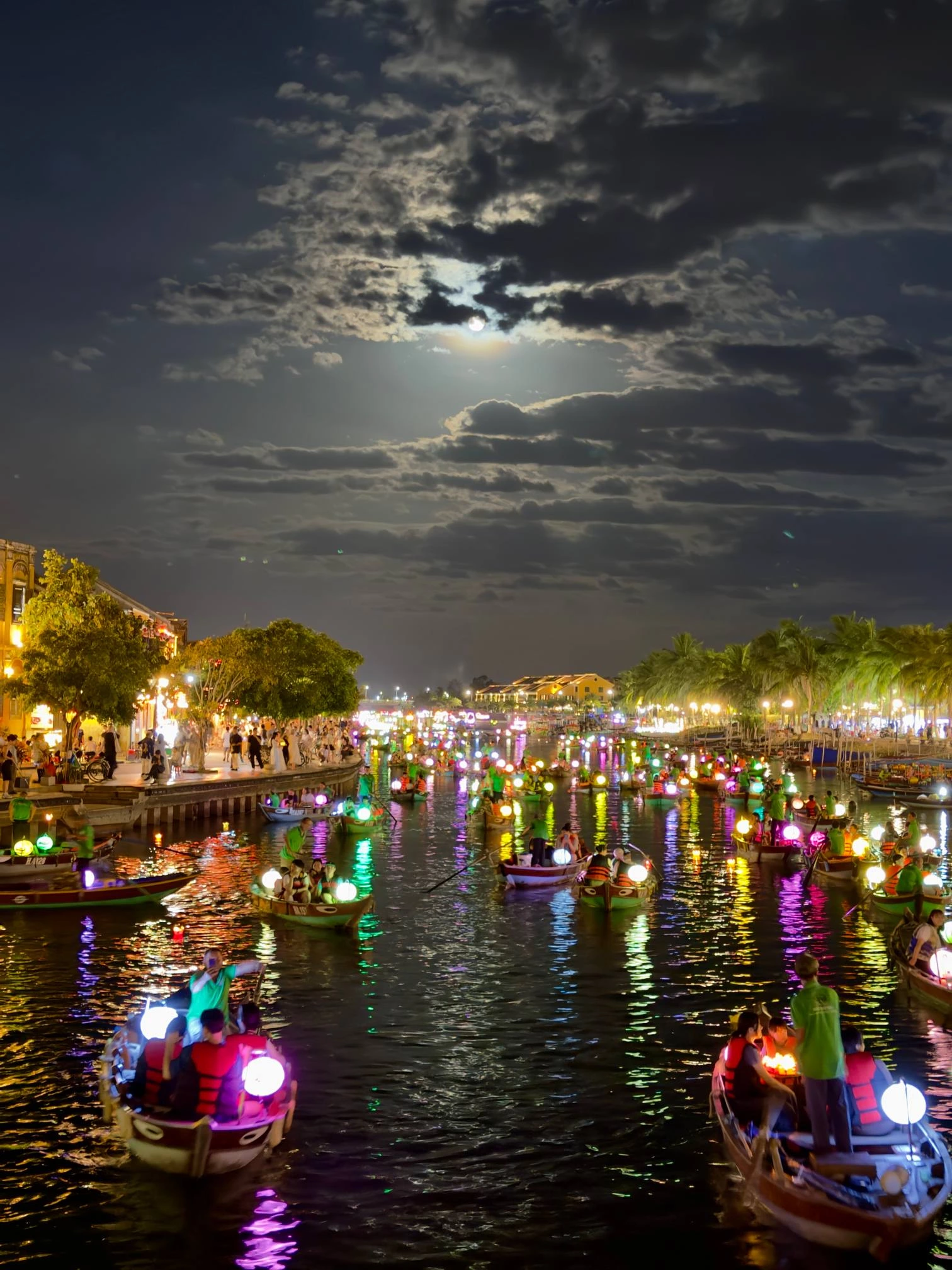
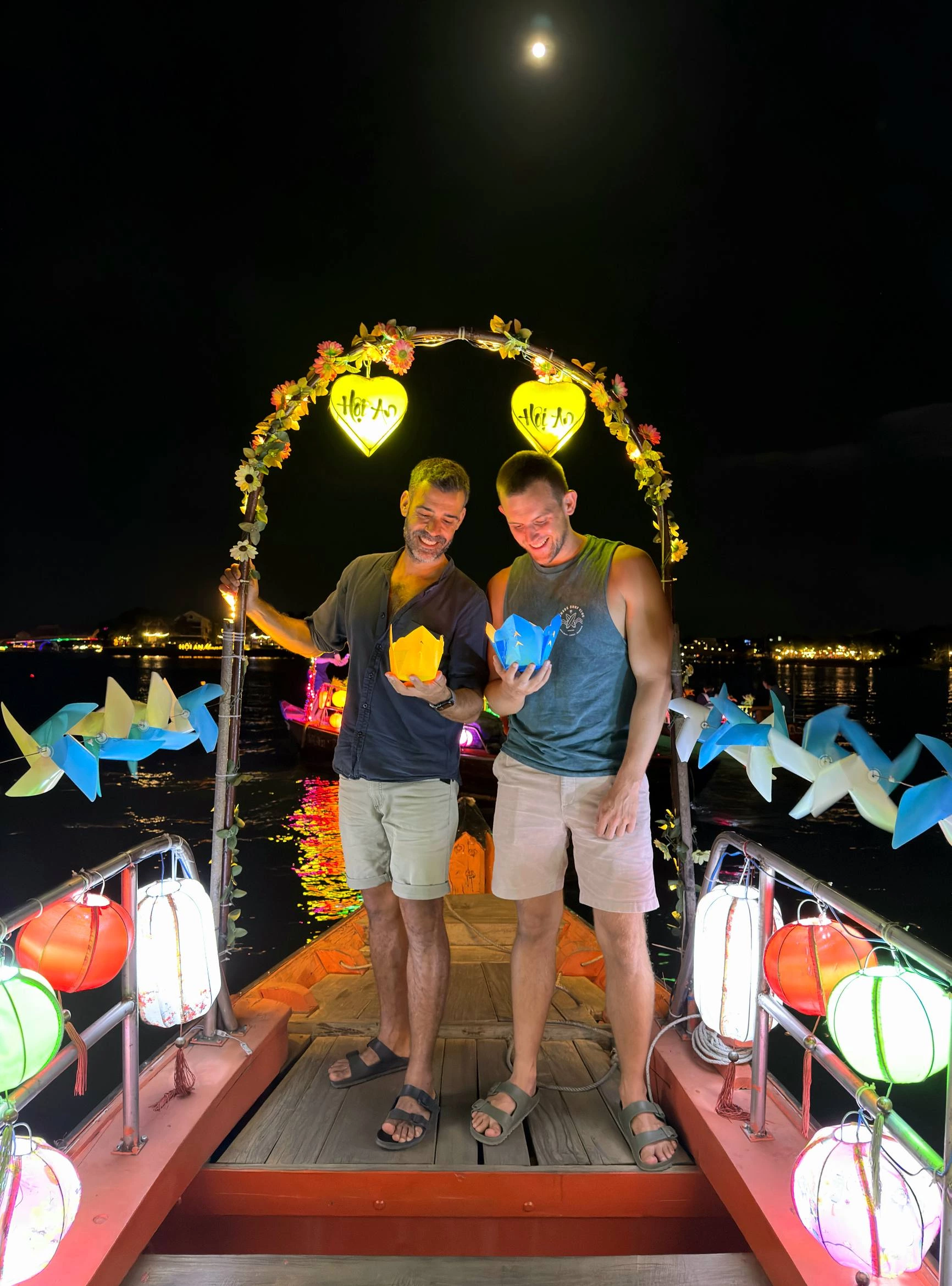
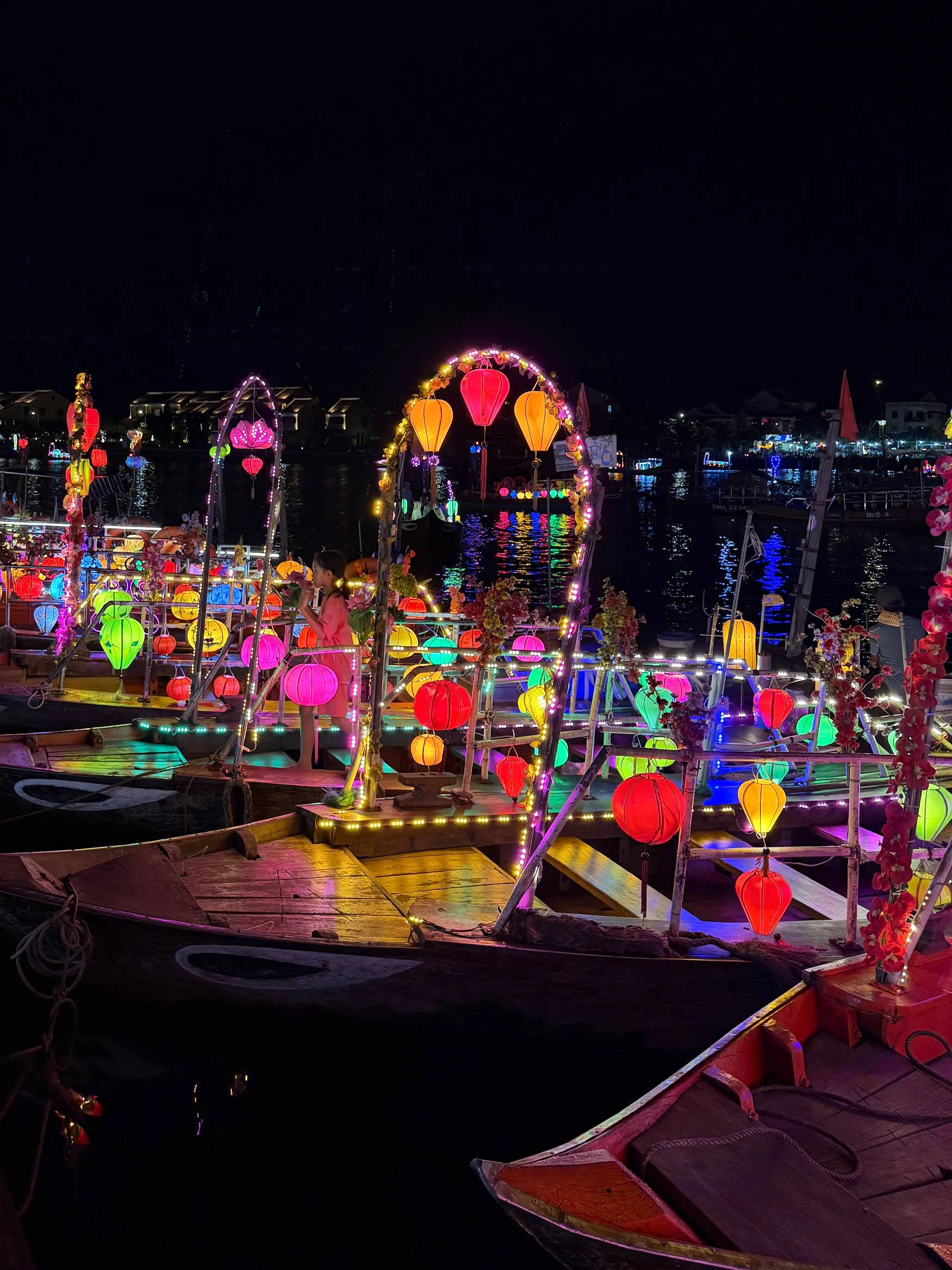
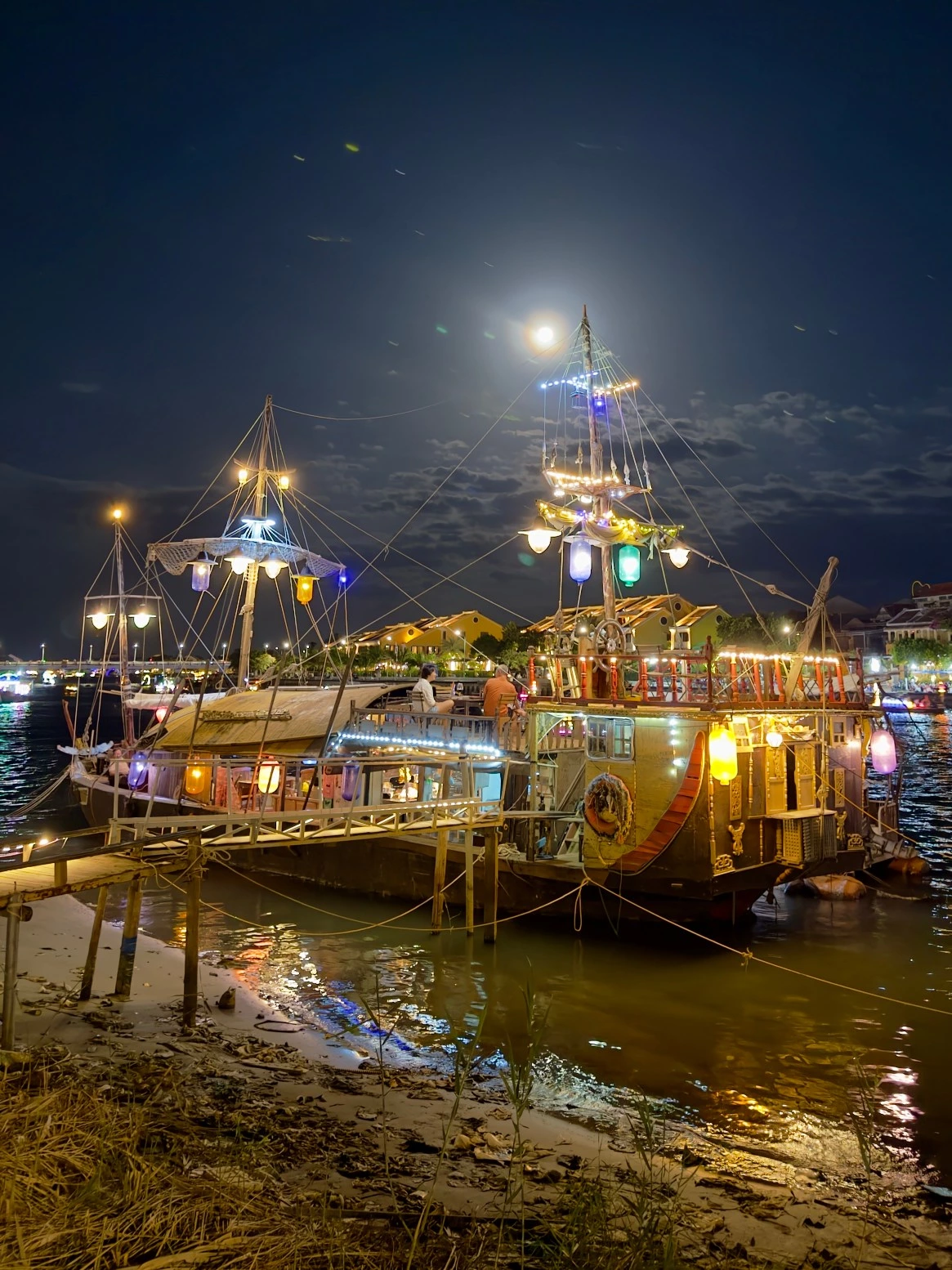
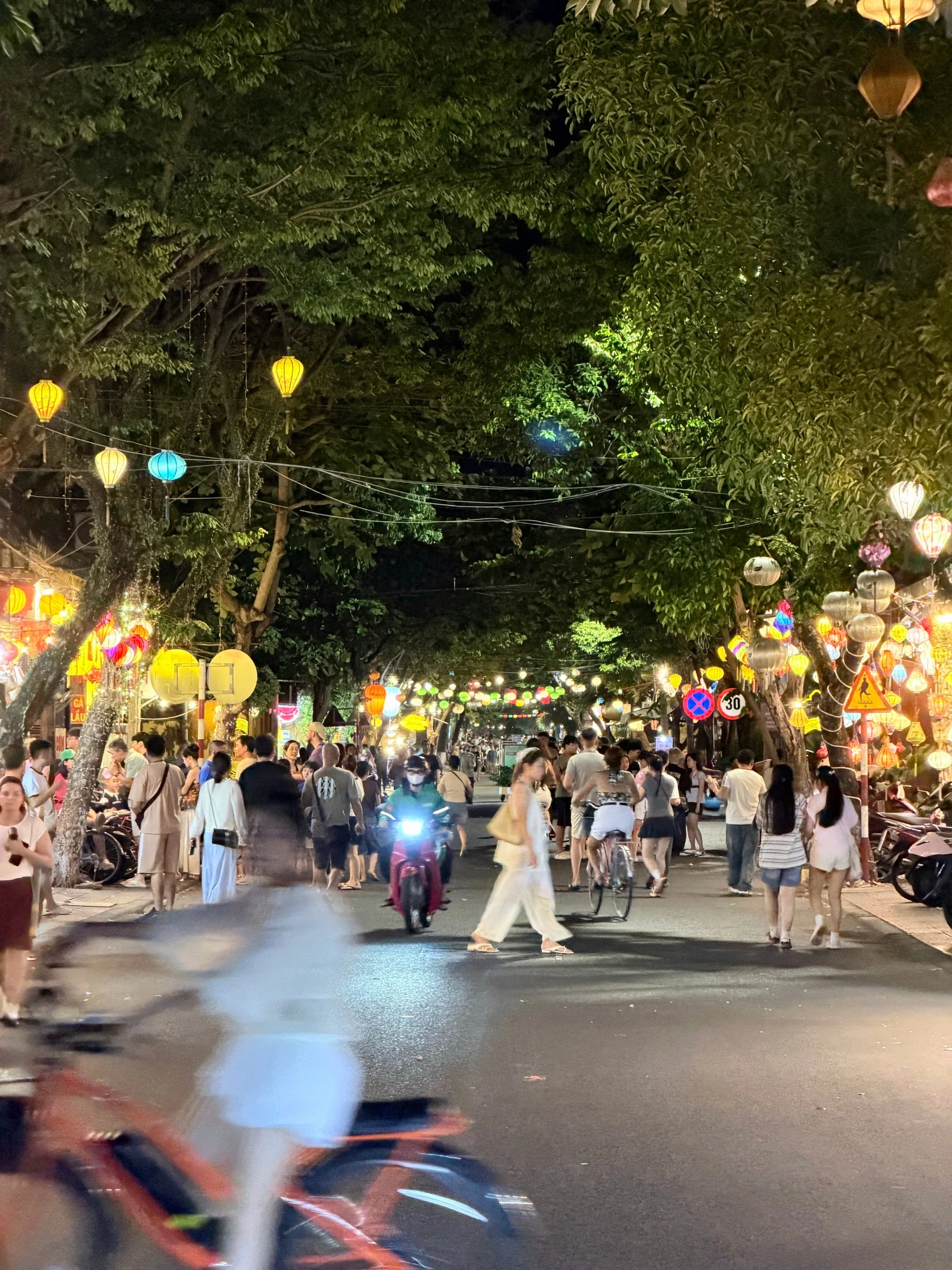
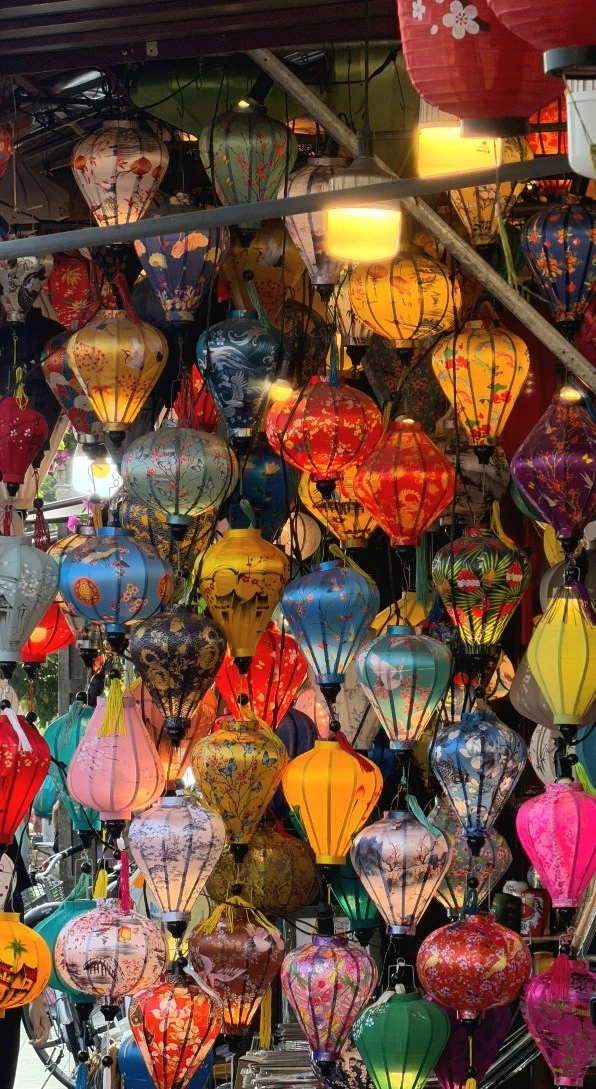
Everywhere, lanterns hang from the facades, above the alleyways, in restaurants, and even on boats. Blue, pink, red, green, yellow, and purple, they gradually transform the city as night falls. Vietnamese tourists and Western travelers mingle in the streets. In the evening, everyone heads toward the Hoài River. Dozens of small boats covered in lanterns move slowly along the water. On our very first evening, we boarded one of them. The ride is very short and costs almost nothing, but it’s an attraction in its own right. We’re given a small paper lantern with a candle inside; we make a wish before setting it adrift on the water and watch it drift away among the others. We loved the experience so much that we even did it again on our last night.

Objectively speaking, not much happens during those few minutes. And yet, being in the midst of all those illuminated boats is enough to make the moment quite magical. The evening continued without any real plan. We stop at a small bar where a couple is performing live. There are very few customers. When they realize we speak French, the opening notes of Gilbert Montagné’s “On va s’aimer” begin. The melody—no doubt about it. The lyrics, on the other hand, have clearly taken quite a journey from France to Vietnam.

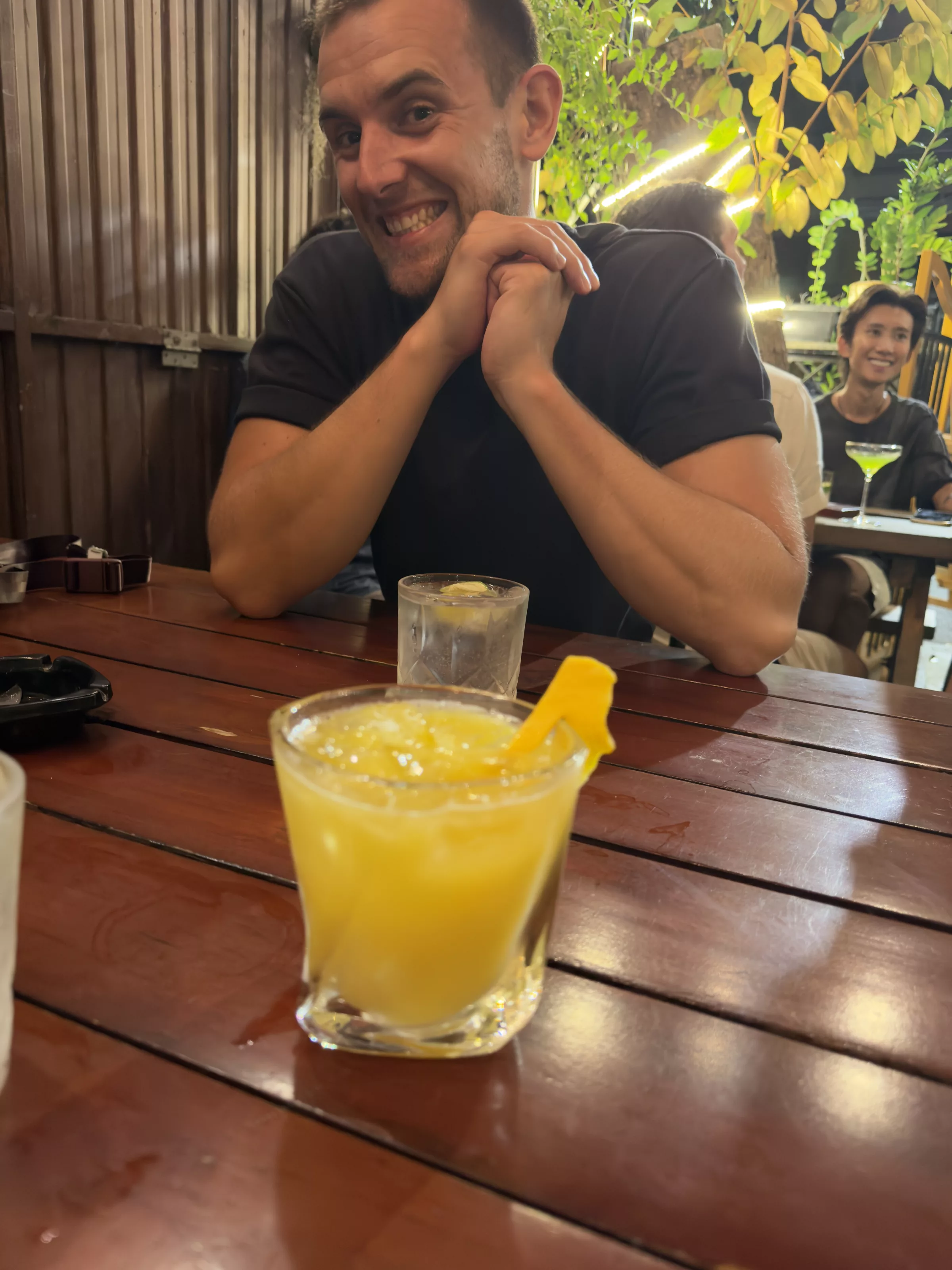
We recognize the song well enough to know what they’re supposed to be singing, but not always what they’re actually singing. With almost no one else in the bar and their very Vietnamese-sounding French, we’re practically treated to our own private concert. A little later, on our way back to the hotel, a rainbow flag catches our eye in front of a small bar that opens onto the street. We stop. The place is called the Pip Bar. We order two cocktails, and as we scan the menu, we spot “mango sticky rice.” Perfect—we’ll even end the evening with a little dessert. Except that we’re in a cocktail bar.

And the “mango sticky rice” is also a cocktail. The result: three cocktails instead of two, and still no dessert. Luckily, the liquid version is pretty good. We also immediately liked the place—its small terrace opening onto the street and its laid-back vibe.

What was supposed to be an impromptu nightcap ended up becoming one of the spots we’d return to during our four-day stay.

In fact, it’s by returning to the same streets every evening that we begin to notice the quirky tourist dynamics of Hoi An.

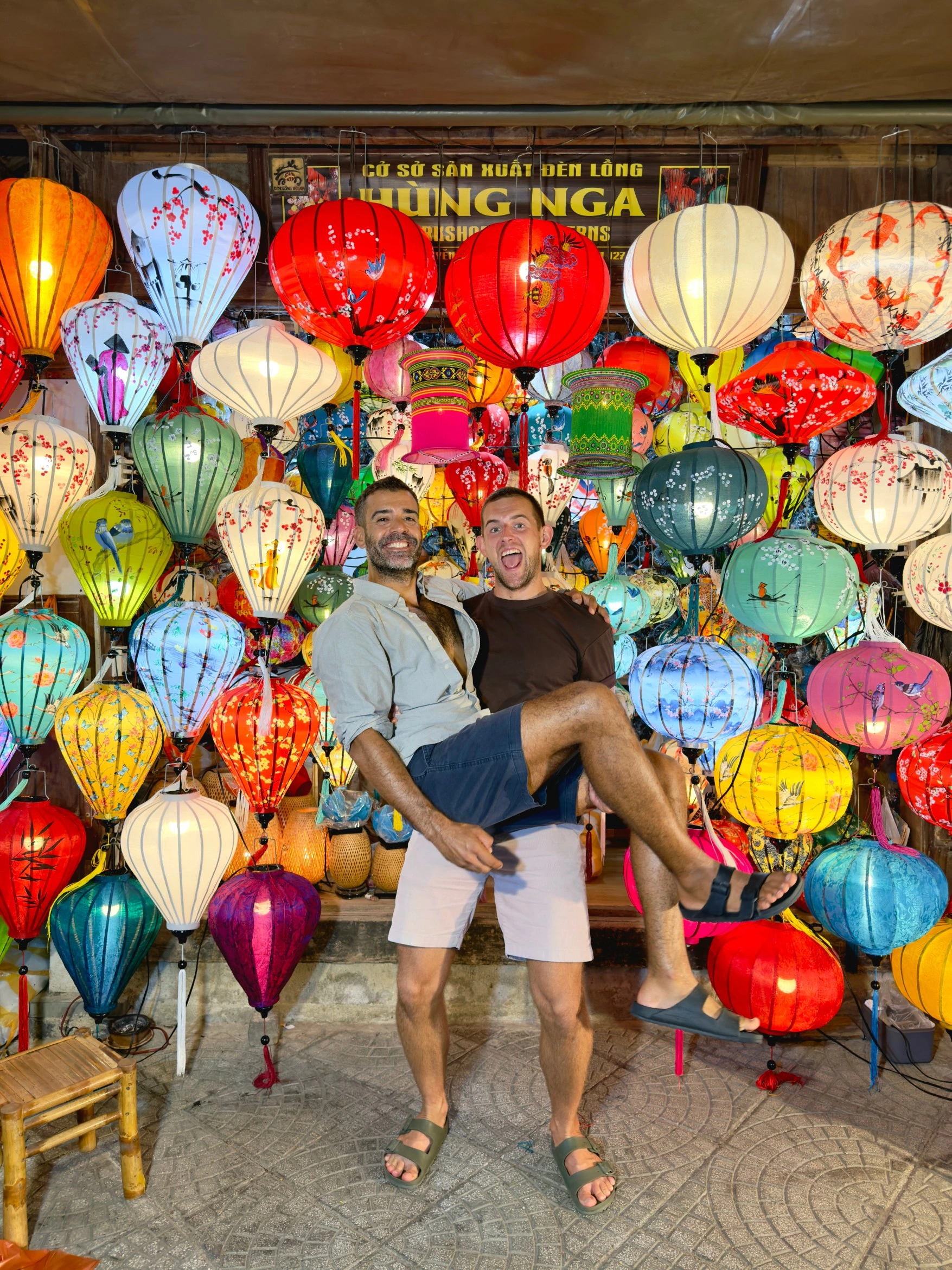
Everyone is taking photos of everything. In front of some lantern shops, the backdrops are so perfect they almost seem to have been built for Instagram. And sometimes, that’s literally the case. For 10,000 dongs—just a few dozen cents—you can go inside and use the wall of lanterns as a backdrop.

After more than a month in Vietnam, we might be getting used to this kind of setup, but this one strikes us as rather clever. The shopkeeper makes a little money, the visitor can take photos at their leisure without disturbing anyone, and no one has to pretend they’re there to buy a lantern. It’s all perfectly commercial and perfectly open about it. And despite everything, the result is still beautiful. In Hoi An, we’re slowly starting to wonder if tourism and charm really have to be enemies.

This impression also comes from the people. Some restaurant owners are particularly friendly and touchy-feely, especially with Matthieu, whose arms seem to attract a steady stream of attention. They’ll touch his arm to talk to him, then do it again a few minutes later. In the end, it mostly ends up being a lot of fun for us. Behind the tourist routine, interactions often remain surprisingly spontaneous. Our hotel also gives us an excellent reason not to turn these four days into a marathon.

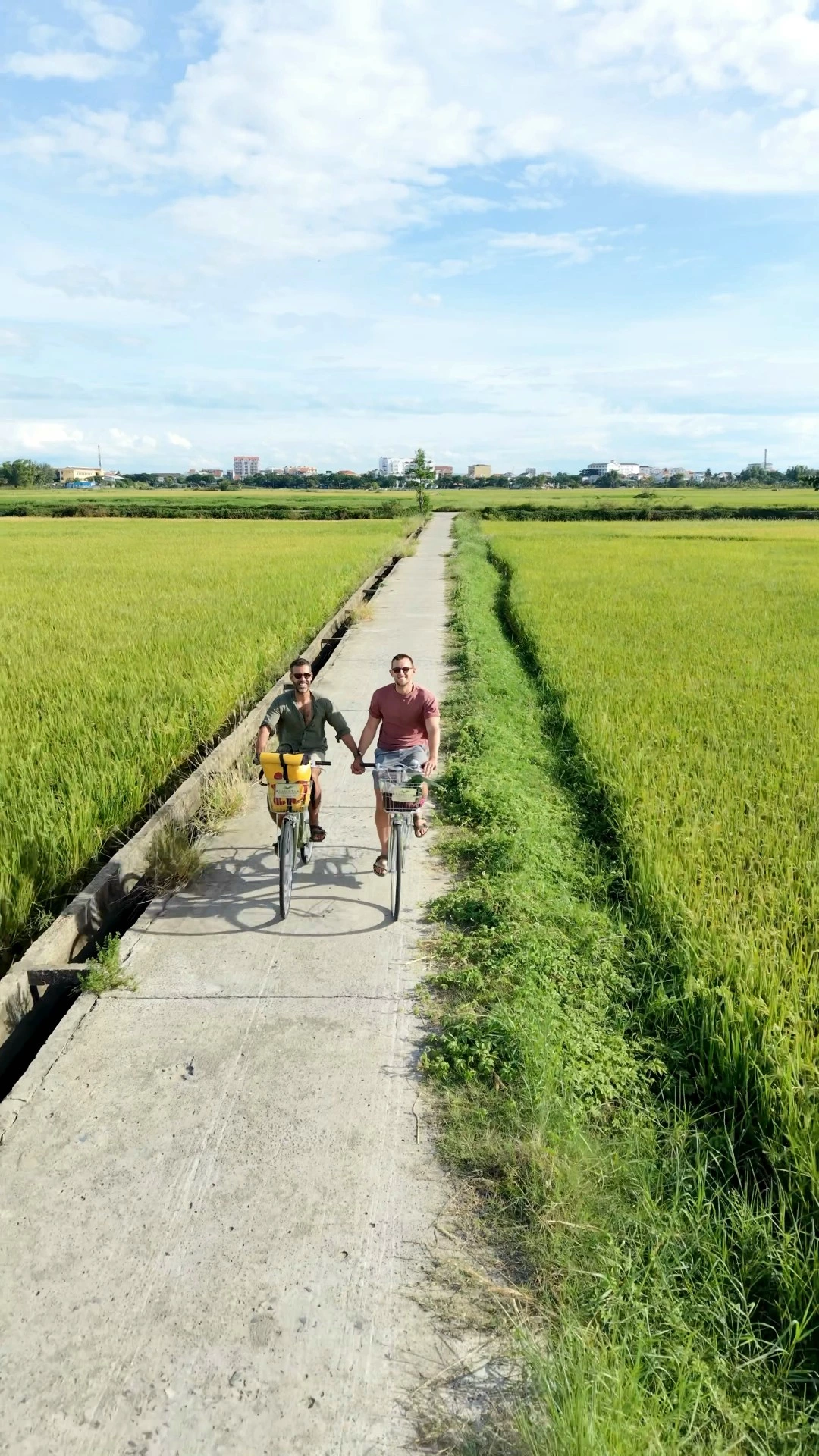
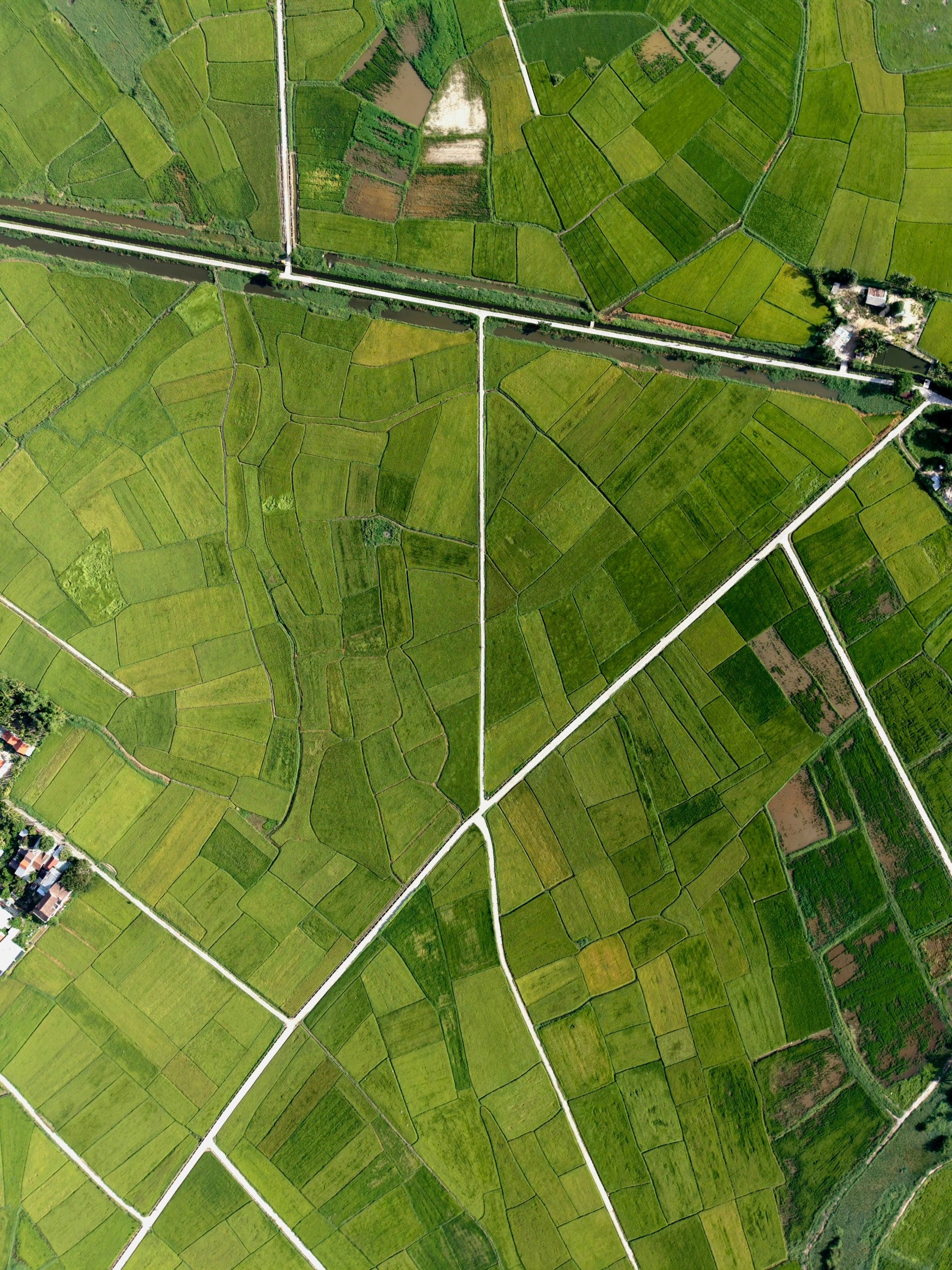
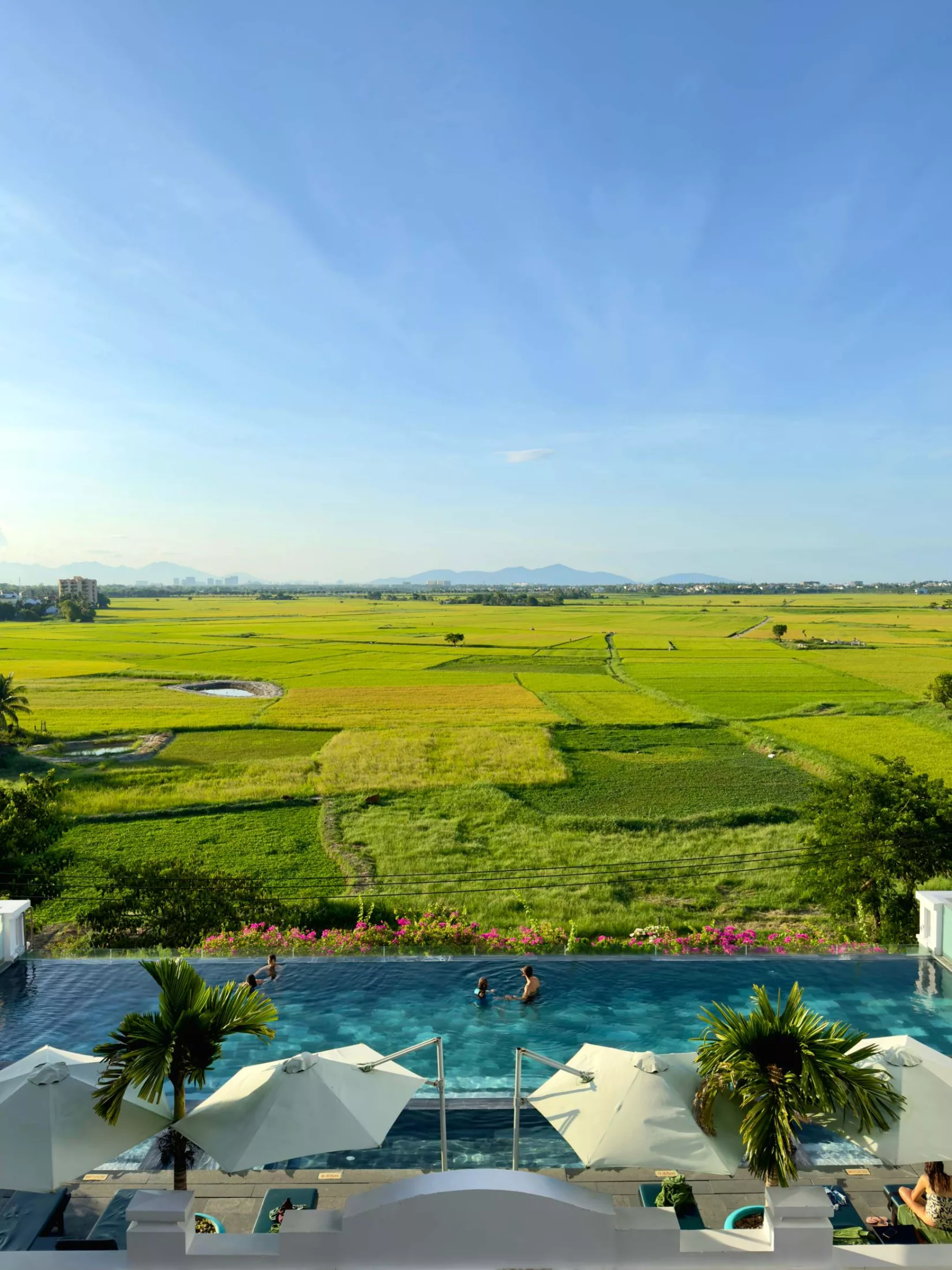
For a practically negligible sum, we discover a contemporary hotel with an infinity pool overlooking the rice paddies, a gigantic room with a lovely view, an extremely comfortable bed, and free bicycles. In the morning, breakfast is gargantuan and delicious. We get a little exercise, play a few games of pickleball, spend plenty of time by the pool, and head back to the old town every evening. For once, we’re not trying to pack our days full. The bikes also take us through the rice paddies to the famous coconut boats.

We expected to find a highway of round boats packed with tourists. However, the departure points are so scattered that we only come across two other visitors for much of the ride. That’s when our very elaborate conversation about “coco” and “banana” began. Our captain showed us how to catch crabs, made us a little crown out of leaves, and then revealed another passion: Rasputin. The song starts, he hums along as best he can and improvises a little dance at the edge of the boat. A few minutes later, our boat is spinning around at full speed. Our stomachs aren’t too thrilled.

We, on the other hand, are loving it. Then the music stops. He points at himself. “Tip, tip.” We burst out laughing.

After Rasputin, the dance, and the boat spinning around—at least things are clear now. The timing is impeccable. Even the exit is perfectly orchestrated. Another boat takes pictures of us with him, and a few minutes later, our photos are ready. About fifteen photos for less than three Swiss francs. Once again, we’re not quite sure if we’ve just experienced a small, traditional boat ride or a perfectly polished tourist attraction.

Probably both.

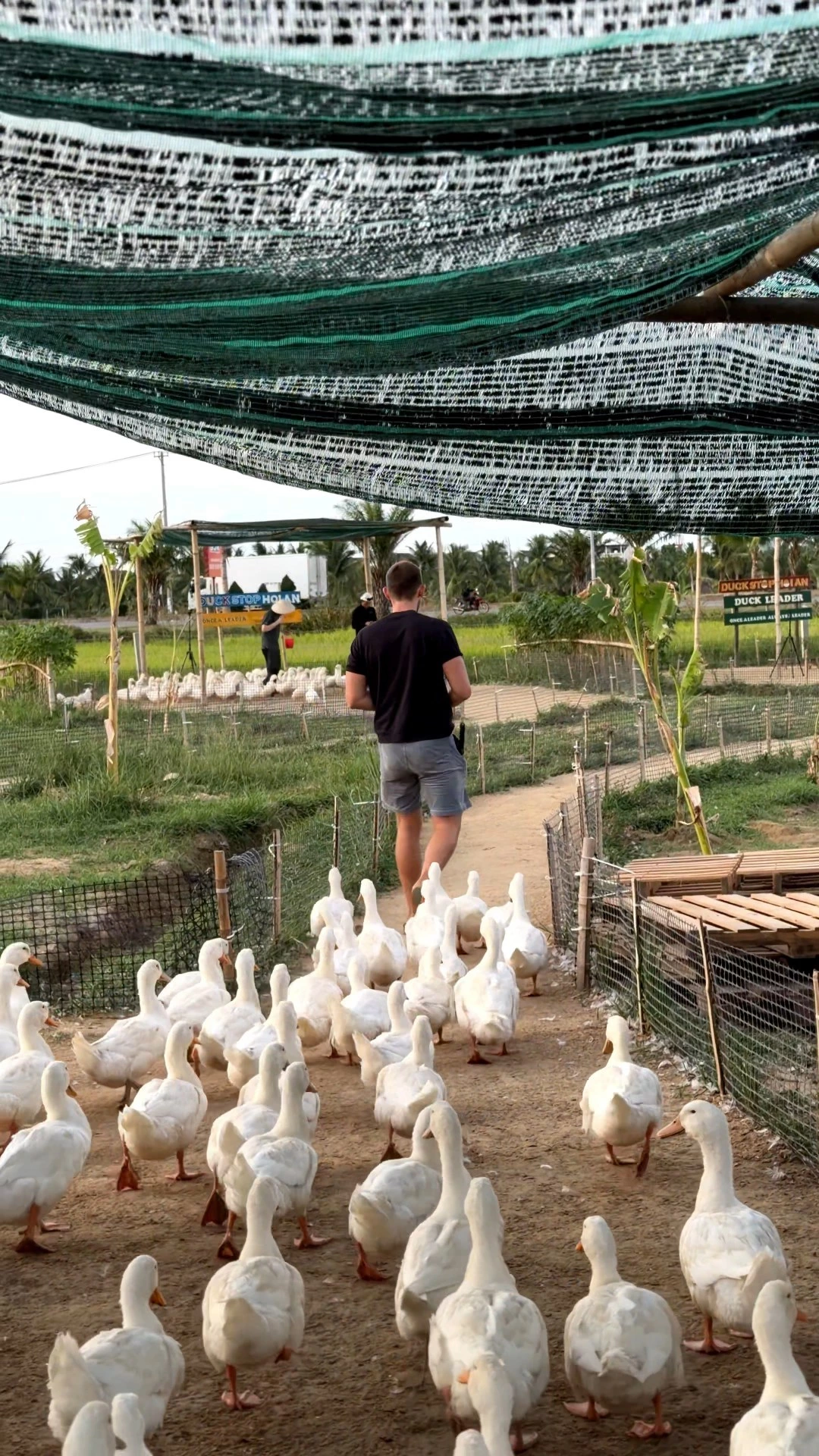
A few kilometers further on, we try another experience whose name pretty much sums up the concept: the Duck Leader.

In the middle of the rice paddies, several flocks of ducks await their visitors.

The game consists of becoming, for a few minutes, their impromptu leader.

We’re given some seeds, we start walking, and the whole flock immediately follows in a joyful, coordinated movement.

The setting seems very rural, but the operation is perfectly organized. Several groups move side by side, each with its own guide and its own ducks. For about twenty minutes, our flock follows us with a fairly simple motivation: to grab the seeds we’re handing out. Then our guide decides to tweak the rules a bit and pours the seeds directly onto our feet. In a matter of seconds, our feet disappear beneath the ducks.

The beaks peck away; it tickles, and it’s impossible to move without risking stepping on one. Matthieu loves it. Sébastien discovers that there’s apparently a maximum number of ducks that can comfortably gather around his feet. After that, we wash and disinfect our feet, and once back at the hotel, we wash them a second time just to be safe. Hoi An takes tourism so far as to let you leave with something made especially for you.

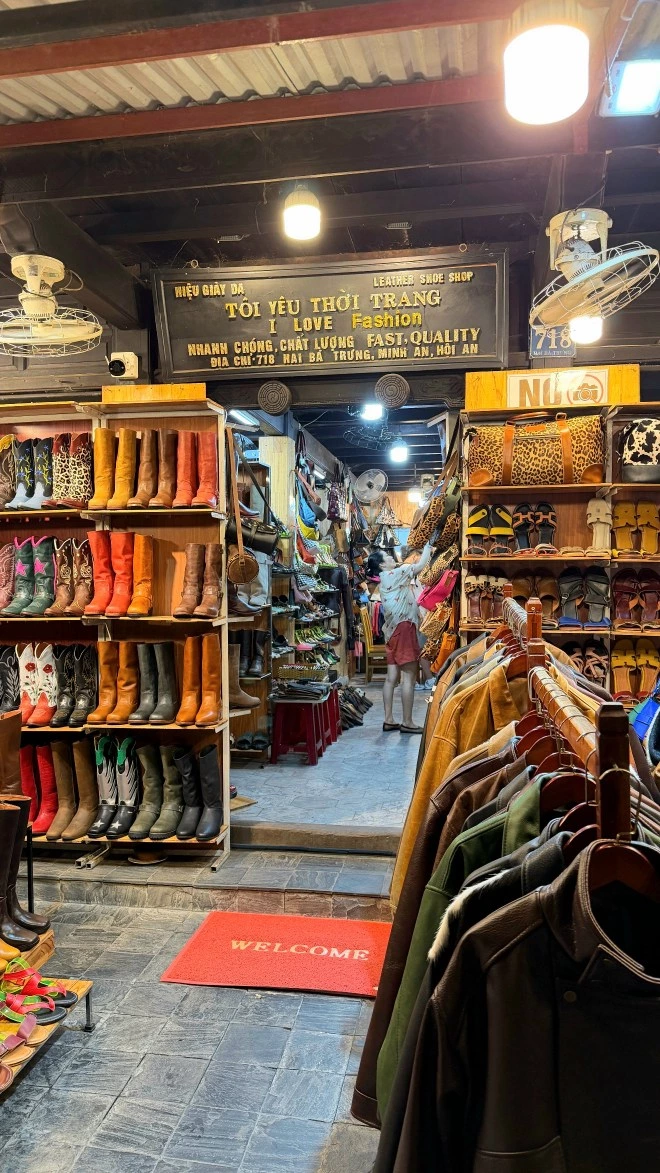
Sébastien is determined to try out one of those shops that can make custom leather shoes in a single day. We choose the style, the leather, the color, and have our feet measured.

We settle on sandals heavily inspired by a certain well-known German model. Let’s call them “Birken-almosts.” The next day, they’re ready. Then comes the full moon.

And it’s that evening that all our impressions from the previous days finally come together.

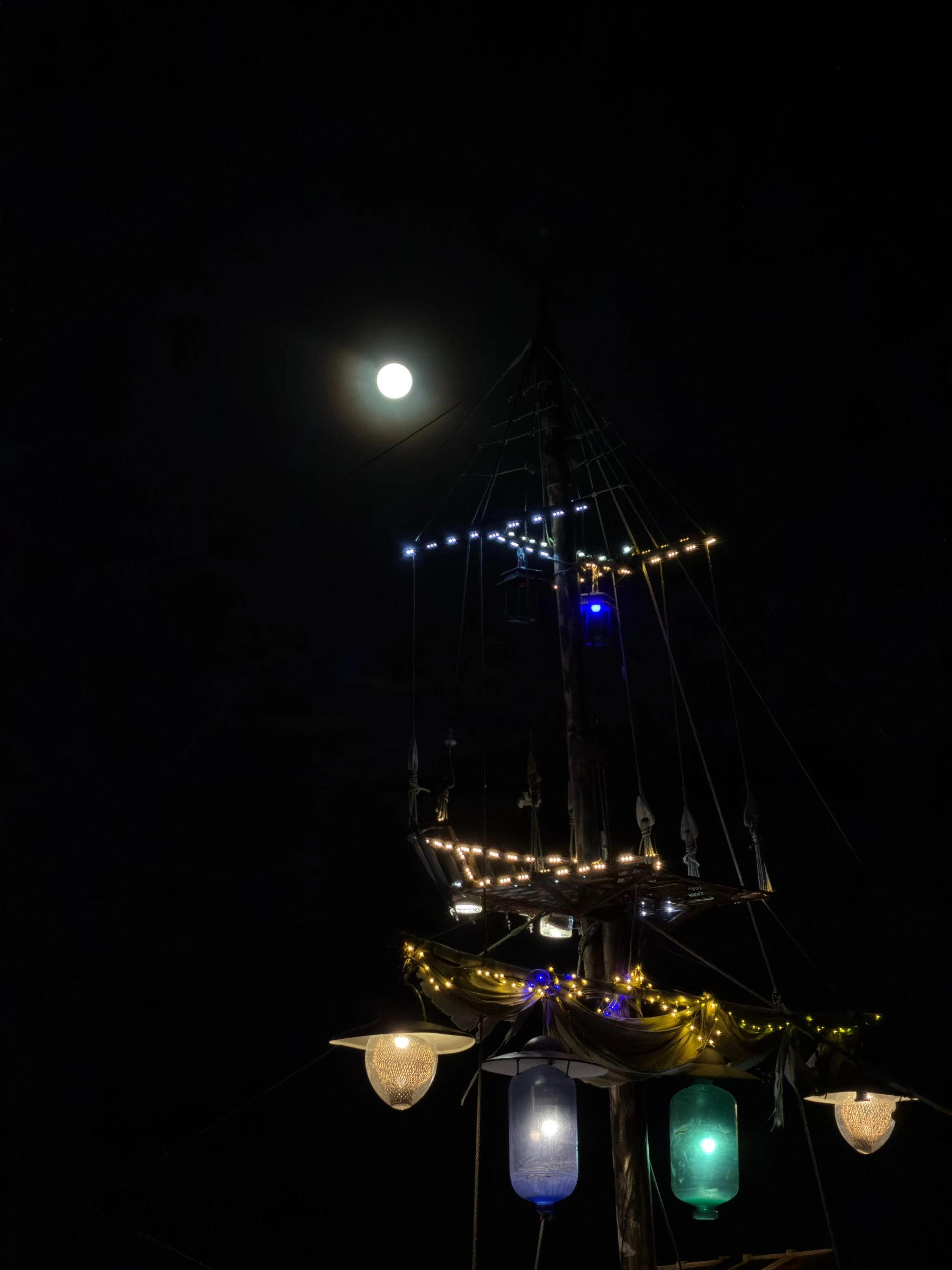
Part of the electric lighting in the old town fades away, and the lanterns take over the streets. They hang above our heads, fill the boats, and are reflected in the river. Small paper lanterns drift on the water between the boats. There are huge crowds.

Huge numbers of boats. Huge numbers of phones held aloft to take photos. And it’s magnificent. It’s almost counterintuitive. You could remove half the visitors and have a quieter old town. Take thirty boats off the river and make the experience more peaceful.

Do away with the photo-op shops and have something less commercial.

But would it really be more beautiful?

That evening, we weren’t so sure anymore. It’s precisely all those illuminated boats that transform the river into a vast mosaic of colors. All those clustered lanterns that make the streets seem almost unreal. Tourism is no longer content to merely be part of the scenery. In some places, it directly contributes to creating it.

And yet, behind it all, something else continues.

In front of certain houses and shops, we notice trays of food, incense, and offerings—particularly those related to ancestors and local spiritual beliefs. A few meters away, a family is setting out their offerings while visitors board boats decked out in lights. These two realities aren’t hidden one behind the other.

They share the same streets.

Maybe that’s why four nights in Hoi An ultimately felt almost too short.

We didn’t pack our days with sightseeing or try to see everything.

We rode bikes, lounged by a pool overlooking the rice paddies, accidentally ordered a dessert, listened to Gilbert Montagné singing in broken French, let ducks peck at our feet, and took a small boat ride a second time simply because it was beautiful.

We thought we might like Hoi An despite its mass tourism.

In the end, we actually liked it at times because of it.

And that was something we really didn’t expect.
Discover our recommendations9
Lasenta Boutique Hotel Hoi An
Hotels🇻🇳 Hoi An, Vietnam
General venue

A recommended place without a particular LGBTQ+ positioning.

Lasenta Boutique Hotel Hoi An

About a 20-minute walk from Hoi An's historic centre, Lasenta Boutique Hotel is a comfortable hotel overlooking the rice fields. Its main attraction is the infinity pool, with open views across the paddies. There's also a gym, and breakfast offers plenty of choice.

Read the full recommendation
57 Lý Thường Kiệt, Hội An Đông, Đà Nẵng 560000, Vietnam
Read the related article
Pip Bar
Bars🇻🇳 Hoi An, Vietnam
LGBTQ+ venue

A venue intended for the wider LGBTQ+ community.

Pip Bar

Pip Bar is a small, intimate bar in Hoi An, with a lovely open terrace and a particularly friendly atmosphere. It's the kind of place where you can simply stop for a drink and easily strike up a conversation with other guests. What makes it special is its warm welcome and inclusive atmosphere, particularly towards the LGBTQ+ community.

Read the full recommendation
7 Đường Phạm Hồng Thái, Hội An, Đà Nẵng, Việt Nam
Read the related article
Activities🇻🇳 Hoi An, Vietnam
General venue

A recommended place without a particular LGBTQ+ positioning.

Lantern boat ride in Hoi An

At nightfall, the Hoài River in the heart of Hoi An fills with small boats decorated with colorful lanterns. For around twenty minutes, you glide among the illuminated boats, with the chance to make a wish and release a small paper lantern onto the water. It's a very touristy activity, but one that really adds to Hoi An's charm.

Read the full recommendation
Near An Hoi Bridge, Hoai River, Hoi An, Vietnam
Read the related article
Activities🇻🇳 Hoi An, Vietnam
General venue

A recommended place without a particular LGBTQ+ positioning.

Coconut Basket Boats

Hoi An isn't just about lanterns and the old town! A few kilometres from the centre, in Cam Thanh's water coconut forest, you can hop aboard unusual round bamboo boats called thúng chai. Originally used by local fishermen, they're now mostly used to take visitors through the coconut palms. It's definitely touristy, but a fun way to spend about an hour, with a few activities along the way.

Read the full recommendation
Cam Thanh, Hoi An, Quang Nam, Vietnam
Read the related article
Activities🇻🇳 Hoi An, Vietnam
General venue

A recommended place without a particular LGBTQ+ positioning.

Duck Stop Hoi An

A few kilometres from central Hoi An, surrounded by rice fields, Duck Stop offers a wonderfully unusual activity: leading a flock of ducks! With a guide, you feed them, have them follow you around and try the famous 'duck massage', where the ducks peck at seeds sprinkled on your feet. A fun change from the usual sightseeing in Hoi An.

Read the full recommendation
Read the related article
Activities🇻🇳 Hoi An, Vietnam
General venue

A recommended place without a particular LGBTQ+ positioning.

Cycling through the rice fields of Hoi An

Just a short bike ride from Hoi An’s historic centre, the scenery changes completely. Busy streets give way to rice fields and narrow paths, where you might pass locals on scooters, farmers at work and the occasional buffalo. Around Cam Chau and Cam Thanh, a few cafés offer a lovely spot to stop and look out over the fields.

Read the full recommendation
Cam Chau and Cam Thanh, Hoi An, Vietnam
Read the related article
Bars🇻🇳 Hoi An, Vietnam
General venue

A recommended place without a particular LGBTQ+ positioning.

Boat Living Hoi An

Set on a boat moored along the Hoài River, Boat Living Hoi An is an unusual bar just steps from the old town. It's a lovely spot for a quiet drink while watching lantern-lit boats pass by. A few snacks may also be available.

Read the full recommendation
1B Nguyễn Phúc Chu, Hội An, Việt Nam
Read the related article
I Love Fashion
Other places🇻🇳 Hoi An, Vietnam
General venue

A recommended place without a particular LGBTQ+ positioning.

I Love Fashion

In Hoi An, it's hard to miss the made-to-measure shops. The town has made a specialty of it: clothes, suits, shoes… You can have almost anything made to your taste. Even though shopping wasn't part of our travel plans, we ended up giving in too!

Read the full recommendation
Read the related article
Neighbourhoods🇻🇳 Hoi An, Vietnam
General venue

A recommended place without a particular LGBTQ+ positioning.

Hoi An Old Town

Listed as a UNESCO World Heritage Site, Hoi An's Old Town is a maze of narrow streets lined with old yellow-fronted houses, small cafés, shops and colourful lanterns. It's a charming historic centre best explored on foot, with plenty of opportunities for spontaneous stops along the way.

Read the full recommendation
Hội An Ancient Town, Hội An, Đà Nẵng, Vietnam
Read the related article
View all recommendations

Gallery

Our questions and answers

21
Is Hoi An worth the trip?

Yes, Hoi An was definitely worth the trip for us. We were a little worried that mass tourism would ruin the experience, but after four nights, it almost felt like too short a stay. The most surprising thing is that at times we loved Hoi An not in spite of its touristy side, but precisely because of it.

What to Do in Hoi An?

In Hoi An, we especially enjoyed switching between the old town and much more peaceful activities around the rice paddies. We went biking, tried out the coconut boats, played with a flock of ducks at Duck Leader, had custom sandals made, enjoyed the pool, and took a small boat ride on the river twice, surrounded by lanterns. For once, we didn’t try to pack every day to the brim, and it was just fine that way.

How many days does it take to visit Hoi An?

For us, four nights in Hoi An weren’t too many—in fact, they almost seemed too short. Yet we didn’t rush from one sight to the next or dash from one activity to another. Between the old town, the rice paddies, bike rides, activities, and evenings by the river, we could easily have kept up the same pace for a few more days.

Is Hoi An too touristy?

Yes, Hoi An is very touristy, but that doesn’t necessarily mean it loses all its charm. During the full moon, there were huge crowds, lots of boats, and people everywhere holding up their phones—and yet we found the scene absolutely beautiful. In some places, we even felt like all that tourist activity was part of the scenery itself.

Is it possible to love Hoi An despite mass tourism?

Yes, and that’s probably what surprised us the most in Hoi An. Some shops charge 10,000 dong just to use their wall of lanterns as a photo backdrop, the boat tours are perfectly organized, and some activities are clearly designed with visitors in mind. Yet we found that all of this worked surprisingly well with the city rather than against it.

When is the best time to visit Hoi An?

From February to August, Hoi An generally experiences a warmer, sunnier, and clearer period, and our trip in late August 2026 took place under ideal weather conditions. We were also lucky enough to be there during the full moon, which completely transformed the atmosphere in the old town at night. If we had to sum up our experience, late August offered us both perfect weather and one of the most memorable evenings of our trip.

Is the lantern boat ride in Hoi An worth it?

Yes, since we’ve even done it twice. The ride is very short, and objectively speaking, not much happens, but being surrounded by all those little lit-up boats and setting a lantern adrift on the water creates a rather special atmosphere. We did it on our very first night and then a second time before leaving Hoi An.

How much does the lantern boat ride in Hoi An cost?

We paid 150,000 dongs for our boat ride for two in Hoi An, a price we thought was really fair. Prices can vary depending on the departure point and the package you choose, so it’s always best to check the price before boarding. At that price, we enjoyed the experience so much that we did it a second time during our stay.

Is the full moon in Hoi An worth it?

Yes, even though this is probably one of the times when Hoi An is most crowded. Some of the electric lighting fades away, lanterns become much more prevalent in the streets, and the boats light up the entire river. It was crowded, very touristy, and full of people on their phones, but we still found the show magnificent.

Are the coconut boats in Hoi An worth it?

Yes, we had a blast on the coconut boats, even though we were almost expecting the worst. We’d imagined some kind of “boat highway” packed with tourists, but our starting point was so quiet that we only came across two other visitors for most of the ride. Between crab fishing, the leaf wreath, Rasputin, and our boat spinning around in a series of loops, the experience was totally touristy and honestly a lot of fun.

How much does a coconut boat cost in Hoi An?

We paid 300,000 dongs for the coconut boat in Hoi An. We then added about 100,000 dongs for a series of photos taken during the ride and gave a 100,000-dong tip to our captain, who even treated us to a little dance to “Rasputin.” Prices can vary widely depending on the provider and any extras, so it’s worth checking and negotiating clearly before you go.

Are the coconut boats in Hoi An too touristy?

They’re clearly very touristy, but our experience didn’t feel at all like that of an overcrowded attraction. The various starting points are spread out, and for much of our walk, we were almost alone. Everything runs like clockwork—right down to the photos waiting for us at the exit—but that didn’t stop us from truly enjoying the moment.

Can you explore Hoi An by bike?

Yes, biking was one of our favorite ways to explore the area around Hoi An. Our hotel provided bikes for free, and we used them to ride through the rice paddies and, in particular, to get to the coconut boats. As soon as you leave the old town, the scenery changes very quickly, and biking is the perfect way to enjoy that contrast.

Is the Duck Leader in Hoi An worth a visit?

Yes, especially if the idea of becoming the temporary leader of a flock of ducks already makes you laugh. For about twenty minutes, we walked along scattering seeds while all the ducks followed us, until our guide finally decided to pour the seeds right onto our feet. One of us loved it; the other discovered that there was clearly a limit to the number of ducks one can comfortably have around one’s toes.

Where to stay in Hoi An?

We really enjoyed staying a little way outside the old town, surrounded by rice paddies. Our hotel had an infinity pool overlooking the fields, free bikes, and enough peace and quiet to really slow down during the day, while still allowing us to head back to the center every evening. For us, this mix of countryside and old town worked perfectly.

Can you have custom-made shoes made in Hoi An?

Yes, and one of us really wanted to try them on. We chose the style, the leather, and the color, and then the store took our foot measurements. Our sandals—heavily inspired by a certain well-known German model—were ready the very next day.

What to do in Hoi An in the evening?

The evening was probably when Hoi An impressed us the most. We loved heading back to the old town, watching the lanterns gradually light up, strolling along the river, taking a boat ride, or simply stopping at a small bar with live music. We also really liked the Pip Bar and thought the Living Colors LGBTQ+ Bar was nice, although, personally, we preferred the simpler, more relaxed atmosphere of the Pip Bar.

What's Hoi An like for a gay couple?

During our time as a couple in Hoi An, we didn’t encounter any problems and felt very comfortable during our four nights there. We discovered several LGBTQ+ or LGBTQ+-friendly spots, and some interactions with locals were particularly spontaneous and at times very physical. Our experience is a personal one: a few trouble-free days don’t sum up an entire city, so we always consider the context, the people around us, and our own feelings rather than labeling a destination as “safe” or “unsafe.”

Are there any LGBTQ+ bars in Hoi An?

Yes, we discovered the Pip Bar almost by chance when we spotted its rainbow flag, and we went back there during our stay. We also stopped by the Living Colors LGBTQ+ Bar, one of Hoi An’s well-known LGBTQ+ spots: we thought it was a nice place, even though we personally preferred the simpler, more laid-back vibe of the Pip Bar. It’s very subjective, but the Pip Bar has become one of those places we naturally associate with our nights out in Hoi An.

Is it possible to enjoy Hoi An without visiting many sights?

Yes, and that’s exactly how we experienced Hoi An. We didn’t try to check off a long list of sights; instead, we spent our time biking, in the pool, in the rice paddies, on the river, or simply wandering the streets. Despite that very leisurely pace, four nights almost seemed too short to us.

Hoi An or Da Nang: Which atmosphere did we prefer?

The two cities are so different that you don’t really want to choose one over the other. Leaving behind the high-rises and wide avenues of Da Nang for Hoi An, we arrived in a setting of low-rise houses, yellow facades, wooden shutters, and lanterns hanging above the streets. Hoi An immediately struck us as smaller, slower-paced, and much more immersive, especially in the evening.

Read about our experience in the article.

Read the article