“But that's impossible—she takes everything…”
Matthieu looks at the sideboard. Then at the table next to it.
“Not only does she cut in front of you, but she also takes all the dragon fruit.”
This is our last breakfast after six nights in Da Nang. Ahead of us, a young Russian tourist accompanied by her mother keeps making trip after trip to the buffet. She fills large plates, comes back, goes back, and fills more. Their table gradually disappears under the food. Then we realize that some of it is going straight into her bag for the day.
The scene strikes us more than it really surprises us. For a few days now, we’ve been around a lot of Russian-speaking tourists in Da Nang and have been discovering certain habits, certain ways of doing things, and certain social norms that aren’t our own. At first, it’s a bit unsettling. Then you get used to it. Just one of many little cultural surprises we’ve encountered since arriving here.
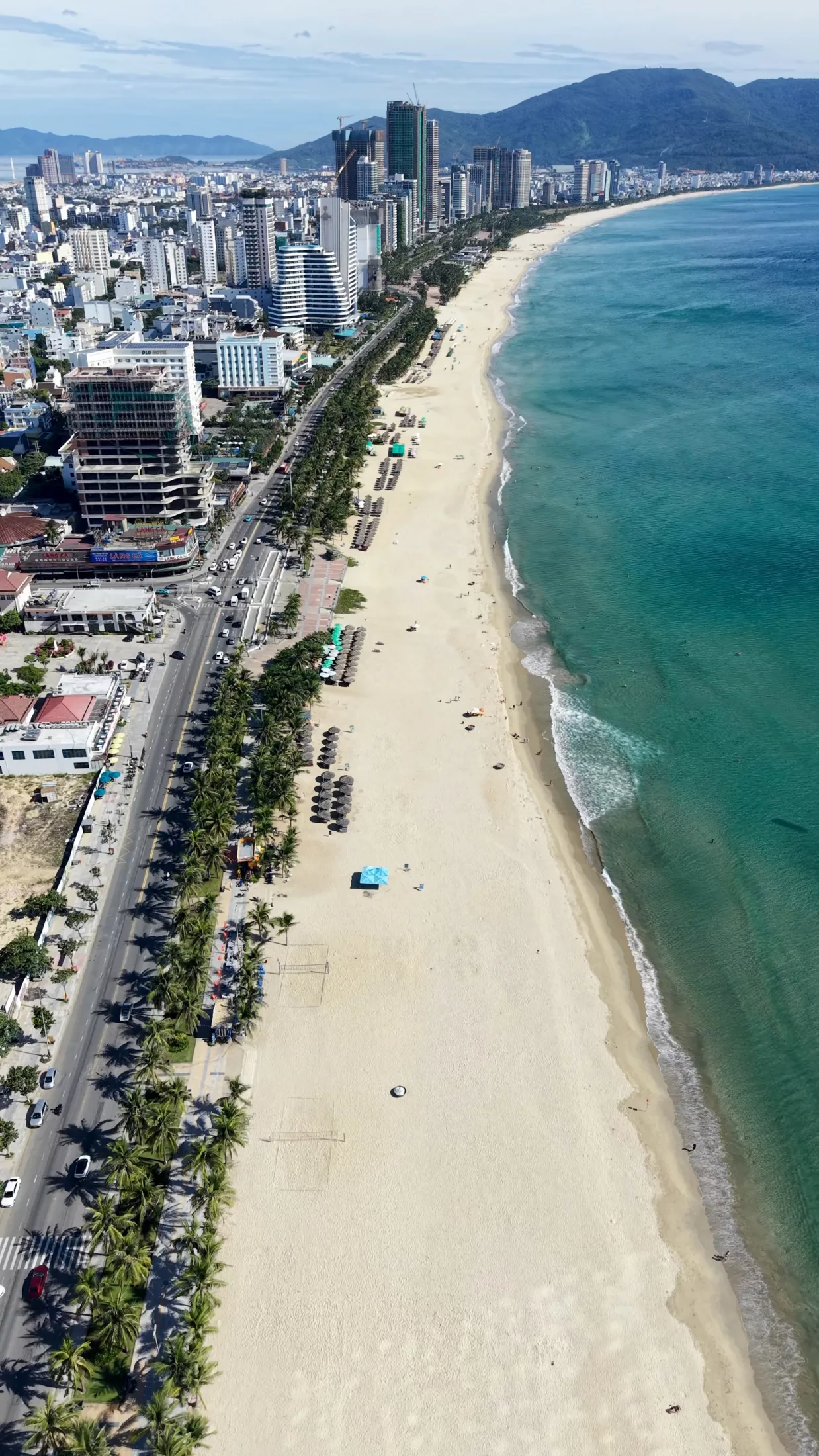
Because in Da Nang, you hear a lot of Russian spoken—at breakfast, in restaurants, on the street. Some businesses even display their information in Cyrillic. And yet, when you look outside, it’s not Russia that comes to mind. Instead, it’s the tall towers, the vast beach, and the long urban coastline that remind us more of Miami.
Welcome to Da Nang.
Or in Miami.
Or in Moscow (or Sochi, for its seaside charm).
After six nights here, we still haven't completely made up our minds.
A few days earlier, as we explored the city, the contrast with northern Vietnam was immediate. After Hanoi, the mountains of Ha Giang and Sapa, and the more rural areas, we found ourselves in a true metropolis. Da Nang stretches along the coast, with its hotels and modern high-rises set behind a vast stretch of sand. The beach is clean, and the water is warm and pleasant. And the city seems to love doing things on a grand scale.
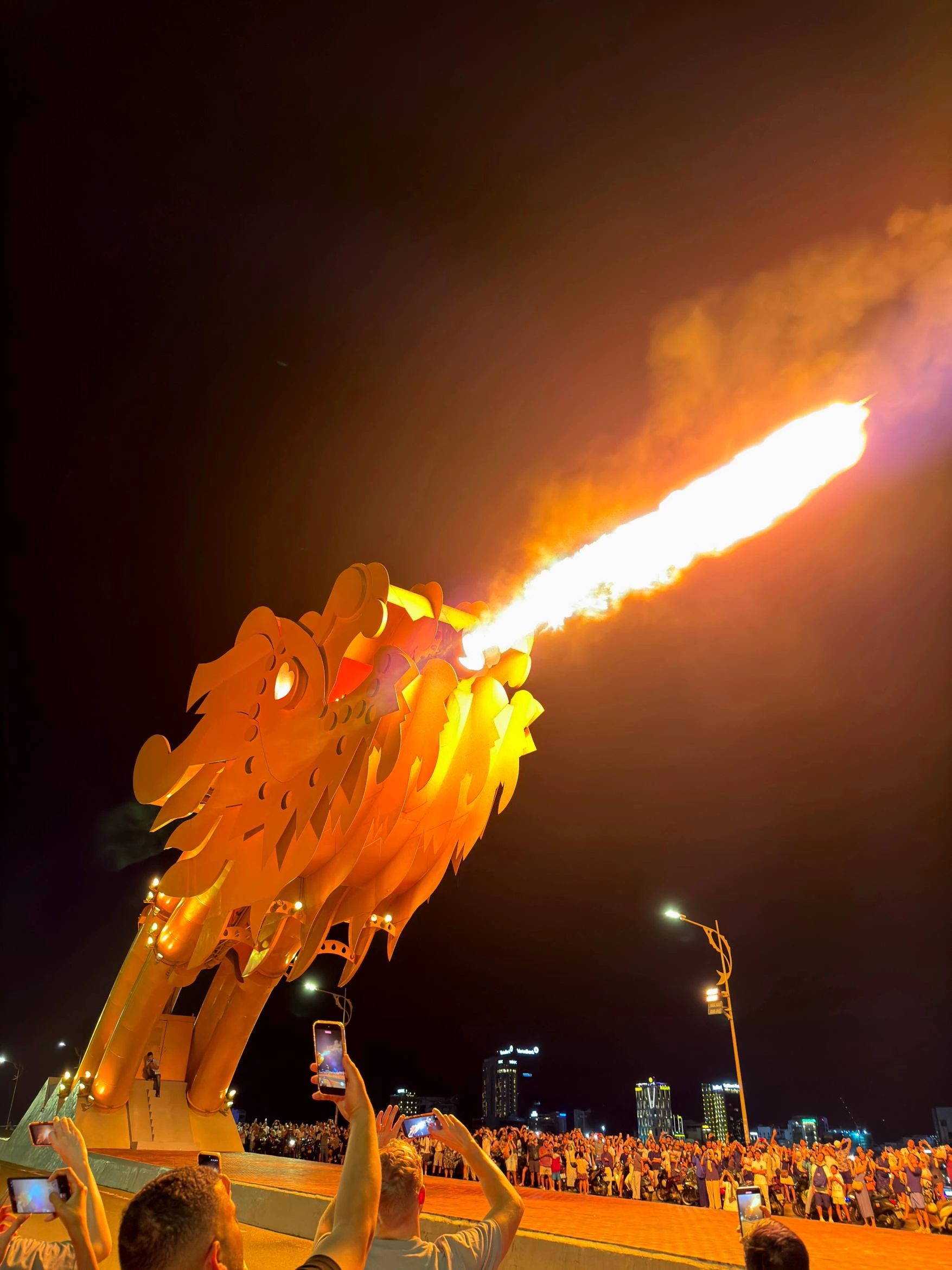
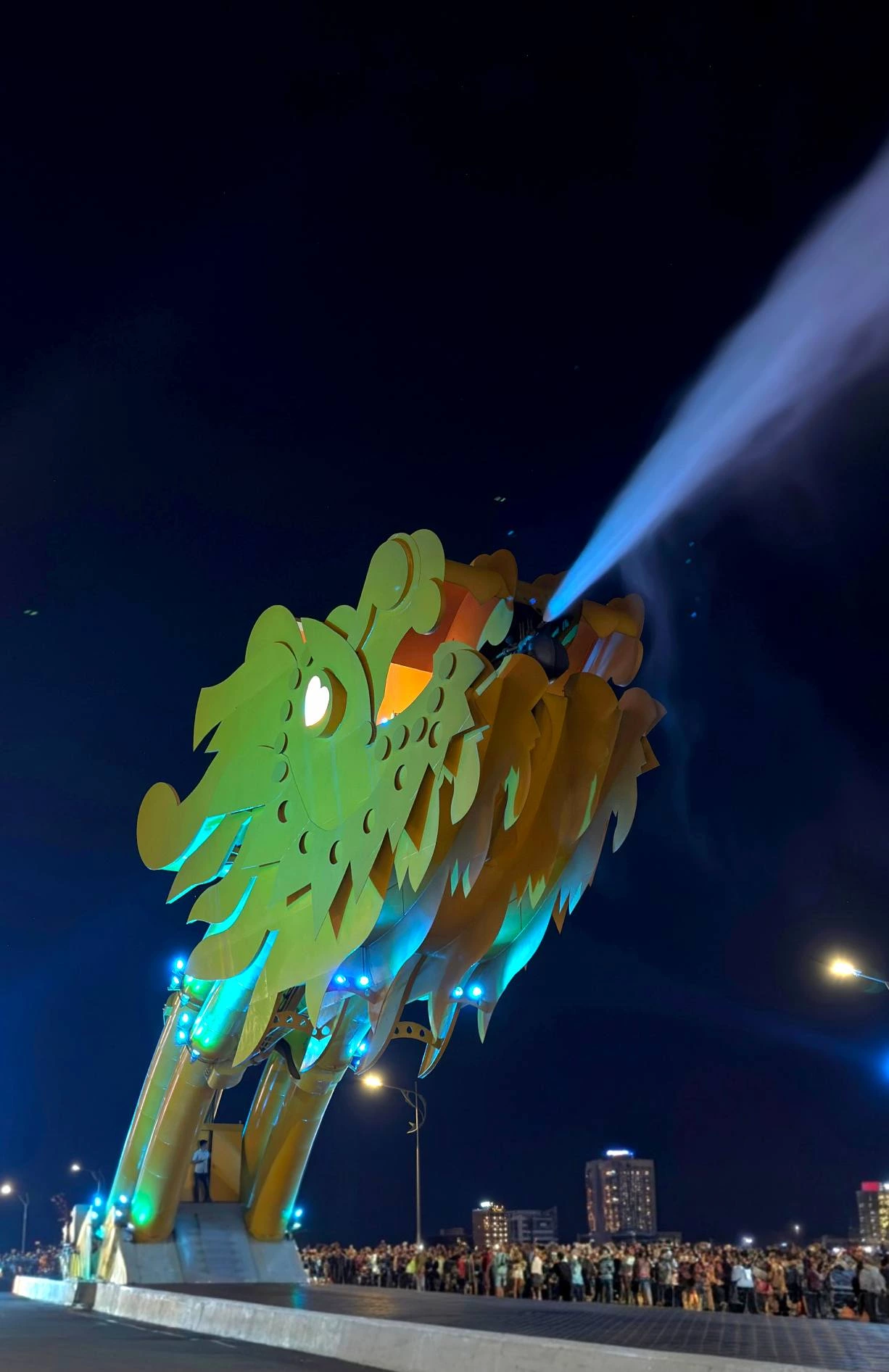
The best example spans the Han River: a bridge whose structure forms the shape of a huge dragon. In the evening, at 9 p.m., traffic comes to a halt, and the dragon’s head breathes fire several times before shooting out powerful jets of water. We watch it once from a distance, then again almost right at the dragon’s feet, surrounded by a huge crowd that has gathered to witness a few minutes of the show. It’s short, over-the-top, and completely unapologetic. And above all, we love the idea that one day, someone suggested, “What if our bridge breathed fire?” And that everyone said yes.
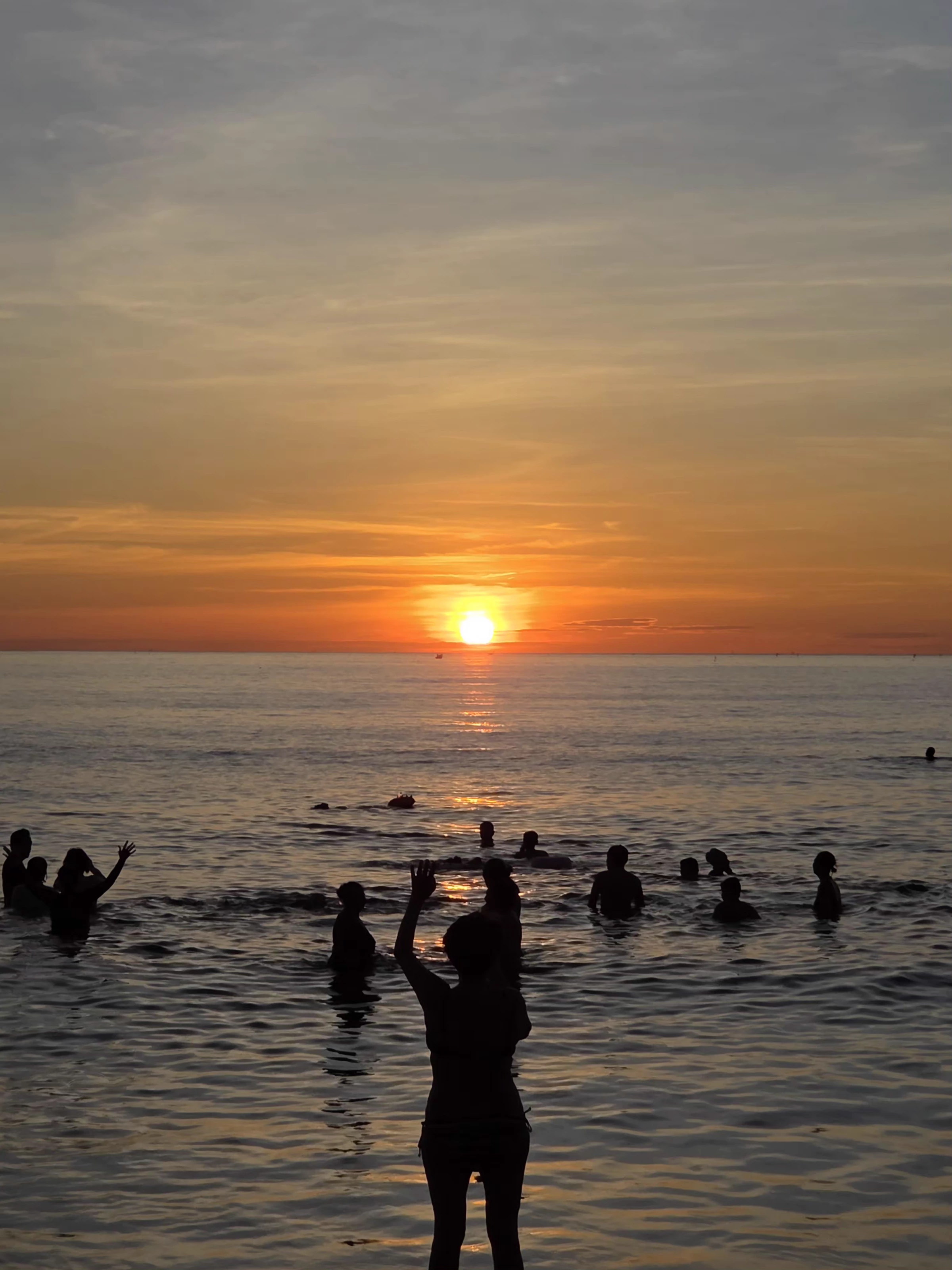
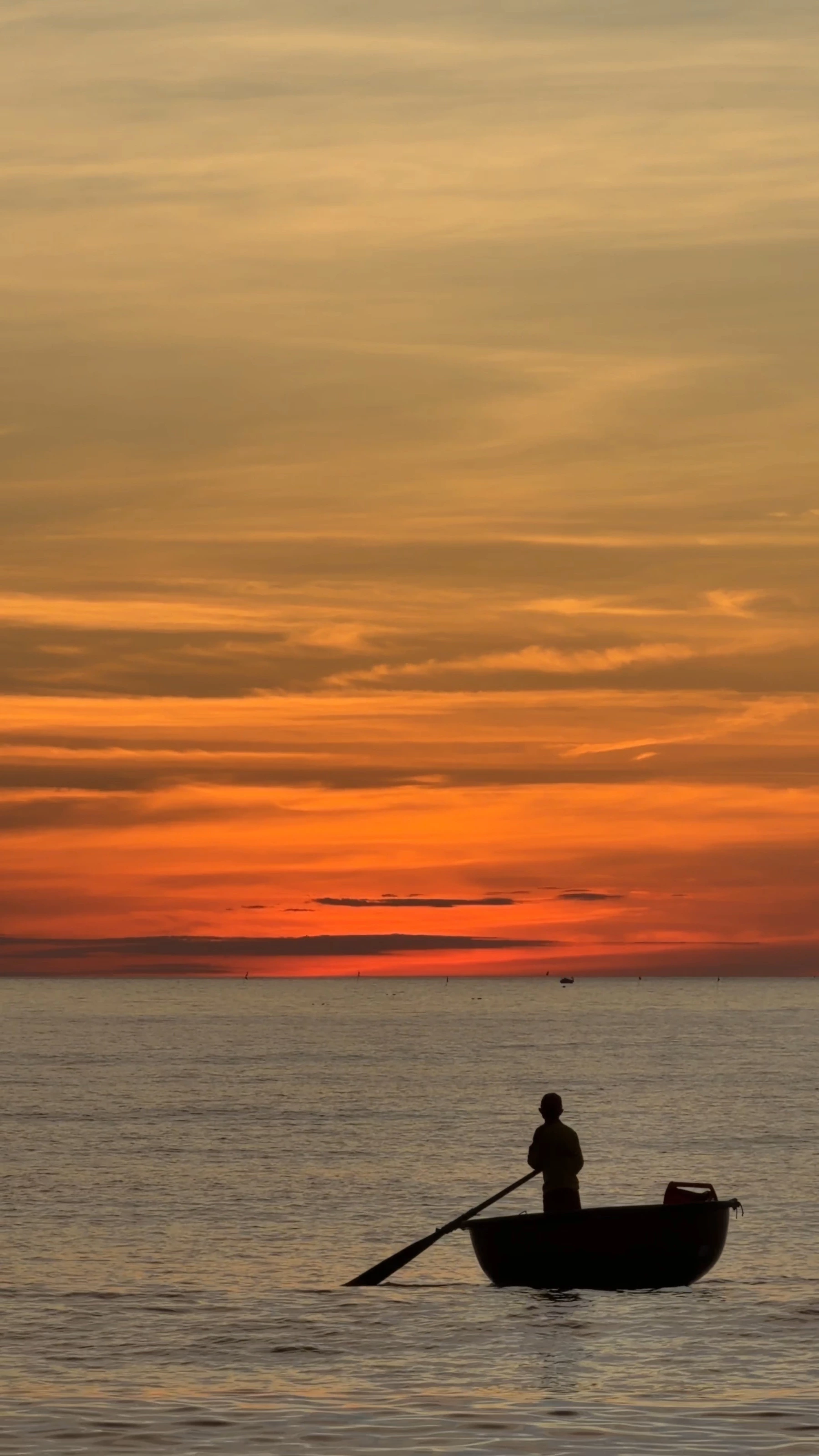
But to see one of Da Nang’s most astonishing sights, you have to set your alarm much earlier. That morning, it went off at 4:30 a.m. By 5:15 a.m., we were already on the beach to watch the sunrise, expecting to find just a few brave souls there. Yet it’s already packed. Dozens and dozens of people are in the water, while others are walking on the sand or waiting for the sun to rise as they face the sea. The city seems almost more alive at dawn than in the middle of the day.
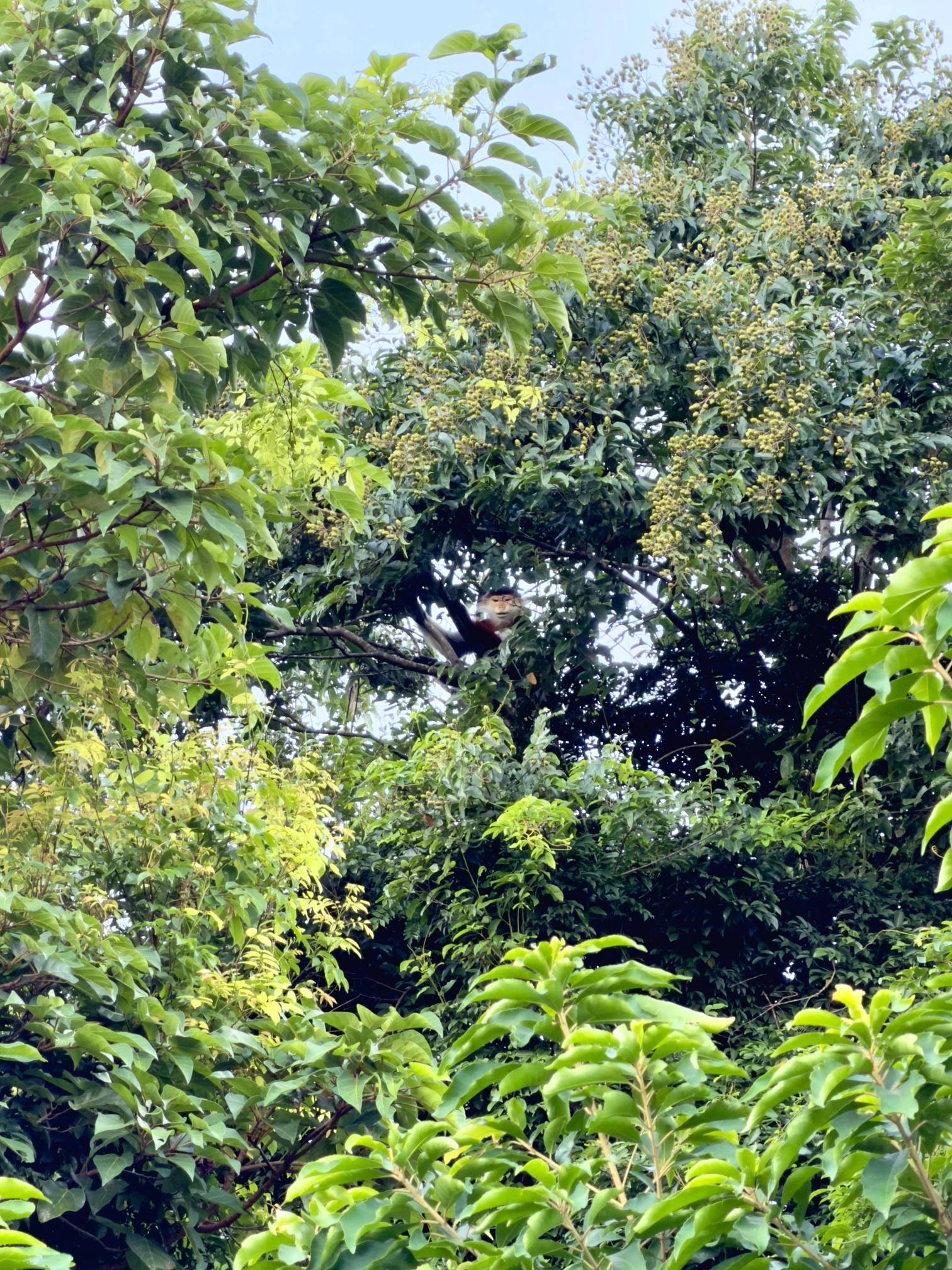
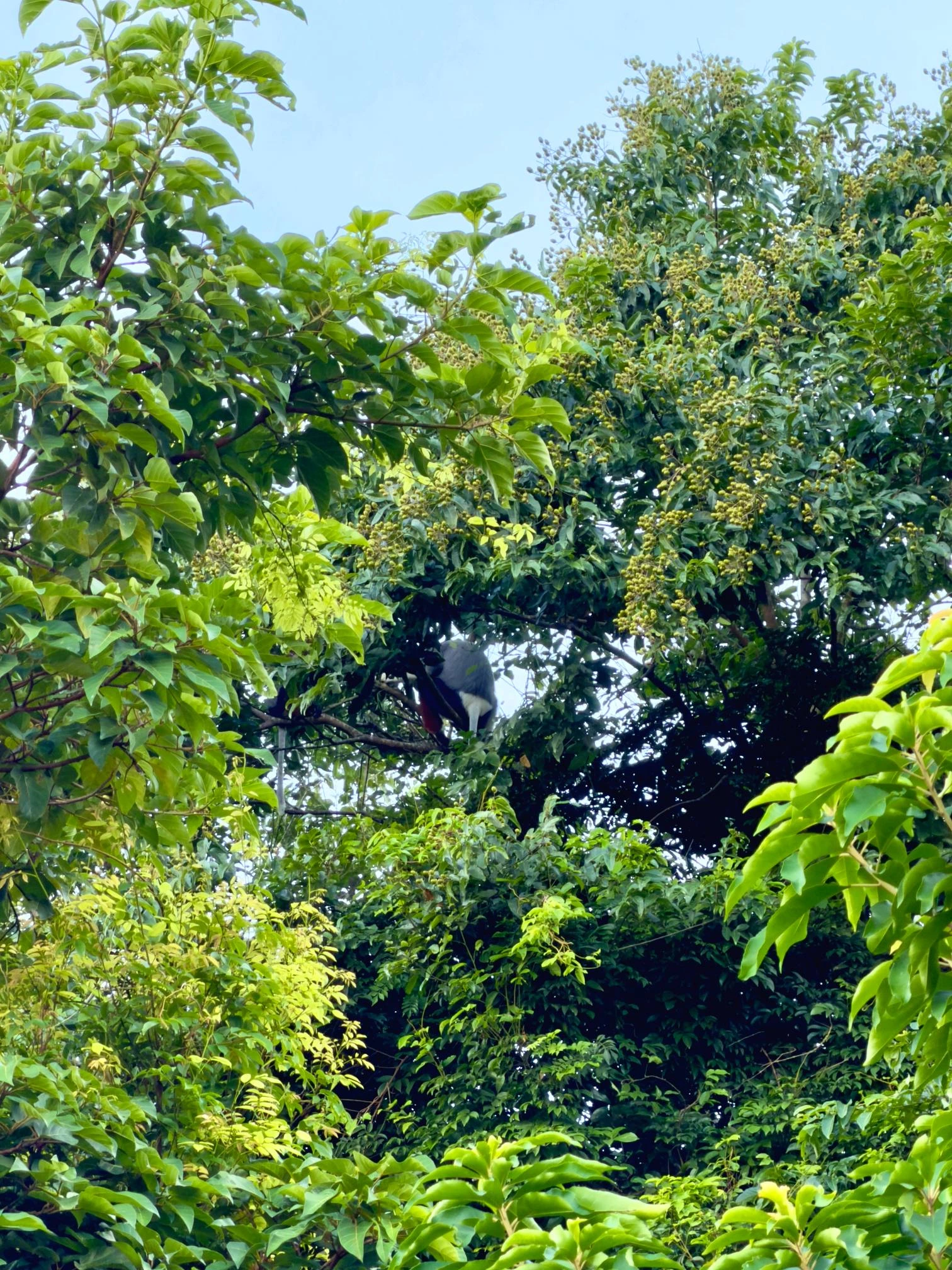
Since we’re already up, we hop on our scooter and head toward the Sơn Trà Peninsula with another idea in mind: to find the famous red-shanked douc langurs, those extremely rare monkeys that can still be spotted in this part of Vietnam.
Our plan is simple: Matthieu has identified several spots where langurs are regularly sighted, and we’re setting out to explore these areas on our own. Once there, we also notice several guides accompanied by tourists. We figure that the spots where they stop must probably be good viewing spots. We might as well benefit from their experience from a distance.
Unfortunately, our plan quickly goes awry. We’re not allowed to continue on the scooter. The guides continue on their way in their vehicles, while we have to keep going on foot. Our morning outing to look for monkeys suddenly turns into a hike for which we’re completely unprepared.
In the end, we give up.
And it’s precisely when we set off again that everything changes.
During a wedding photo shoot—obviously—what better place than a road in the middle of the forest to take wedding photos? Suddenly, a huge langur appears in the trees and crosses over the road, leaping from branch to branch. Photographers, the bride and groom—everyone looks up. We see it for only a few seconds, but long enough to figure out which direction it’s heading.
We pick up the scooter and head to a spot where, earlier, we’d seen a guide stop with his clients.
And there, at last, we find them.
A few adults, accompanied by two babies, are moving through the trees right in front of us. For ten to fifteen minutes, we stand there watching them, filming them, and observing their movements. At one point, it even seems as though one of them is waving at us.
We had set out convinced that our plan had completely fallen apart. In the end, it was precisely when we gave up on it that the morning turned magical.
Da Nang also knows how to go all out on the artificial. A day at Bà Nà Hills is enough to see that. You leave the heat of the coast behind on a cable car and head up the mountain to a gigantic complex that fully embraces its European fantasy.
The Golden Bridge stretches its walkway between two giant stone hands. Then come the European facades, the castles, the French Cancan, the Bavarian scenery, the beers, and a very Vietnamese take on Europe.
It's hard to tell whether we're in France, Germany, or an amusement park that decided to bring it all together in one place.
Is it authentic? Absolutely not.
Does it make us laugh? A lot.
The Marble Mountains offer yet another contrast. Just a few kilometers from downtown, several limestone formations rise almost abruptly from the urban landscape. On the main one, stone staircases connect pagodas, lookout points, and natural cavities. You enter caves where altars and statues have been set up directly into the rock, sometimes illuminated by openings high above your head.
After experiencing the truly mind-boggling scale of Paradise Cave in Phong Nha and some older temples we visited elsewhere, the element of surprise is inevitably less striking. But the blend of rock, spirituality, and architecture remains unique enough to make the walk worth the detour.
And then there are all the things we hadn't planned on at all. Like pickleball.
We discovered this sport somewhat by chance during our trip. A racket, a perforated ball, a low net, and rules that are reminiscent of tennis, badminton, and ping-pong all at once.
It grabs you right away.
Ever since then, whenever we get the chance, we don't hesitate to go back.
Between games, Da Nang returns to its seaside rhythm: the beach, the ocean, electric go-karting, a few nights out, Beer Street, and even the little Q Bar, where you’ll find a pretty cool LGBT spot.
Nothing really seems to belong to the same universe, and that's exactly what we're starting to like.
So, Da Nang Vice or Danangrad?
A little of both, and in the end, neither.
Da Nang is probably the place in Vietnam where we most often felt like we were changing scenery without leaving the city. At 5:15 a.m., we found ourselves on a beach already bustling with a crowd of Vietnamese people who had come to enjoy the sunrise. A few hours later, we were searching for one of the region’s rarest primates in the trees of Sơn Trà. That evening, a dragon breathed fire over a river. The next day, we walked through a mock French village at the top of a mountain before returning to a beach that could almost be in Miami.
And at breakfast, everyone around us is speaking Russian.
Da Nang doesn't really resemble the Vietnam we'd discovered up to that point. That's exactly why we're glad we stayed there for six nights. Even though, right up until our last breakfast, the city kept offering us little cultural surprises.