“Tonight it’s all you can drink. NT$700. But if you take your trousers off, it’s cheaper. In boxers, 600. In briefs, 500.”
We look at each other.
“Damn… if I’d known, I would have worn briefs,” says Sébastien.
“See? Once again, I cost us less,” Matthieu replies.
A few seconds later, Matthieu is in briefs, Sébastien in boxers, and together we have just saved NT$300. Yet when we added Tainan to our itinerary, it definitely was not to test the financial benefits of our underwear. We mainly came to discover a city famous across Taiwan for its food.
The day before, we arrived by train with only two nights ahead of us. Tainan quickly feels calmer and lower-rise, with small streets, temples and old façades. Our hotel is small, cute, clean and completely self-service. We do not see a single person during our entire stay. Everything happens through LINE, Taiwan’s most widely used messaging app: we receive the instructions and an entry code, little slippers are waiting for us inside, and everything works perfectly.
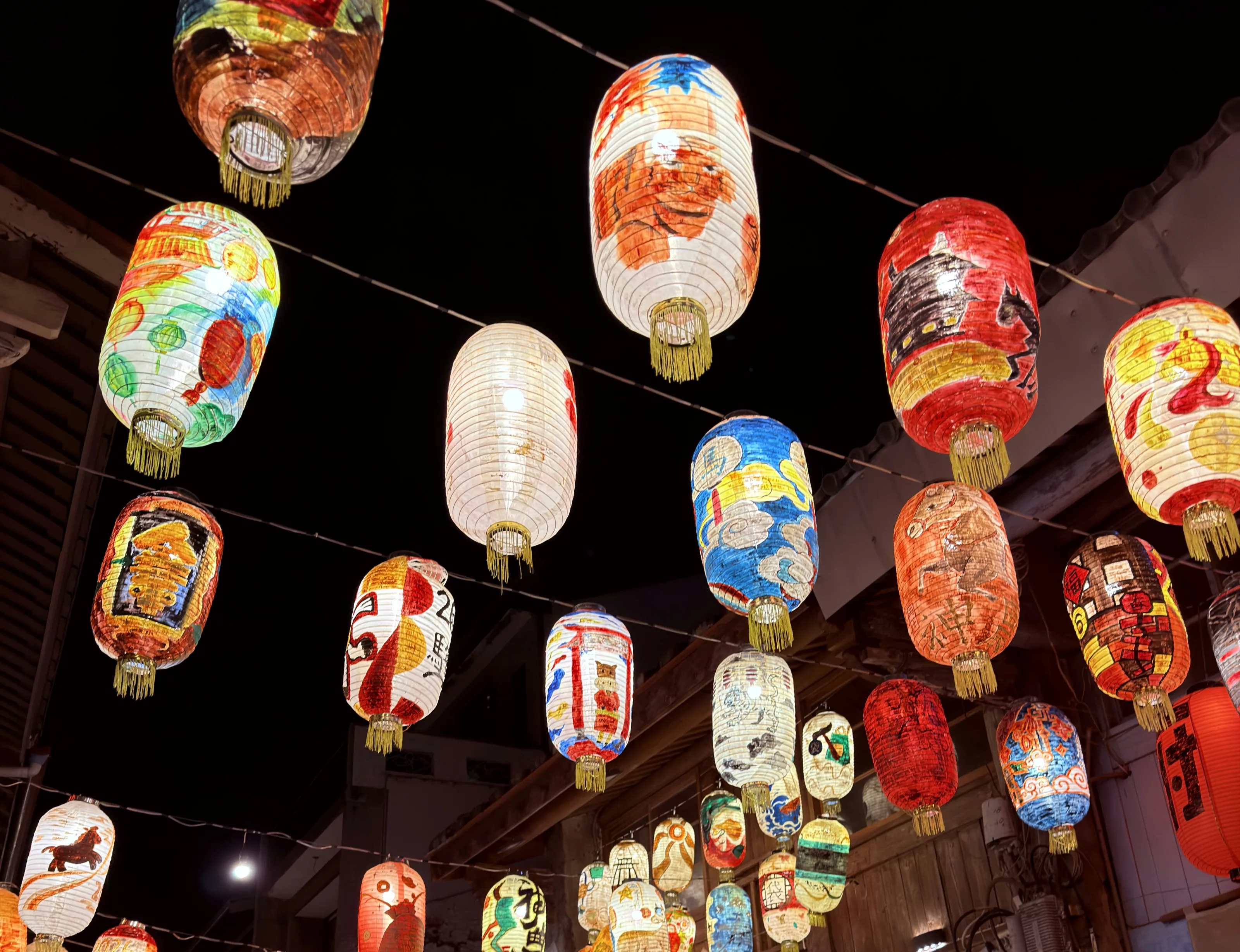
It is already dark when we head back out. We start exploring the city on Shennong Street, one of Tainan’s best-known streets. Lined with old houses and red lanterns hanging above the road, it has an atmosphere unlike anything we have seen so far in Taiwan. For centuries, the street sat close to the city’s old commercial canals and formed part of one of Tainan’s busiest districts.
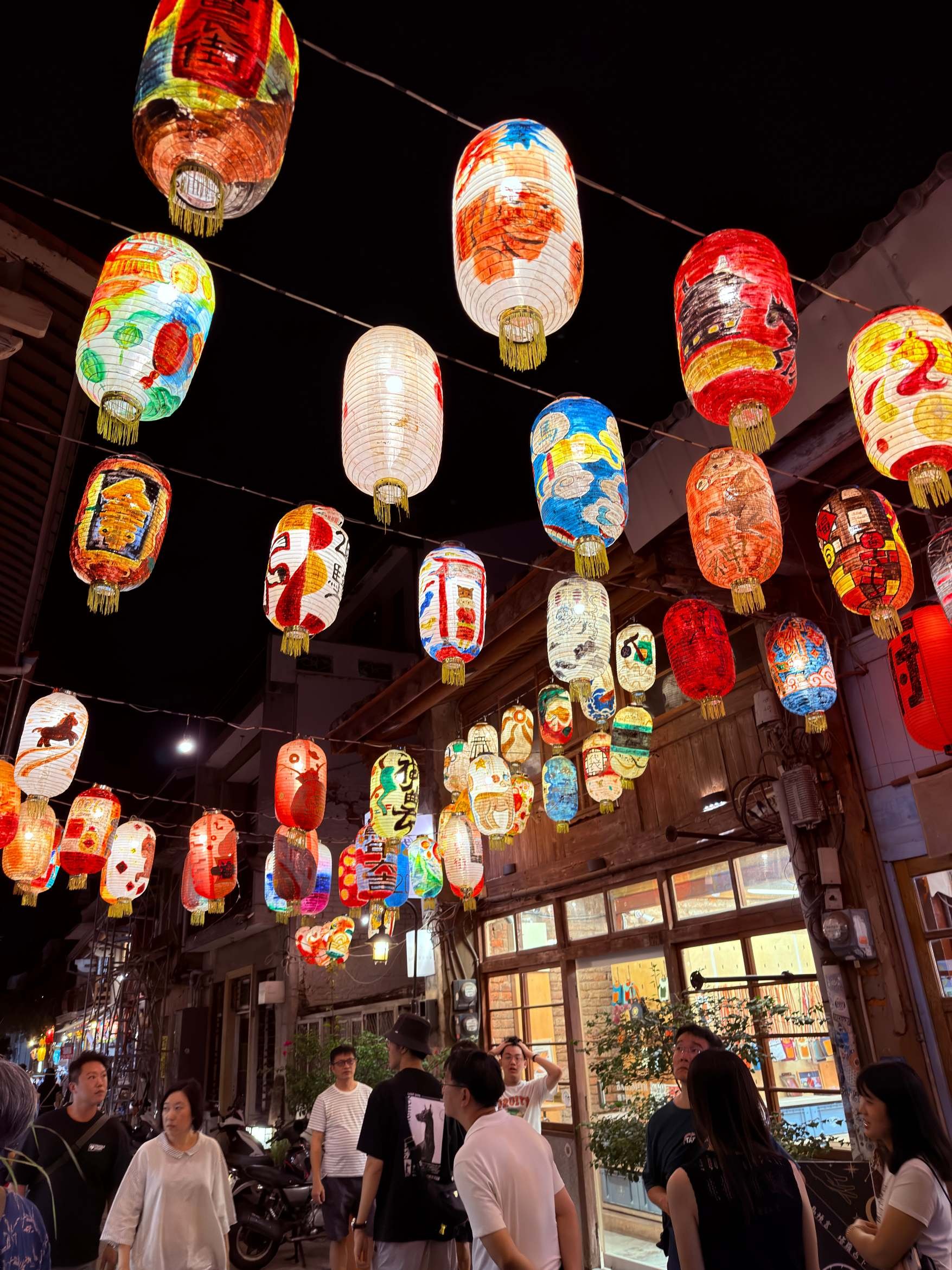
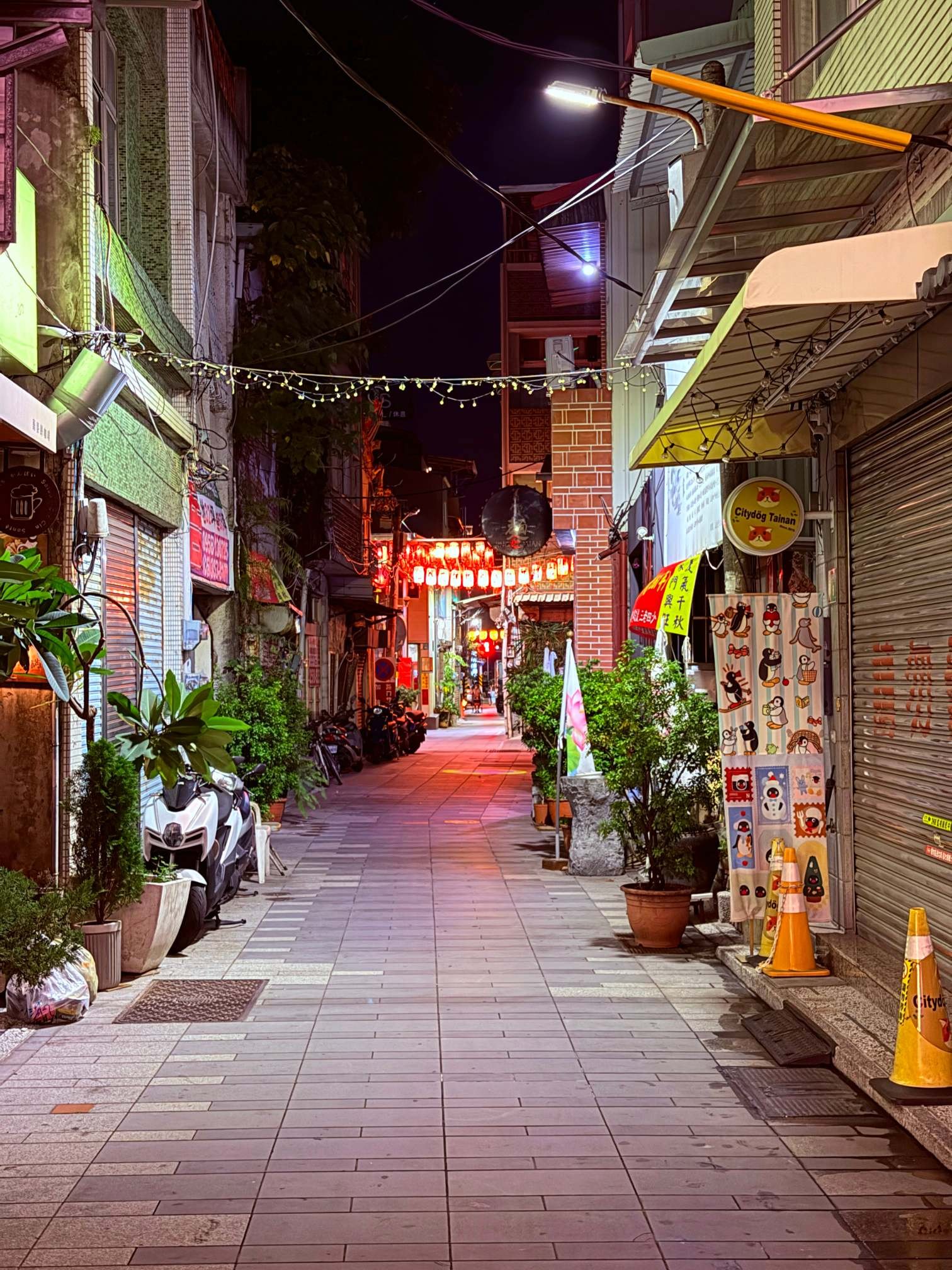
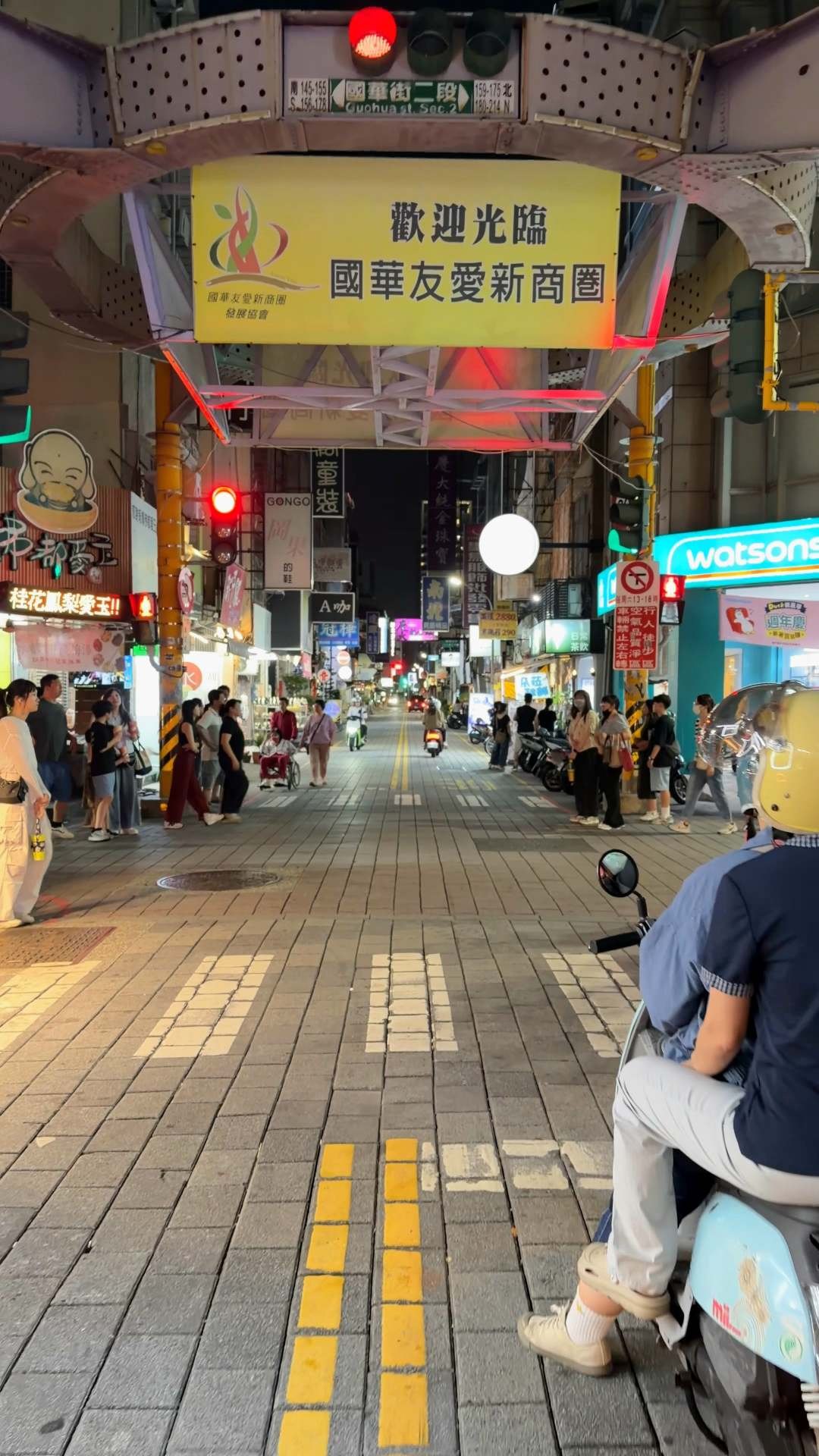
Today, the former merchants’ houses are home to cafés, small shops and a few artisan workshops. We simply enjoy wandering through the peaceful atmosphere before continuing towards Ximen Market. We end the evening by passing Fort Provintia. It is already closed when we arrive, but its illuminated façade gives it a certain presence in the middle of the city.
We immediately like the atmosphere and are curious to see what else Tainan has in store for us.
And since food is one of the main reasons we came, our first evening continues with one of the city’s best-known specialities: danzai noodles. This small bowl of noodles in a light broth, topped with minced meat and a shrimp, is one of Tainan’s signature dishes.
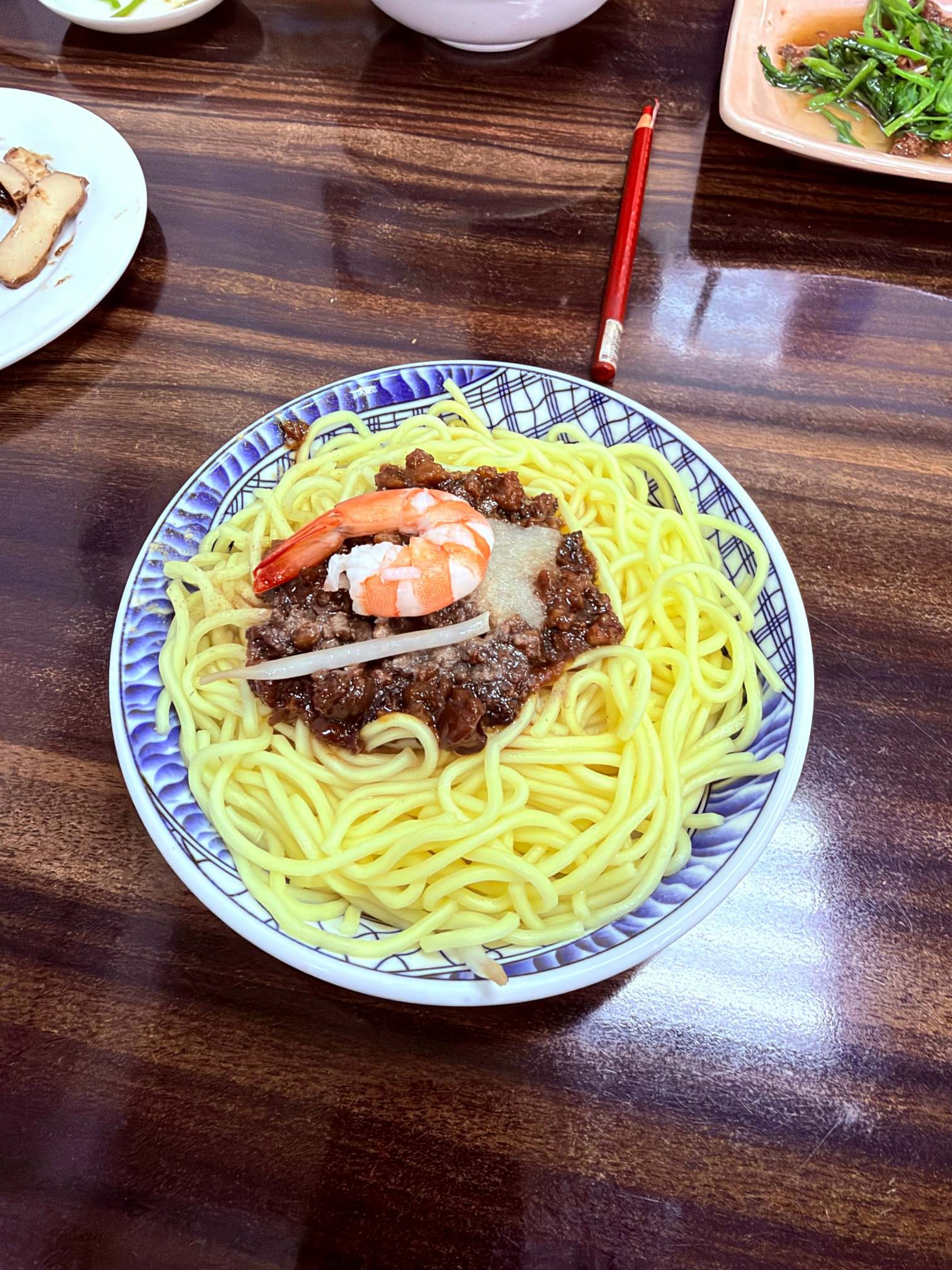
As so often in Taiwan, the restaurant is tiny, has no particular decoration and is full of locals. It is simple, inexpensive and genuinely delicious. We quickly understand why Tainan is so often considered the country’s food capital.
We wander through the streets a little longer before heading back. We are exhausted and, with only one full day ahead of us, the next day is already looking busy.
The next morning, after our jump-rope workout, we stop for coffee at a tiny trailer. We had gone out without our cash and the vendor does not take cards. We tell him we will go back to the hotel to get some money, but he simply hands us the coffees.
“Take them. You can come back and pay later.”
It is such a small gesture, but it perfectly sums up the sense of trust that has struck us in Taiwan. Nobody seems particularly worried about helmets or even keys left on scooters, belongings left unattended or, apparently, two tourists promising to come back and pay for their coffees. Of course, we came back.
We then head to Anping Old Fort, one of the most important sites in Taiwan’s history. This is where the Dutch built Fort Zeelandia in the 17th century, at a time when Anping was one of the island’s main ports and gateways. For a long time, much of Taiwan’s maritime trade and history was shaped in this area.
Because it is Saturday, the neighbourhood is lively. Markets draw visitors, food stalls multiply and plenty of families are out enjoying the weekend. The atmosphere is pleasant and it is easy to understand why the area attracts so many people.
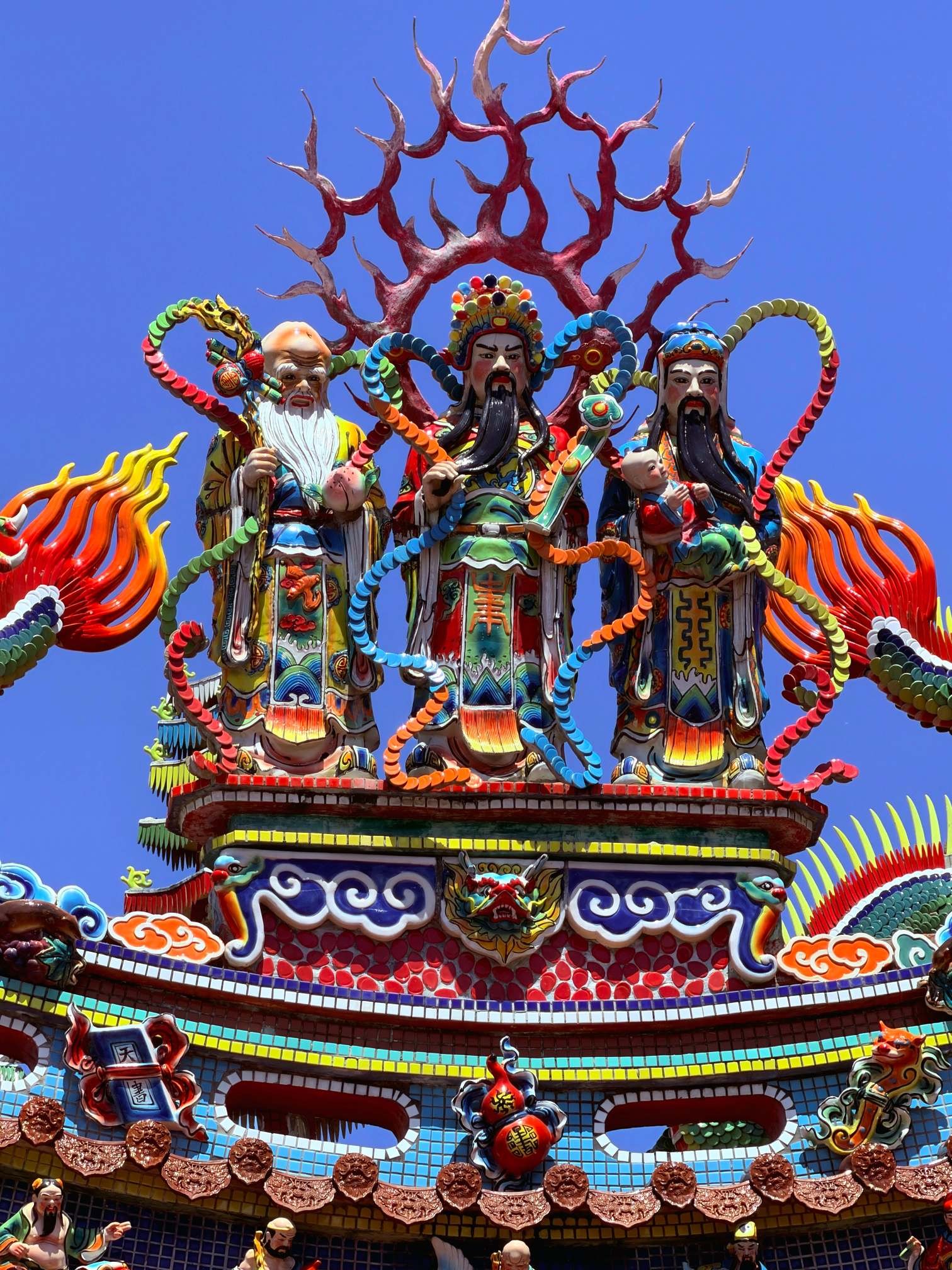
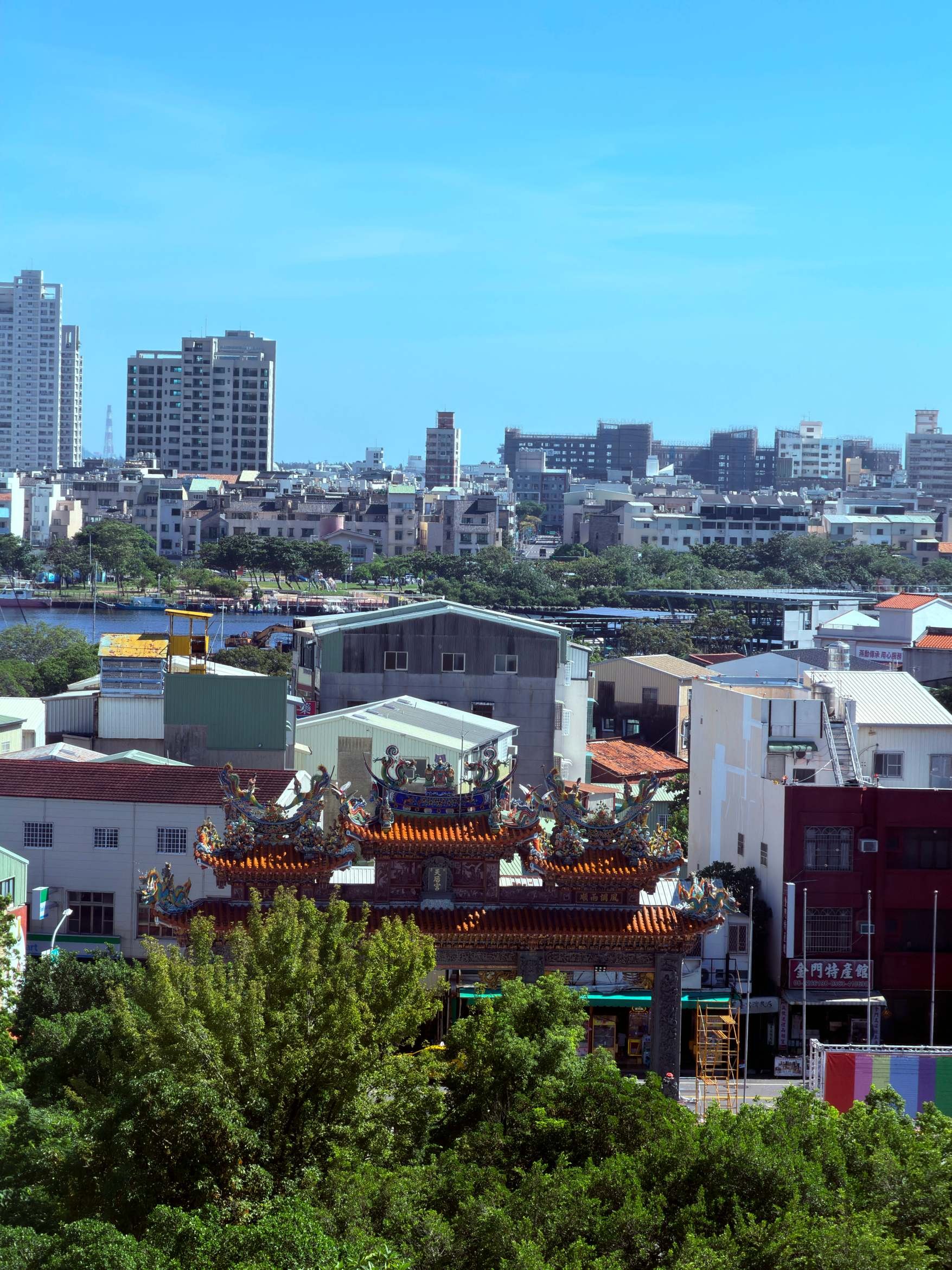
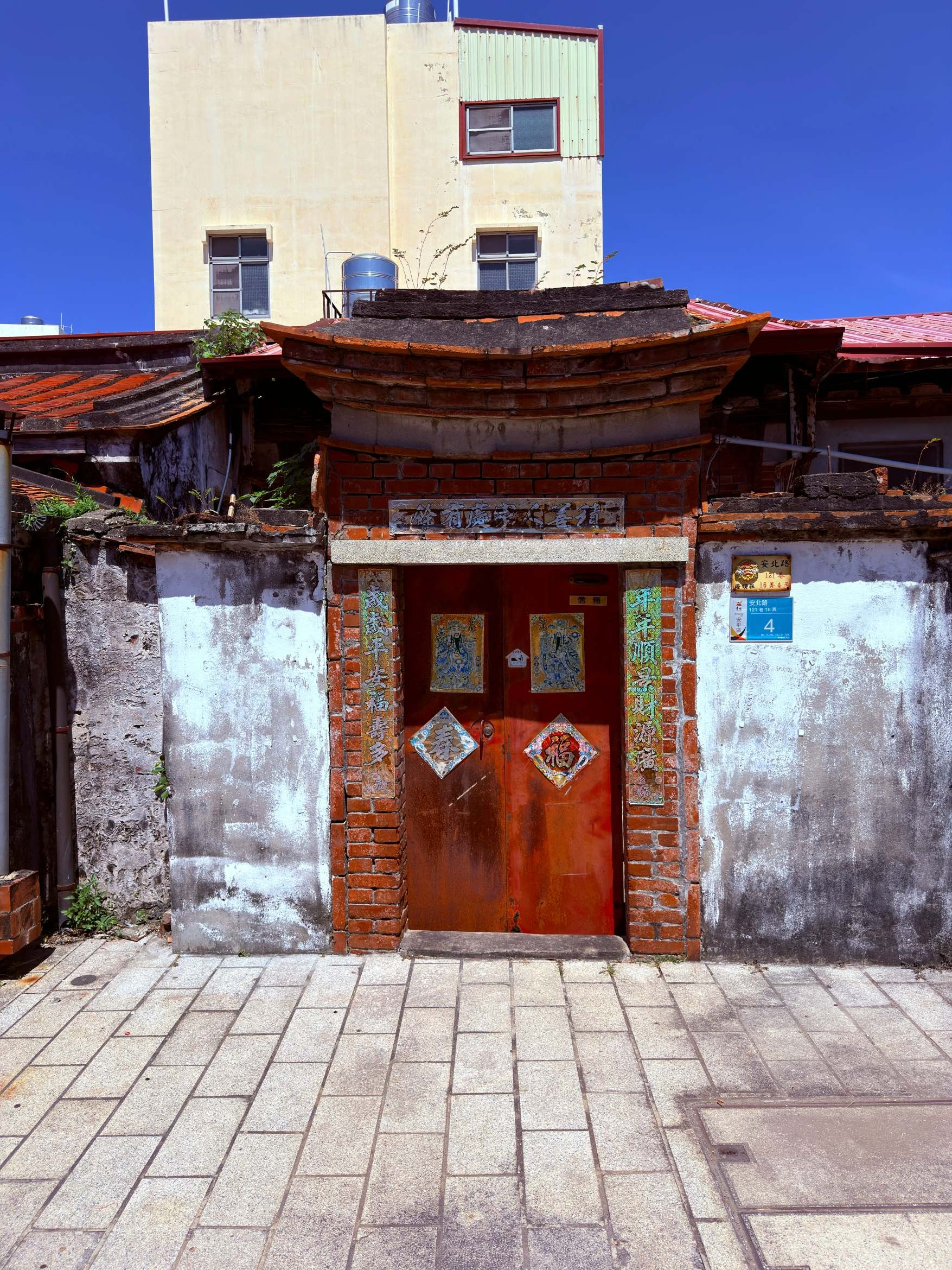
Despite the site’s historical importance, the visit leaves us a little more mixed. A lot of the information is only available in Chinese. We probably could have spent the whole visit pulling out our phones to translate everything, but that simply was not the experience we were looking for that day. As a result, we sometimes feel that we are missing part of the site’s story. We find the visit pleasant, but not much more, even though we completely understand why the place holds such an important position in the city’s history.
Matthieu, meanwhile, continues our food exploration very seriously. He tries milkfish, probably Tainan’s most iconic food product. Farmed around the city for generations, the fish is so closely associated with the region that it appears everywhere: in soup, grilled, fried or served with rice.
He follows it with a bowl of lu rou fan, rice topped with pork slowly braised in a fragrant sauce. You can find it all over Taiwan, but there was no way we were visiting the country’s food capital without ordering it at least once.
By this point, we already feel as though we are spending our entire stay eating. And honestly, that was exactly the plan.
We also make a detour to Blueprint Cultural & Creative Park, a small cultural space set in former residential buildings that have been renovated. It combines cafés, creative shops and art installations. It is a pleasant place, especially for a break or a coffee, and its central location makes it easy to include in a day of sightseeing. But the site itself is relatively small. If we had very limited time in Tainan, it probably would not be our top priority.
As the hours pass, we realise that Tainan is not necessarily winning us over through its attractions. What we like most are its alleys, old façades, temples squeezed between buildings, scooters passing family-run shops and the feeling of a city moving at its own pace. Where Taipei impresses with its energy and modernity, Tainan seems to move differently, more quietly and almost more intimately.
That evening, we head to Garden Night Market. The market is enormous, the stalls seem endless and food is everywhere. Fresh fruit, grilled skewers, seafood, pastries, improbable drinks, giant fried chicken: we barely know where to look.
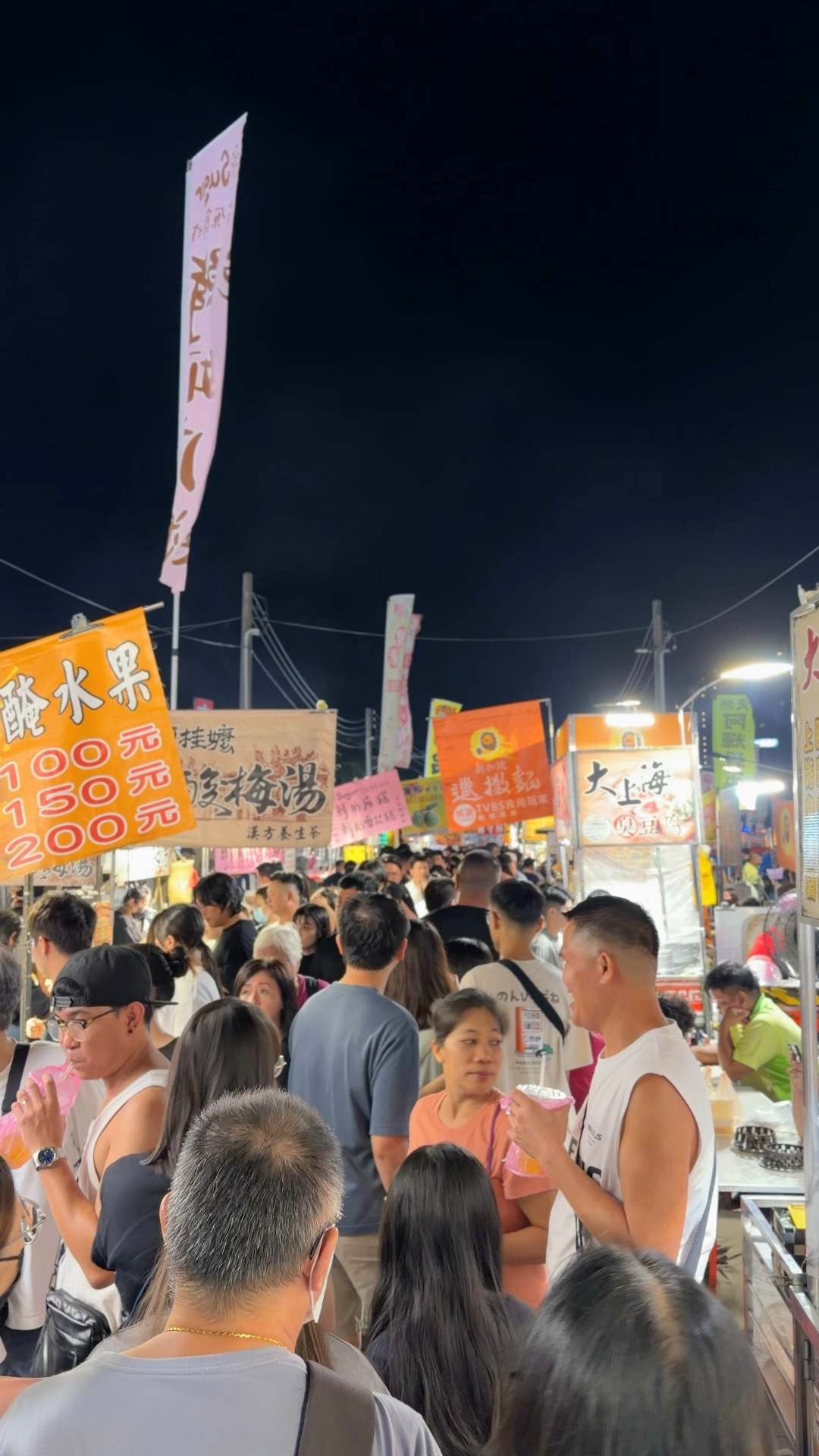
We move slowly through the market, trying whatever catches our eye. It is probably the place that best sums up what Tainan represents for many locals: a city people come to eat in just as much as to sightsee.
After thoroughly filling our stomachs, we decide to discover the local gay scene. The first bar we try does not keep us for very long, so we move on to a second place. Once inside, someone explains the concept for the night: NT$700 for unlimited drinks, 600 in boxers and 500 in briefs.
And that is how, a few minutes later, Matthieu ends up in briefs, Sébastien in boxers, and our getaway in Taiwan’s food capital takes a direction we definitely had not expected.
Once we are rid of our trousers, we order a few drinks and spend a while simply talking to each other, until several locals come over and ask why we are only talking among ourselves.
At first, the question surprises us a little. Between the language barrier and our own habits, it simply had not occurred to us to walk over and sit down at a table of strangers. But here, that seems perfectly normal, and as the evening goes on, the conversations multiply. We are the only Western foreigners in the bar and everyone wants to know what brought us to Tainan, what we think of Taiwan and which parts of the country we have already visited.
A few gin and tonics later, we mainly realise that we are experiencing exactly the kind of moment we love when travelling: something completely unplanned that allows us to meet people we probably never would have crossed paths with otherwise.
In the end, the evening reminds us a little of the coffee that morning. A few hours earlier, a stranger had trusted us enough to let us leave without paying. That night, other strangers spontaneously came over, sat with us and told us about their lives. Two completely different scenes that nevertheless sum up rather well what we loved so much about Taiwan: the trust and how easy it can be to connect with people.
The next day, it is already time to leave. Two nights, one full day, a lot of food and an evening we could never have planned.
We came to Tainan for its food.
And our foodie getaway ended with no trousers.
In the end, even in one of Taiwan’s greatest food cities, the best memory does not always arrive on a plate.