“Ah, the happy ending here is basically part of the standard service.”
Matthieu’s eyes widen.
“So, did you already know how to give massages before?”
“Oh no, I had to learn that. Actually, that was the hardest part. Massaging was the only thing I didn’t know how to do.”
We are sitting on a terrace around Red House, in the heart of Ximending, and for the past few minutes our French waiter has been telling us how he ended up becoming both a waiter and a massage therapist in Taipei. A few months earlier, he was already living here and working in marketing. Then he got fired. The bills still had to be paid, so he found this part-time waiting job and, on the side, started giving massages.
At that point, Sébastien happens to be asking himself quite a few questions about his own professional future. Needless to say, this conversation opens up some rather unexpected possibilities.
But two days earlier, before we had even put our bags down, we already knew we were going to like Taipei. There are cities you have never visited, yet somehow you are almost certain you will feel good there. Taipei was exactly that.
We arrive in the afternoon and discover our hotel in Ximending. After six months of travelling, what we have mainly learned is to adjust our expectations depending on the destination, the prices and how much time we actually spend in our accommodation. The room is nothing special, the cleanliness could be better, and we soon discover that we are sharing the walls and ceiling with a rat that scratches away intermittently, day and night. But the hotel is very well located, inexpensive and, at this point in the trip, it does the job perfectly well.
Something else surprises us in the bathroom: no little toothbrush, no miniature toothpaste and no collection of tiny disposable products like you still find in so many hotels. And this time, it is not simply our hotel cutting costs. Since January 2025, accommodation providers in Taiwan are no longer supposed to automatically provide several single-use toiletries, including toothbrushes, toothpaste, combs and razors. Small individual bottles of shampoo, conditioner, shower gel and lotion have also been replaced by larger containers. If you forget something, some items can still be requested from the hotel.
At first, it can seem slightly inconvenient. Then we realise we absolutely love the idea. When you think about the number of little toothbrushes, tubes and bottles that get used once and then go straight into the bin, the real question is why this is not already the norm everywhere. So yes, there are a few fewer things lined up in the bathroom. And honestly, who cares?
We drop our bags and head straight back out.
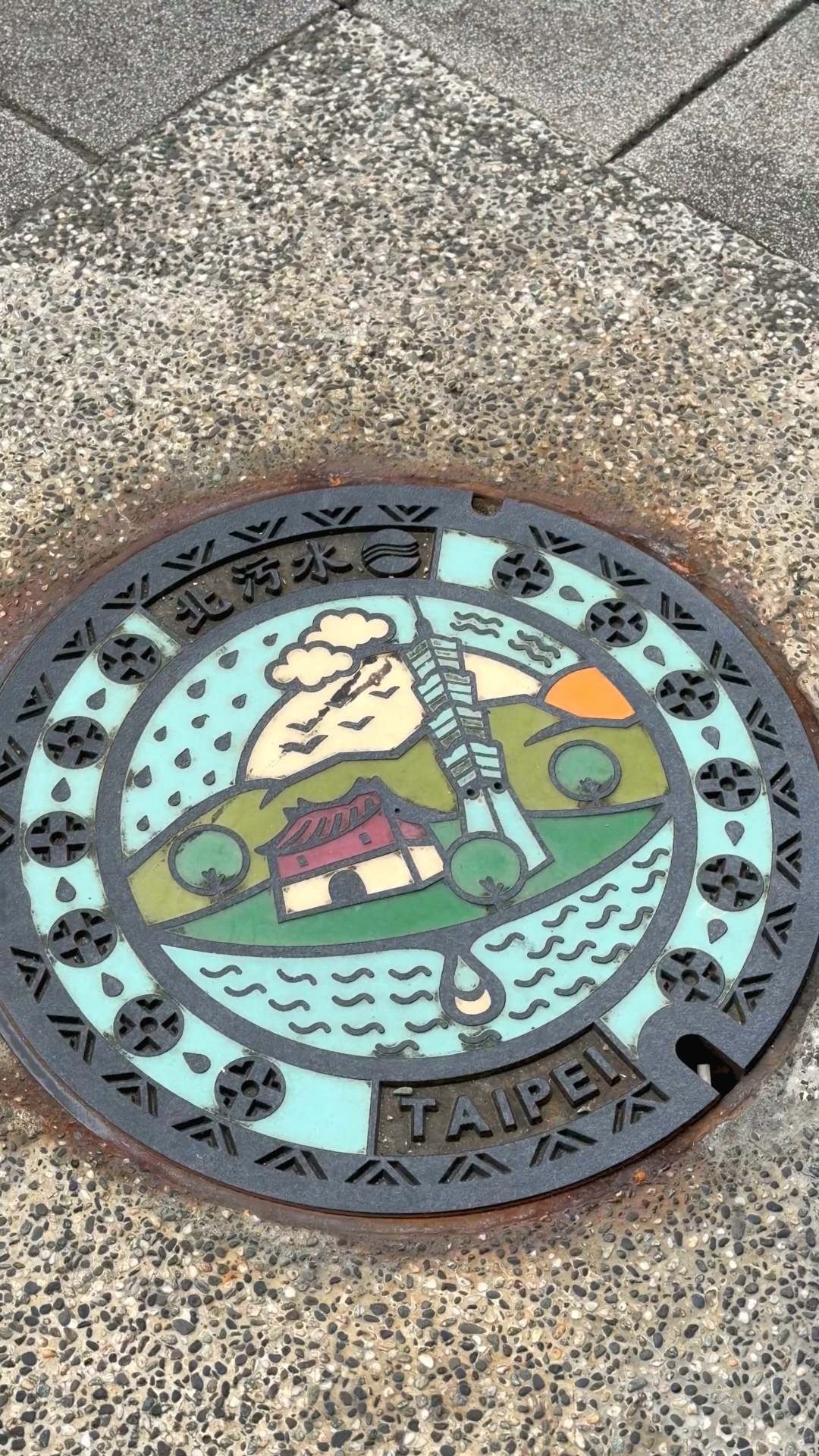
Ximending is one of Taipei’s liveliest neighbourhoods, with pedestrian streets, screens, restaurants and shops. A few streets away, around Red House, a huge rainbow is painted on the ground and several terraces are home to the area’s LGBT bars.
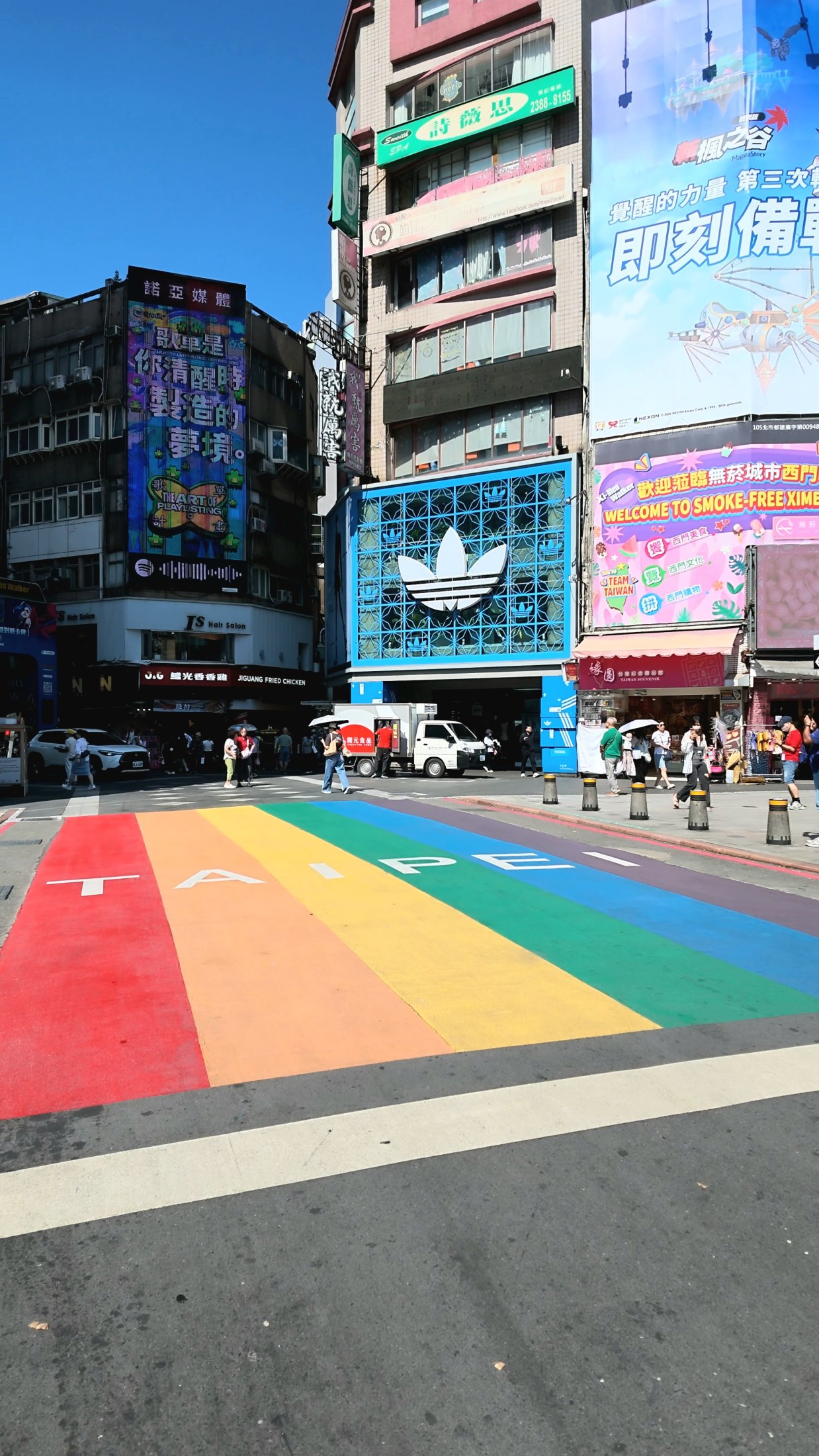
Very quickly, what strikes us most is how natural everything feels. Male couples hug, kiss and simply enjoy their evening, and nobody seems to pay the slightest attention. Being able to do the same without wondering who might be watching feels incredibly good for us too. We immediately feel right at home.
During our first few days, we also discover just how easy Taipei is to get around. Between the metro, buses and YouBike shared bicycles, moving from one neighbourhood to another is simple, and we quickly learn to adapt our route depending on the situation.
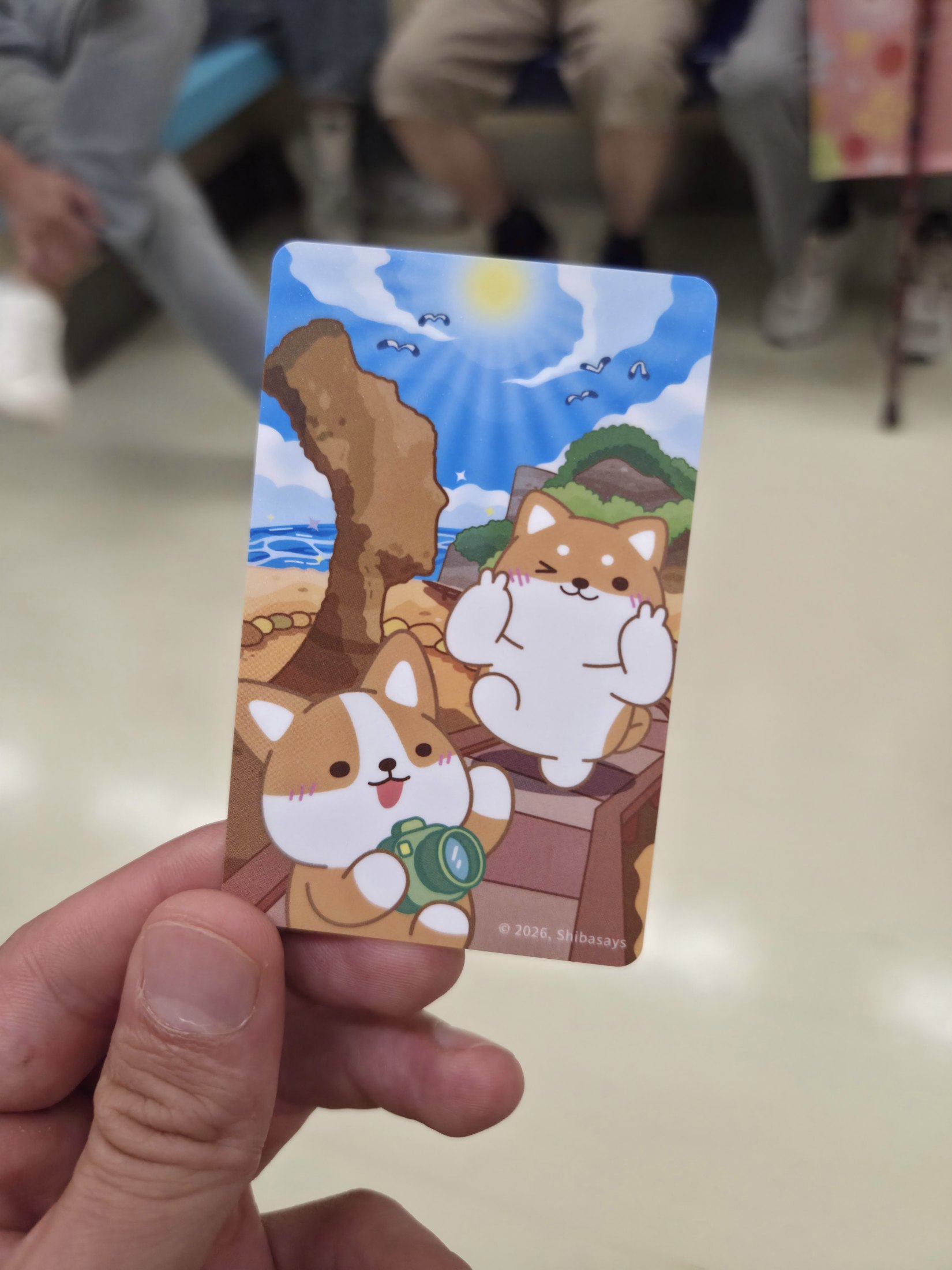
The EasyCard soon becomes our best ally. It lets us pay for public transport, but also for some everyday purchases in convenience stores and other shops. In Taipei, it even comes in the form of sometimes rather improbable collectible objects inspired by characters, popular franchises or everyday items. We quickly realise that some people collect them almost as much as they actually use them. We also use YouBike, the city’s bike-sharing system, a lot. Very often, our winning combination is simply to alternate between metro, bus and bicycle depending on where we want to go.
The next day, after a first evening that ended fairly late, we decide that the last thing we want is to turn our seven days in Taipei into a marathon. So we head to Dadaocheng and Dihua Street, an old trading district where historic façades now house tea shops, traditional businesses, little cafés and much more design-focused addresses. It is slightly hipster, very pleasant and perfectly suited to our energy level that day.
That evening, we return to Ximending and arrive at the exact scene from the beginning, with our French waiter and his rather unexpected career change. After a few drinks, we end up at Cosma, a club where the crowd feels very local. That night, everyone mostly stays with their own group and we simply enjoy the evening. The real encounters will come a few days later.
The next day inevitably starts later than planned. We try Lao Shan Dong Homemade Noodles, a Ximending restaurant recognised with a Michelin Bib Gourmand. The noodles are handmade, the food is very good and genuinely affordable, even if it will not exactly be the culinary revelation of our trip.
We continue to Longshan Temple, and the change of atmosphere is immediate. The temple is full of colour, lanterns, dragons and incense, but what we like most is discovering that it is very much still in use. Around us, worshippers pray, leave offerings and move between the altars. Longshan blends Buddhist and Taoist traditions with folk beliefs, which also explains the feeling that something is happening everywhere at once.
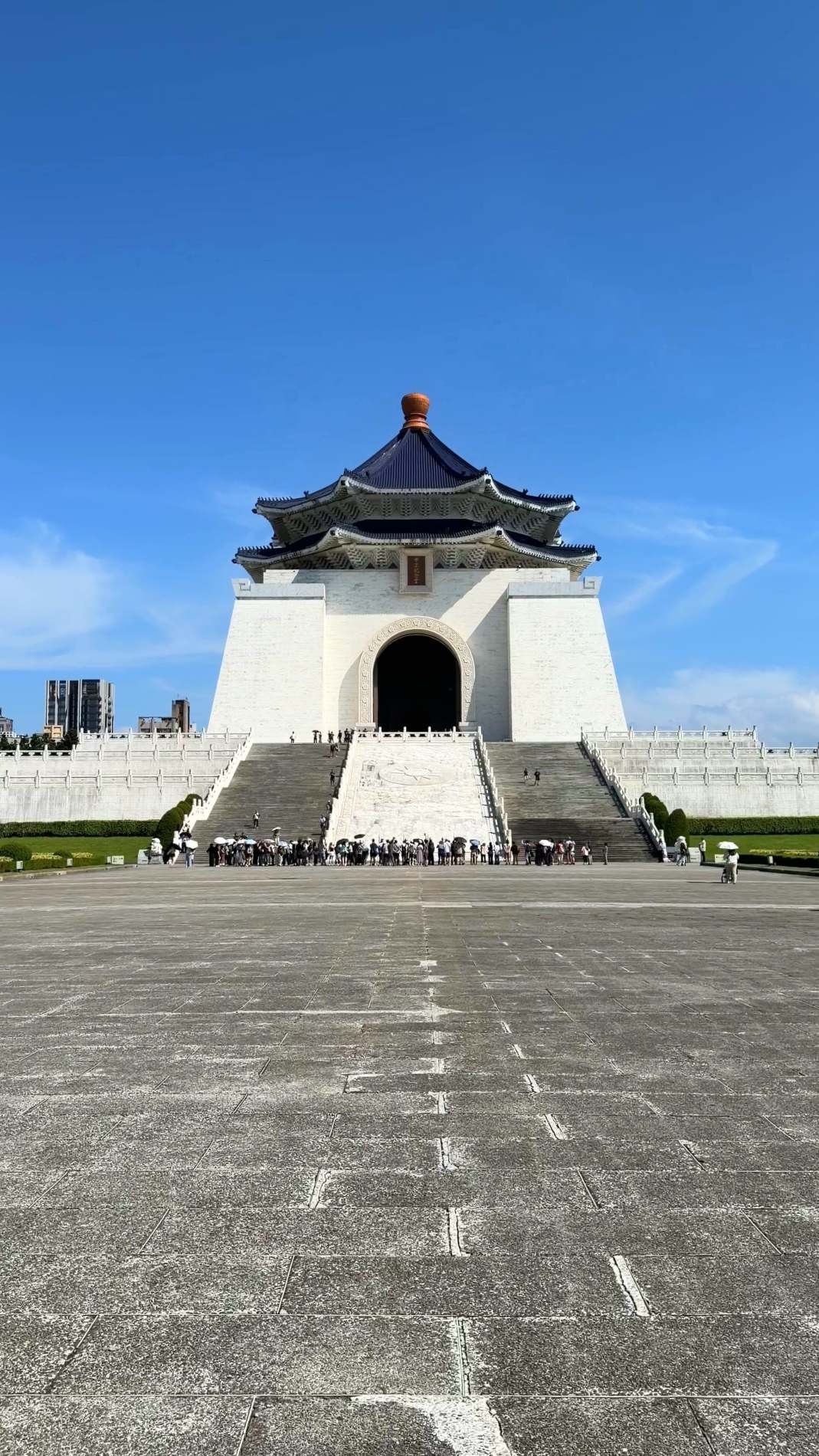
We also discover Chiang Kai-shek Memorial Hall, the huge white-and-blue complex overlooking a monumental square. Beyond the architecture, the exhibitions also address a much more complex part of Taiwan’s recent history and the country’s evolution over the past few decades. In the end, that is what makes the visit much more interesting than we expected.
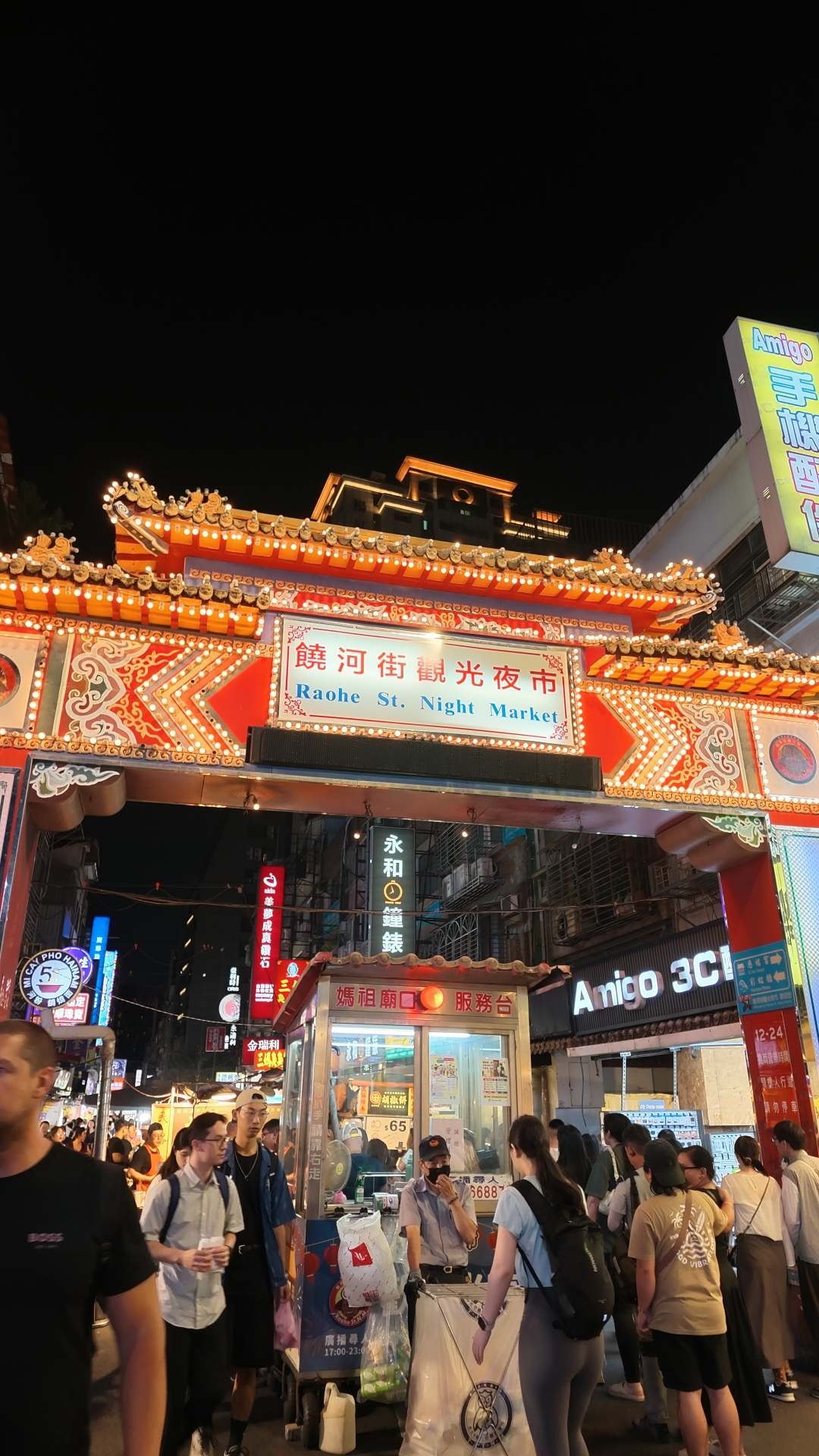
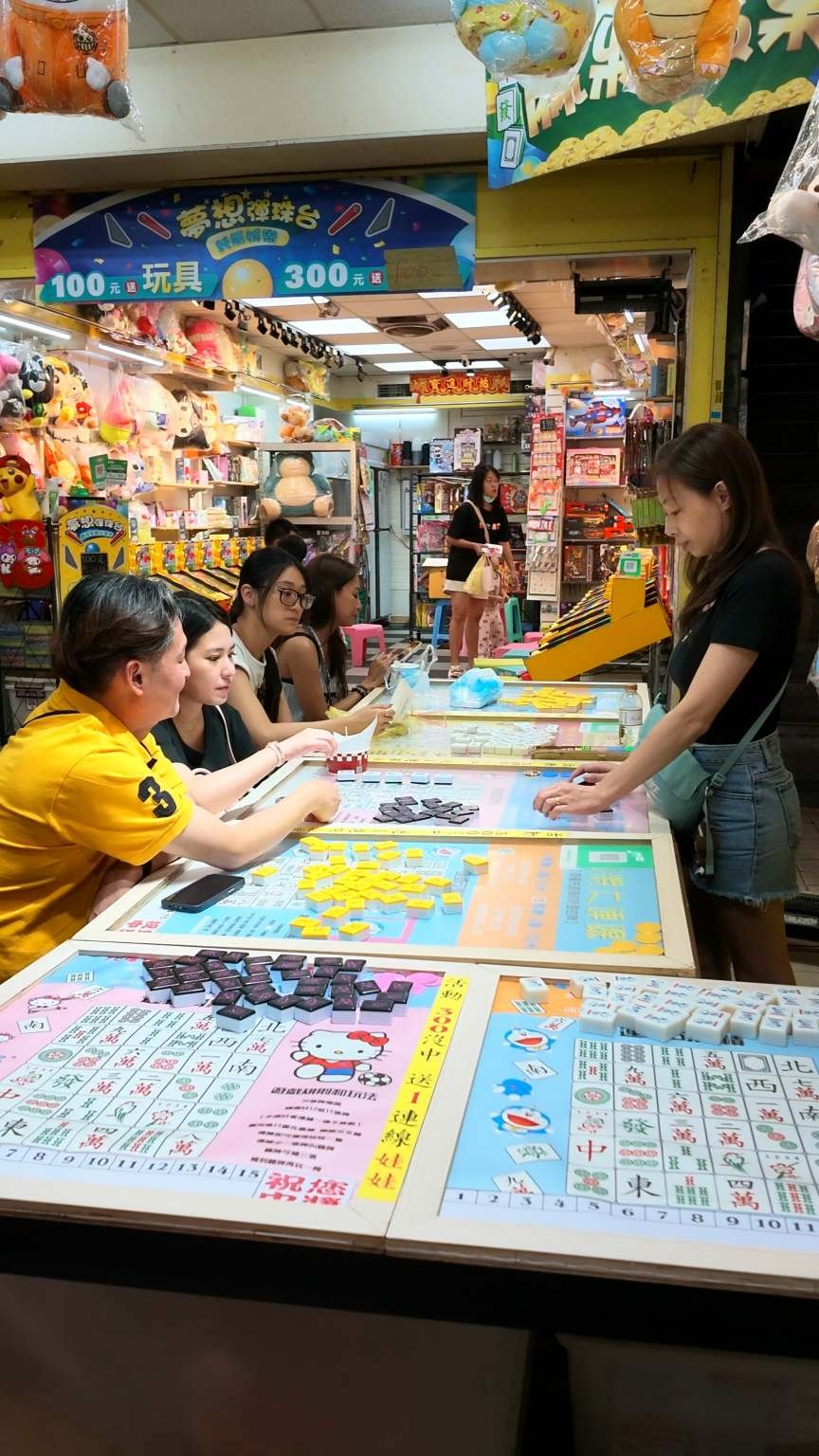
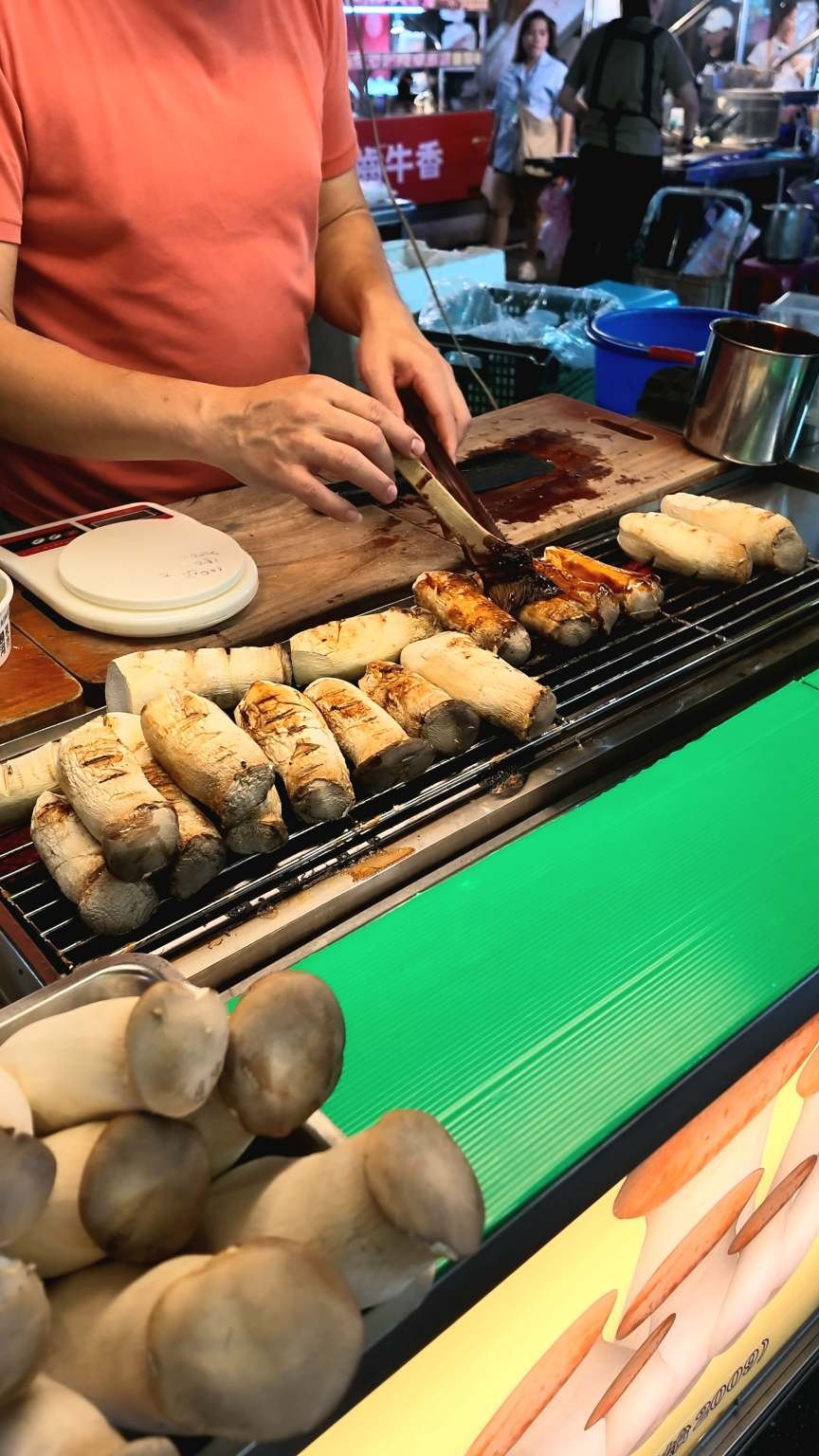
That evening, we find a completely different Taipei in one of its night markets. There are crowds, signs everywhere and, above all, an enormous amount of food. We try some huge grilled mushrooms that instantly become one of our favourite snacks, followed by the famous Taiwanese ice cream roll: a thin crepe wrapped around ice cream and shavings of peanut brittle.
On paper, some combinations can sound slightly questionable. In reality, they work far too well. And in Taipei, food quickly becomes an activity in itself. Restaurants, little local eateries, food stalls or night markets: we regularly start thinking about our next meal when we have barely finished the previous one.
A few days later, we head to Xinyi, the Taipei of skyscrapers and, of course, Taipei 101.
We want to go up the tower, but not necessarily pay for the classic observatory. We have found another solution: having a coffee at Simple Kaffa Sola, on the 88th floor. For around NT$250 per drink at the time of our visit, we get a huge view over Taipei with practically nobody around us. For us, the calculation is pretty simple.
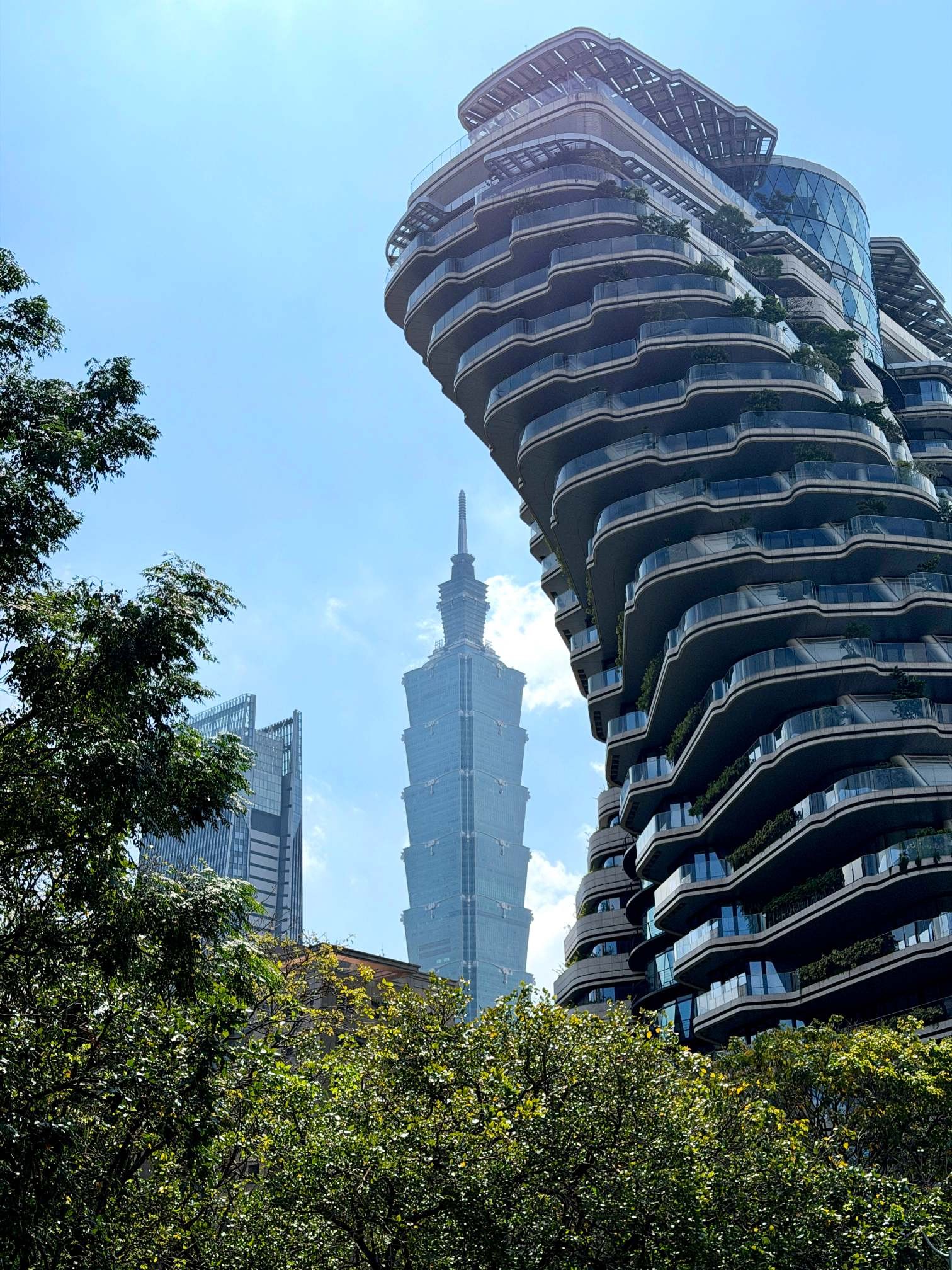
Back at street level, we also spot Tao Zhu Yin Yuan, the rather incredible tower designed by Belgian architect Vincent Callebaut. The floors gradually rotate around the building, creating the impression of a gigantic plant-covered double helix. Naturally, we spend quite a while looking for the right angle to photograph it with Taipei 101.
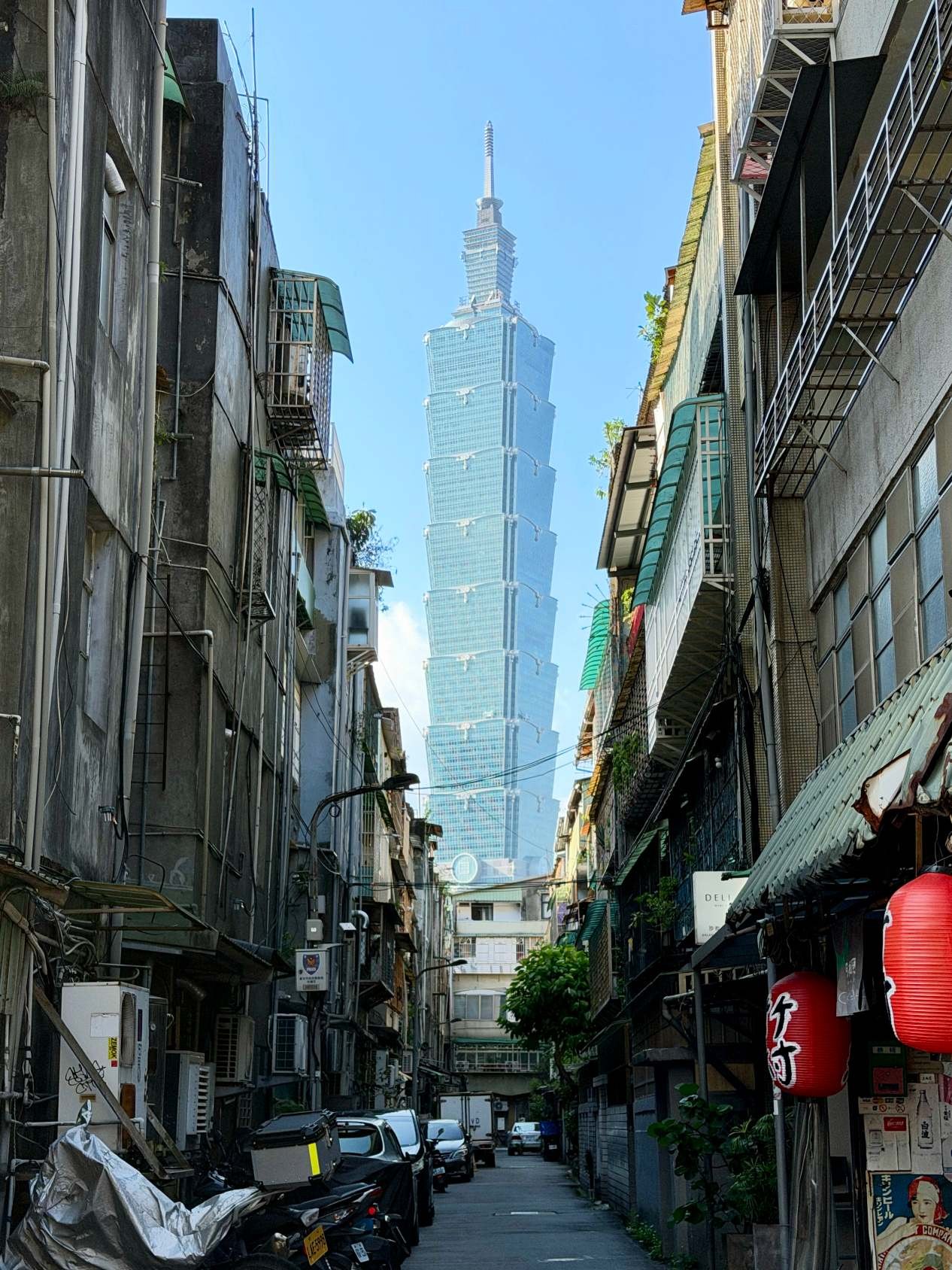
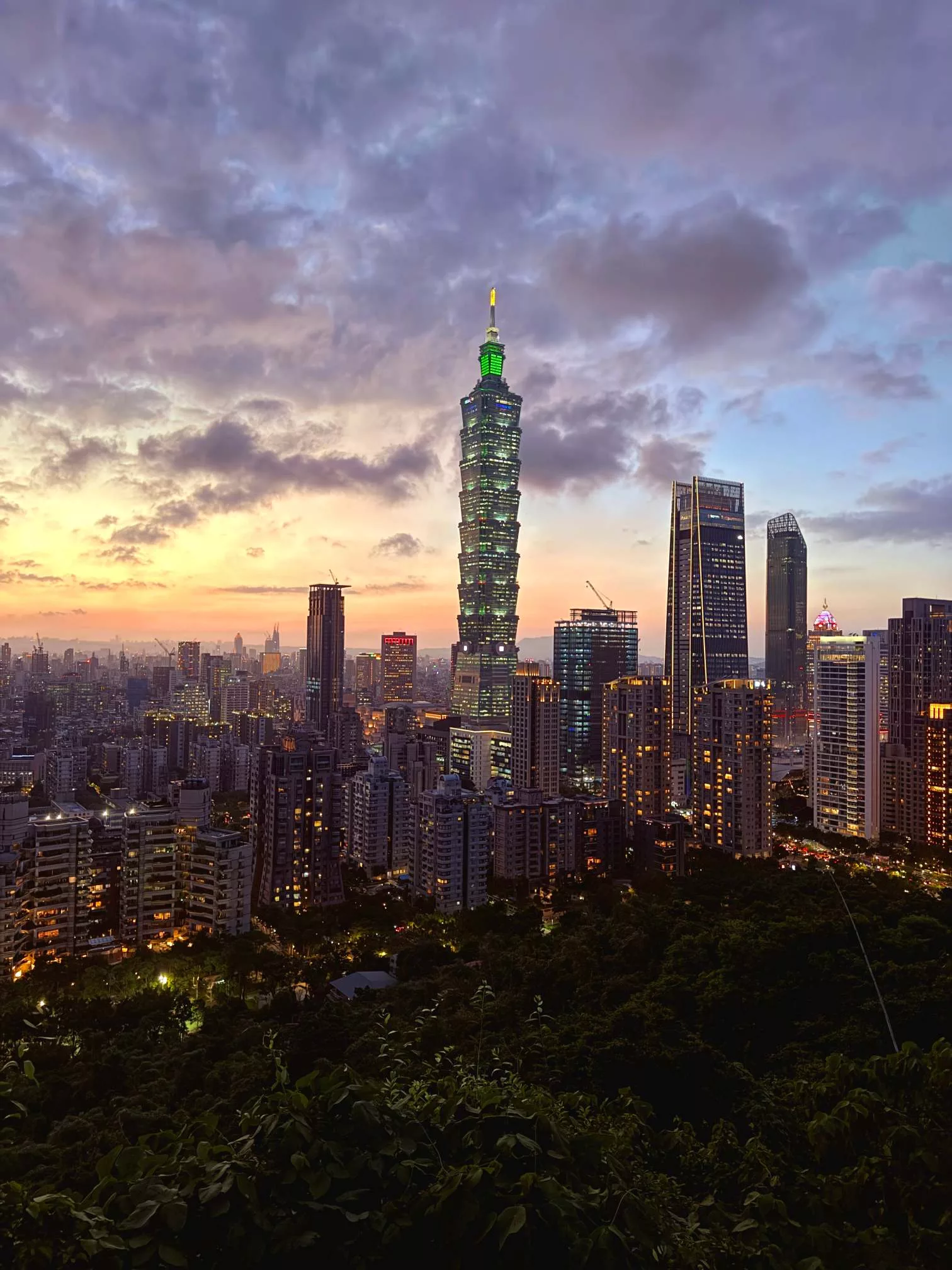
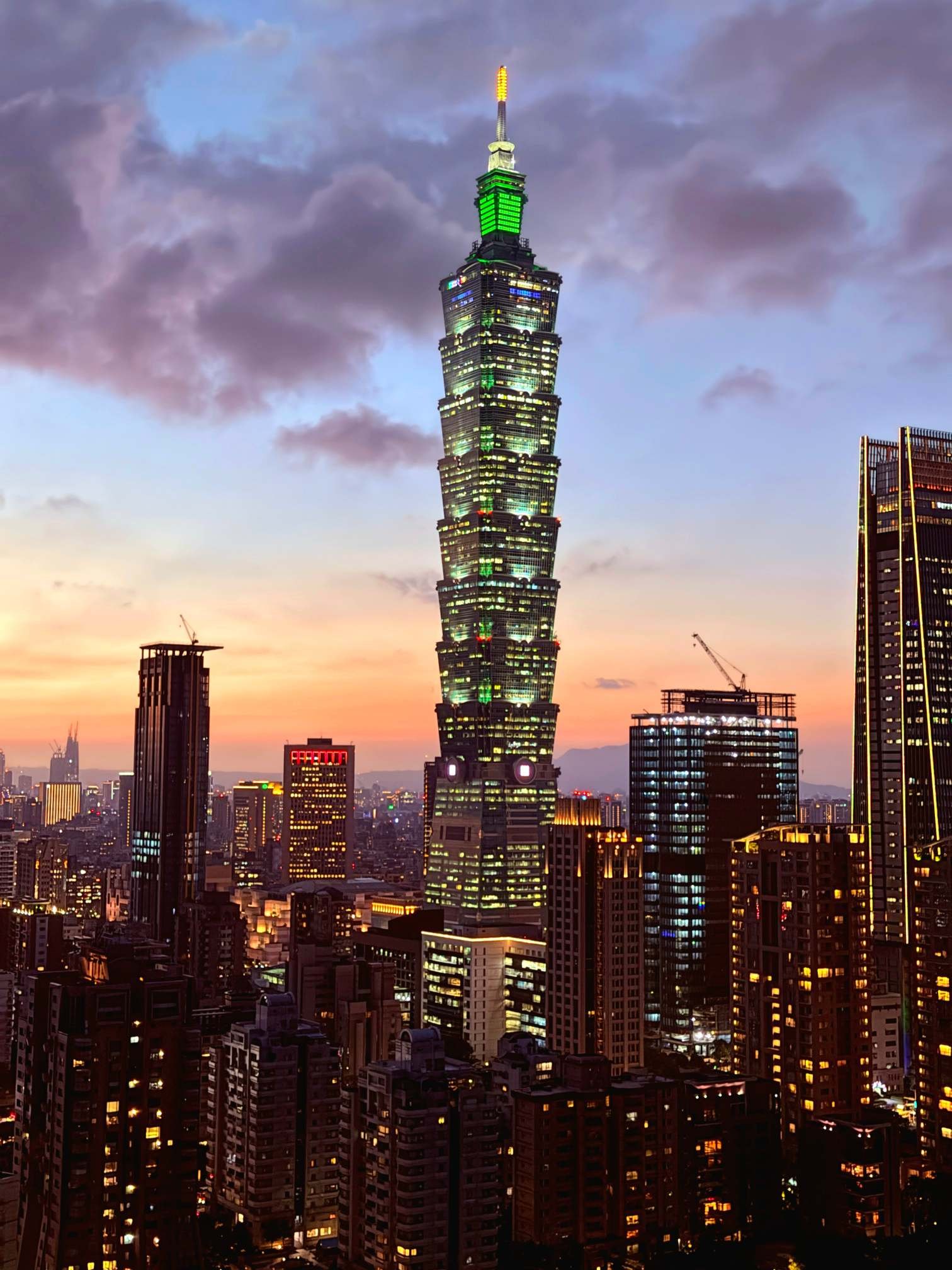
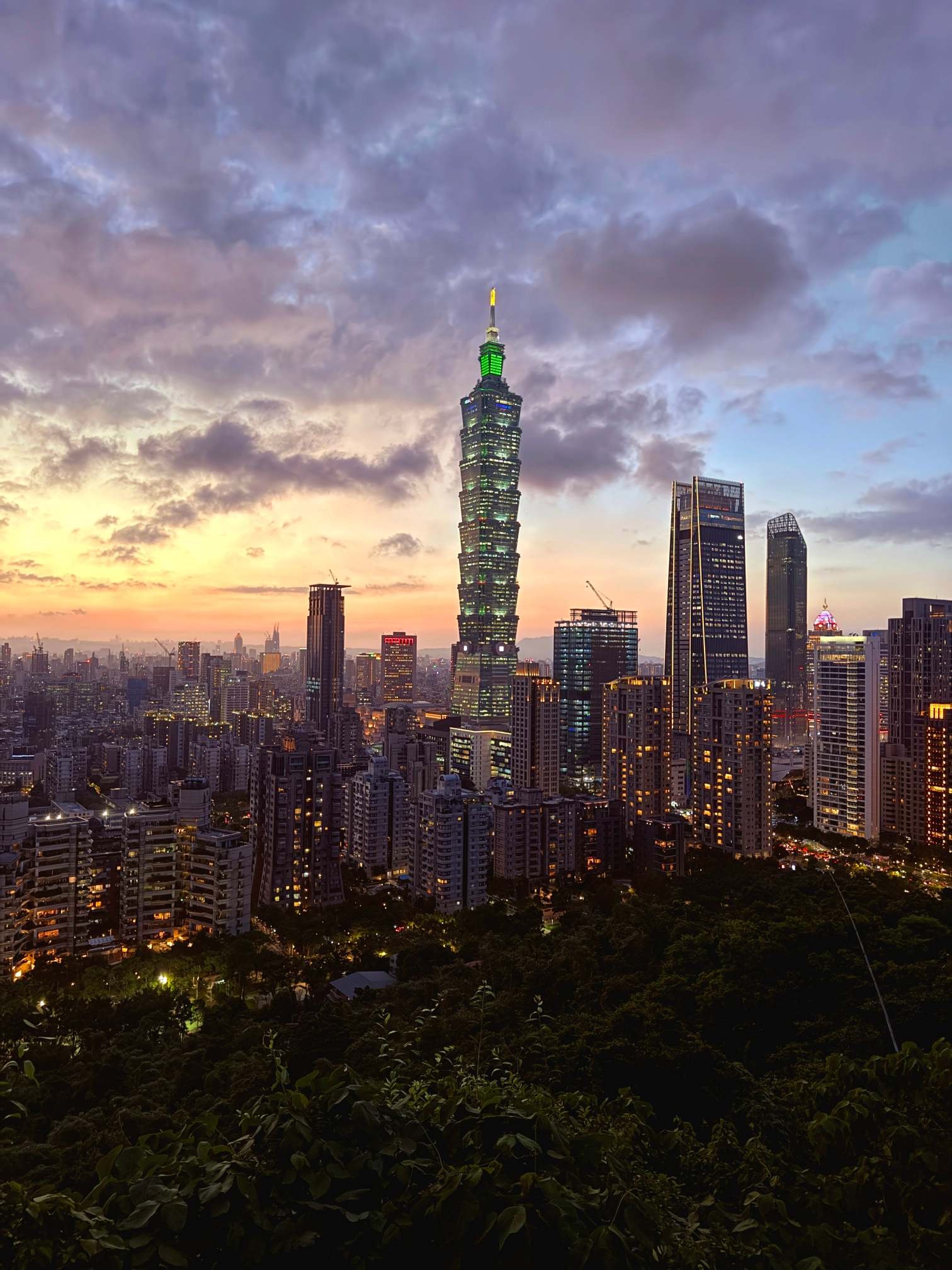
We finish the day at Elephant Mountain. Here, they call it a trail. For us, it is mostly a short climb with a lot of stairs, but within a few dozen minutes Taipei 101 appears above the whole city with the mountains in the background.
We like the view so much that we immediately make ourselves a promise: we will come back for our final sunset.
A quieter day then takes us to the National Palace Museum. There, we mainly discover a part of Chinese and Taiwanese history that we ultimately knew surprisingly little about, surrounded by an enormous collection of imperial objects.
But obviously, the thing we will remember best is a piece of pork belly.
Well, almost.
The famous Meat-shaped Stone is a piece of jasper worked to reproduce the appearance of braised pork, right down to the different layers and tiny pores in the skin. It is one of the museum’s iconic pieces, and we find it pretty wonderful that in the middle of thousands of historic treasures, everyone ends up gathered around a rock that looks like a piece of meat.
For our big day outside Taipei, we then head to Shifen.
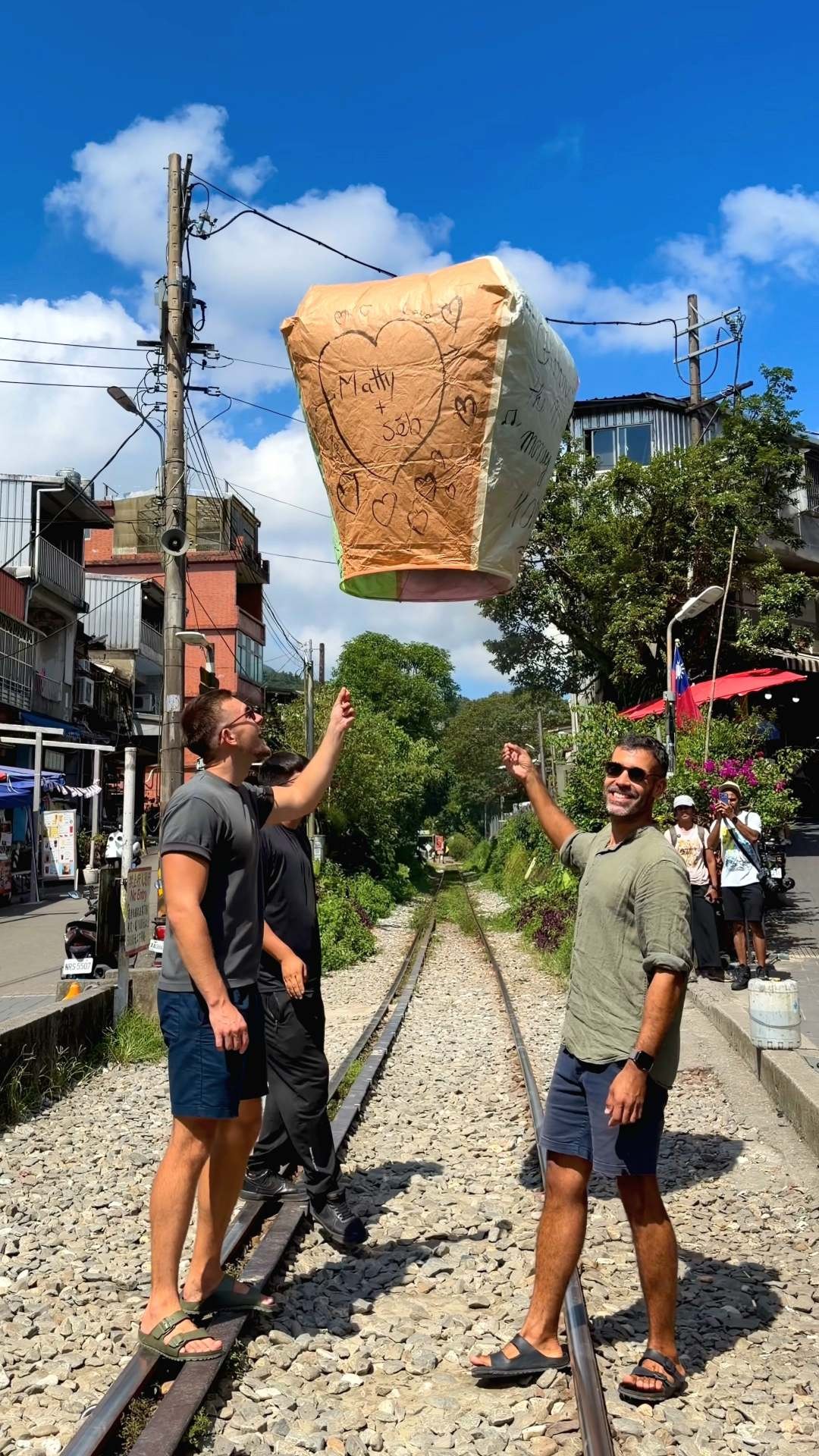
The railway runs directly through the village’s main street. When the train arrives, everyone moves aside, and just a few seconds after it has passed, visitors and shopkeepers calmly take over the tracks again.
This is where people mainly come to release sky lanterns. You choose the colours according to the type of wishes you want to make, write on the different sides, then the lantern is lit and released from the tracks.
It costs NT$250 and we love the experience. So much that we do it twice. We could pretend it was because we wanted more wishes. The photos probably played a small part too.
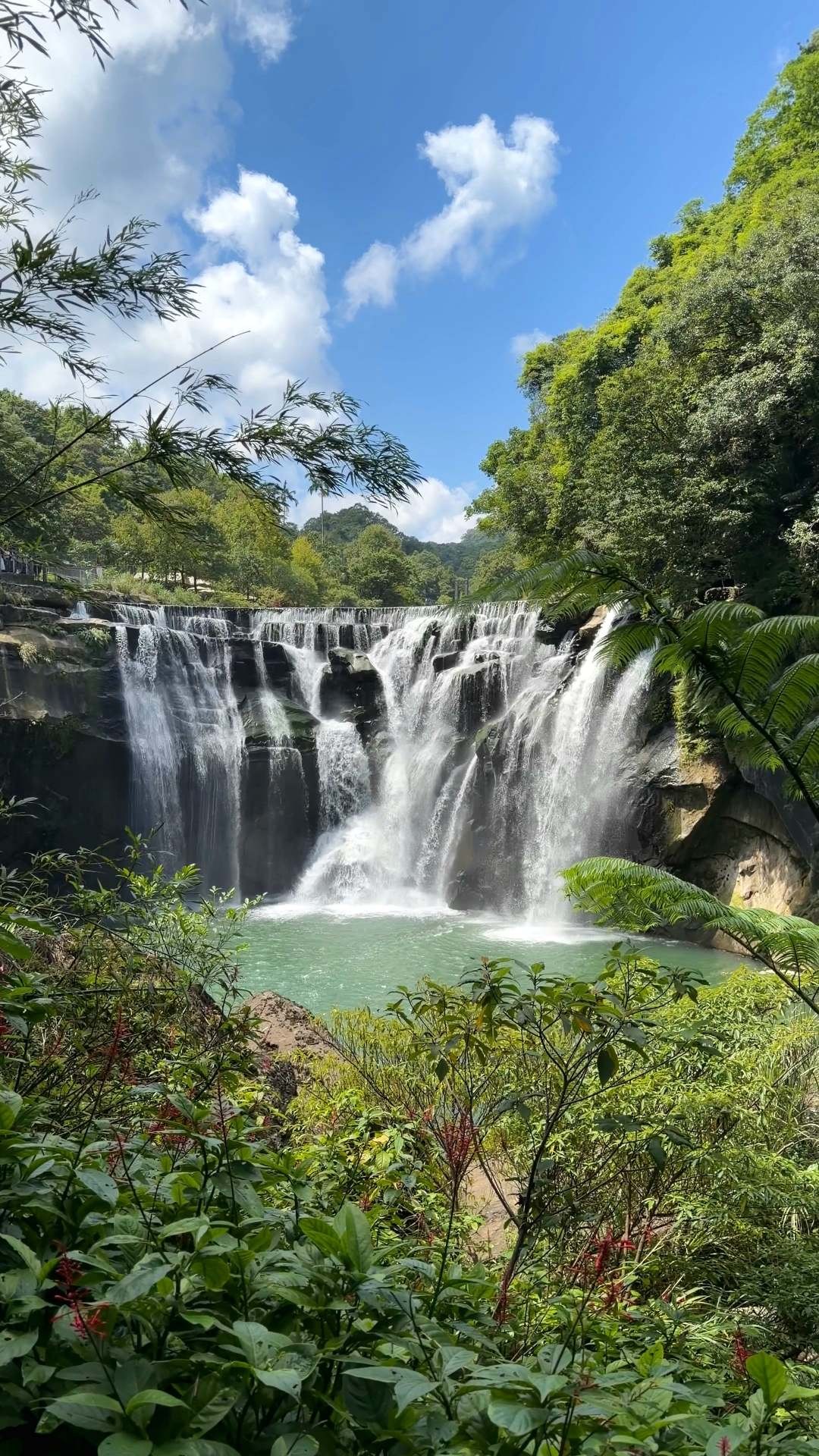
After the lanterns, we continue to Shifen Waterfall. From the village, a short walk of around fifteen minutes takes you to the waterfall along the river and across several footbridges surrounded by vegetation. The walk is already enjoyable in itself. The waterfall is wide, surrounded by greenery and well worth the detour before continuing the day, even if it is not necessarily somewhere we would spend hours.
We then continue to Jiufen, where the atmosphere could not be more different.
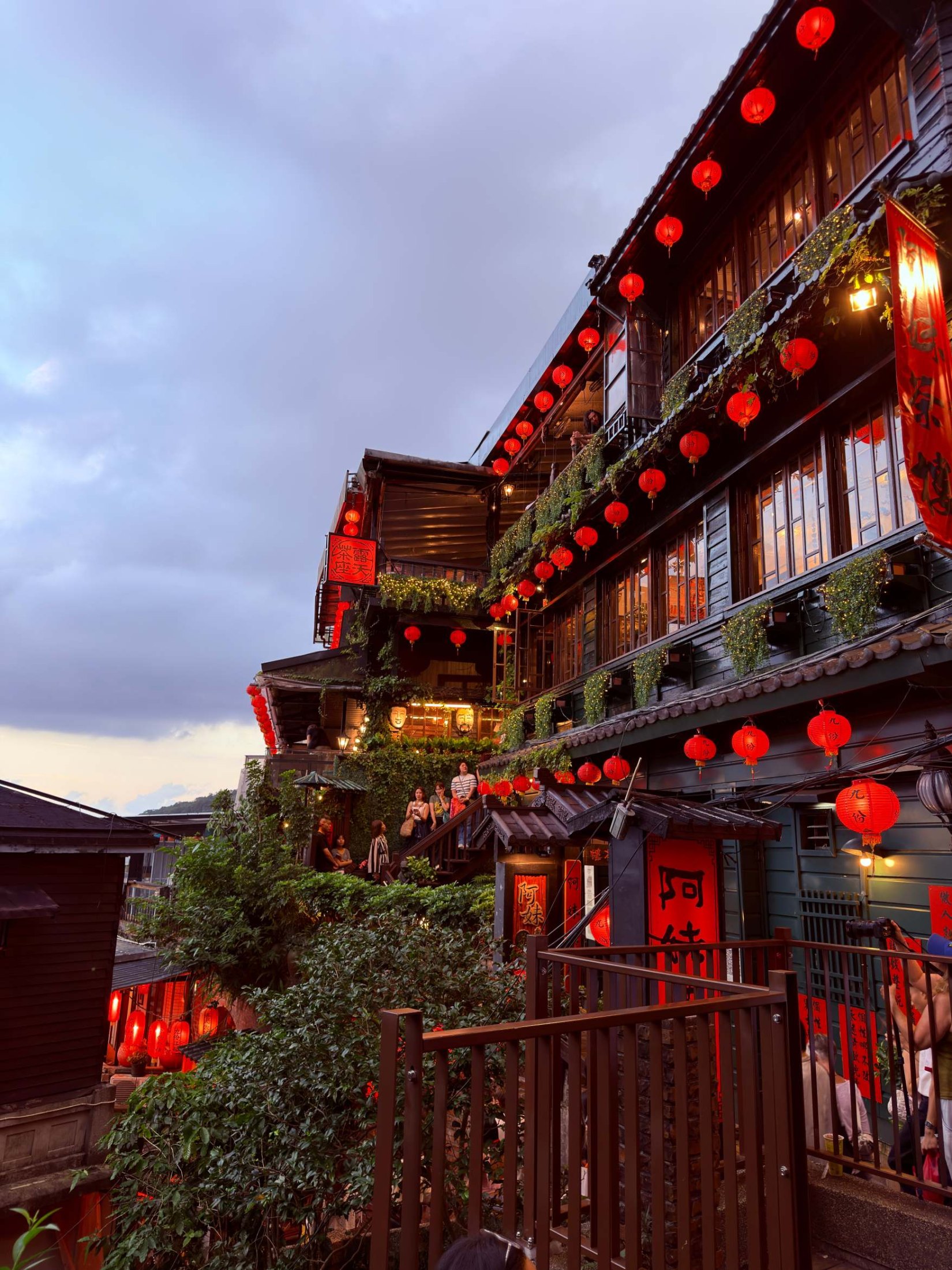
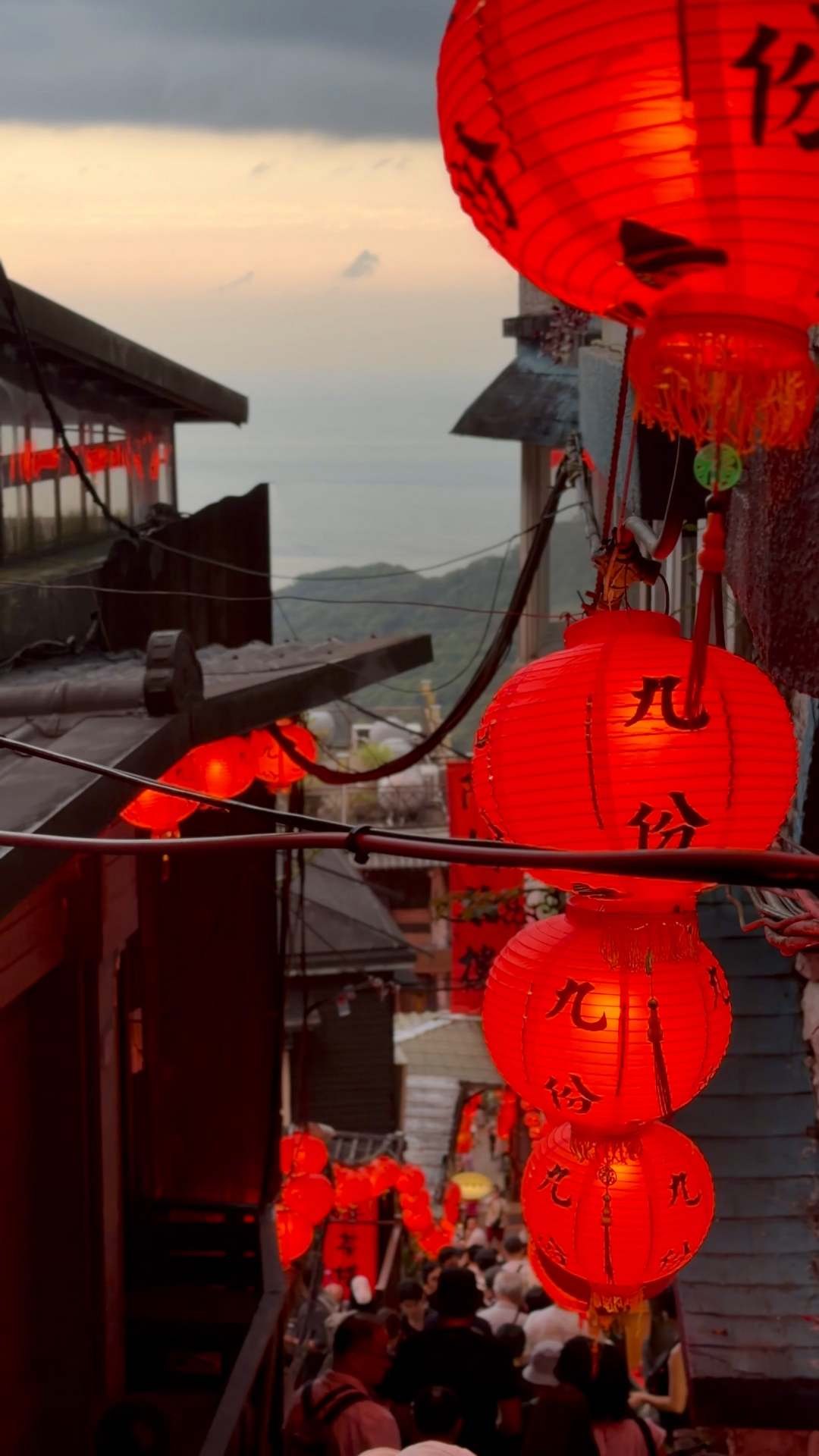
The village clings to the mountainside, with narrow alleys, plenty of stairs and red lanterns hanging everywhere. It is extremely touristy, everyone is more or less looking for the same photos and, obviously, so are we.
We therefore spend a good part of the afternoon exploring the alleys, climbing stairs and looking for the best viewpoints. Then, with a little time left before sunset, we sit down in one of the many teahouses overlooking the valley.
Sitting by the window with our little teapot, we simply enjoy the moment. The atmosphere is calm and completely different from the busy alleys just below. For almost an hour, we watch the surrounding hills while the lanterns slowly begin to light up around the village.
Then the sun gradually disappears and the red lanterns slowly take over the whole scene. We had been afraid Jiufen might only look good on Instagram. In the end, we stay until nightfall.
A lot of visitors do Shifen and Jiufen on an organised tour. We simply use the trains and buses. The journey is easy, inexpensive and, above all, means we are not tied to any group timetable.
At this point, we were supposed to leave Taipei. In the end, we decide to stay one extra day. That is probably the best review you can give a city.
For that final day, we no longer really try to fill the schedule. In the late afternoon, we simply keep our promise and return to Elephant Mountain for sunset.
This time, we stay until the very end. The sky behind Taipei 101 gradually shifts from orange to pink and then deep blue as the city begins to light up. The view was already beautiful during the day. At this hour, it becomes genuinely spectacular.
Then Thursday night arrives.
We go back around Red House and this time the evening is completely different from the previous ones. Locals spontaneously come over to talk to us, one conversation leads to another, and we end up spending a large part of the evening chatting with people we had not known at all just a few minutes earlier. We laugh, have a few drinks and, of course, end the night at Cosma, where we stay much longer than planned.
It is by far our best night in Taipei. The next morning is a little rough on the eyes, but it was absolutely worth it.
This stay also reminds us of something we have been noticing since we arrived in Taiwan: the incredible kindness of the locals. And it is almost never about big gestures. Just an accumulation of small acts of kindness that eventually stay with you.
In restaurants, several people take the time to explain how to eat certain dishes or show us ingredients we do not know. When we hesitate over a map or look like we are trying to find a direction, someone regularly ends up offering help spontaneously. One afternoon, while we are simply sitting in a park, someone even comes over and shares part of their snack with us without expecting anything in return.
And then there are all those little moments you do not necessarily expect. A “you are cute” said with a smile after a kiss, a conversation that starts naturally, or simply that feeling of being welcomed with kindness. Individually, they are only small interactions. But accumulated over the days, they end up giving the whole trip a particular colour.
So why do you absolutely, really absolutely, need to visit Taipei?
Because beyond the monuments and the things to tick off on a map, Taipei gave us something we had rarely felt elsewhere. You find countless elements of Chinese culture in the temples, food, traditions, markets and collections of the National Palace Museum, but in a Taiwanese context that felt profoundly different from everything we thought we knew before. For us, having mostly discovered this world through images, stories and things heard from afar, experiencing it in everyday life was fascinating.
And then there is everything else. We ate incredibly well. The locals were unbelievably kind to us. Taipei is beautiful, wonderfully different, modern without erasing its temples and traditions, intensely urban while still letting you reach a mountain in just a few dozen minutes, lively late into the night while somehow remaining incredibly easy to live in.
And above all, we felt free there. Free to hug, kiss, go out, meet people and simply be ourselves without feeling as though anyone cared in the slightest.
Before we arrived, we knew we were going to like Taipei. We simply did not know how much.
We were supposed to stay for a week. We extended our stay. And when the time finally came to leave, our first thought was not whether we would come back.
It was when.