Discoveries
Nudibranchs
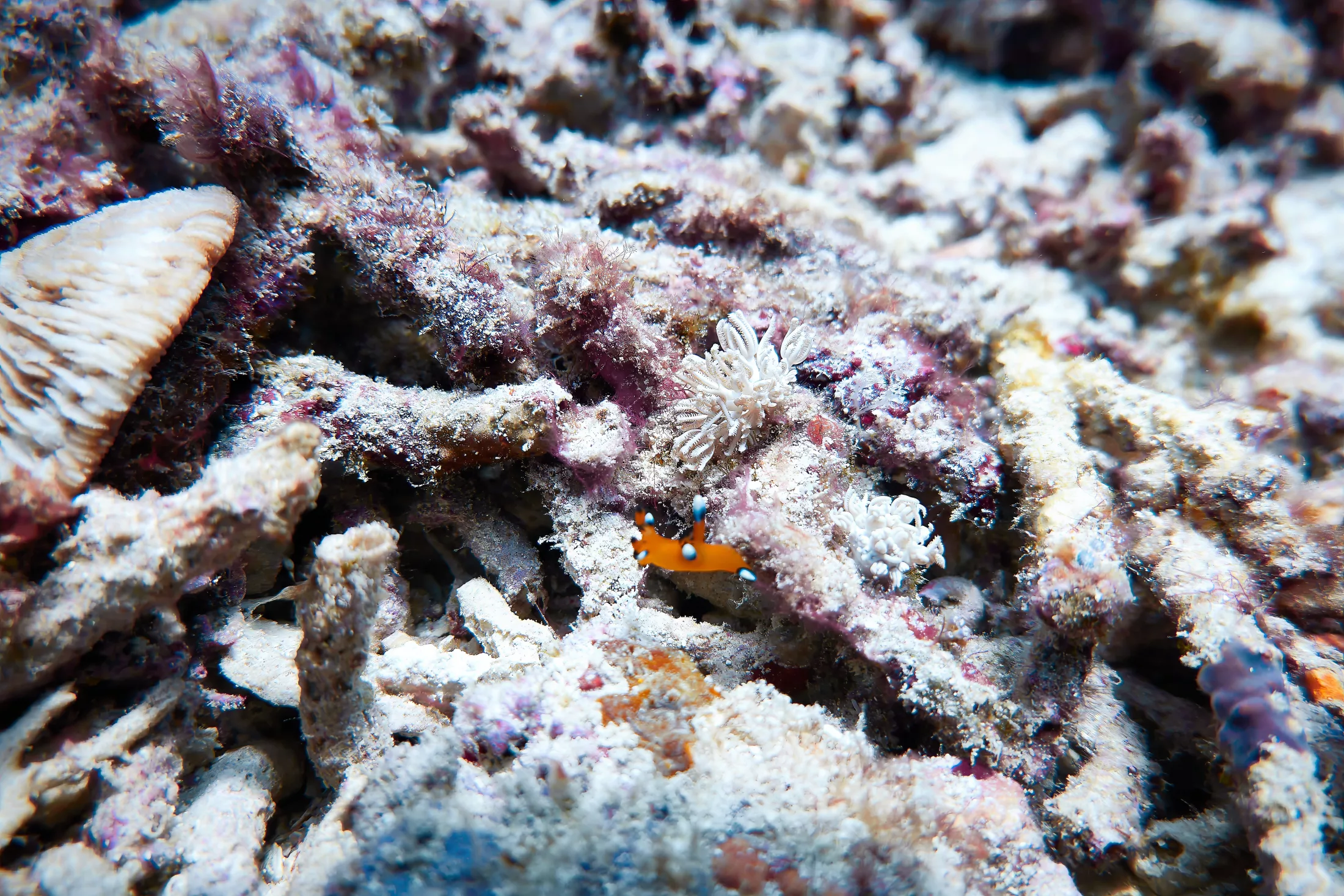
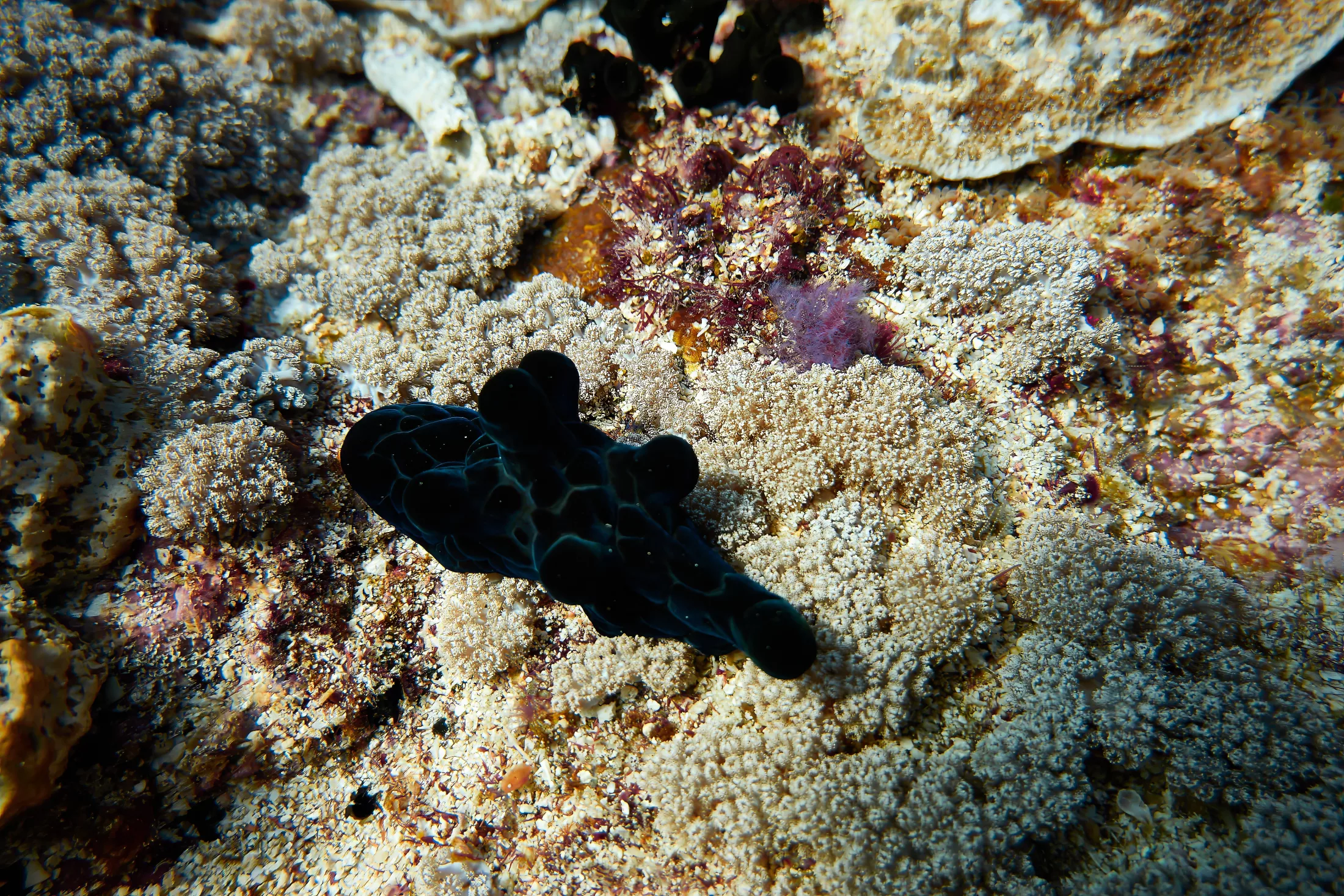
When diving, we tend to always look for big encounters. Sharks, manta rays, turtles, whole schools of fish that cut out the light. It's normal, these are spectacular moments that remain engraved. And yet, very often, the most beautiful creatures are found at the level of the reef, tiny, almost invisible to those who do not take the trouble to slow down. Nudibranchs are one of these hidden treasures.
The nudibranch, or "nudi" for short, is actually a marine gastropod mollusc without a shell, often somewhat unfairly called a "sea slug". However, the term does little justice to these animals of incredible beauty. There are more than 3,000 species recorded around the world, in an explosion of colors, shapes and patterns that defies the imagination. Fluorescent, striped, wavy, adorned with pompoms or feathers, each one is a small living work of art.
Their vibrant colors are not there by chance. They often serve as a warning to predators, because many species are toxic and obtain their chemical defenses directly from what they eat (sponges, corals, hydroids). Most measure between a few millimeters and a few centimeters, making each sighting all the more valuable. You have to slow down, open your eyes, look at the stones closely.
Indonesia is one of the world's paradises for nudibranch enthusiasts. The Lembeh Strait, Bali and Komodo are considered international references, and you quickly understand why once underwater. During our Indonesian dives, we were lucky enough to come across several of them, each time with this little shock of discovery when the guide points out something microscopic that we would never have seen on our own.
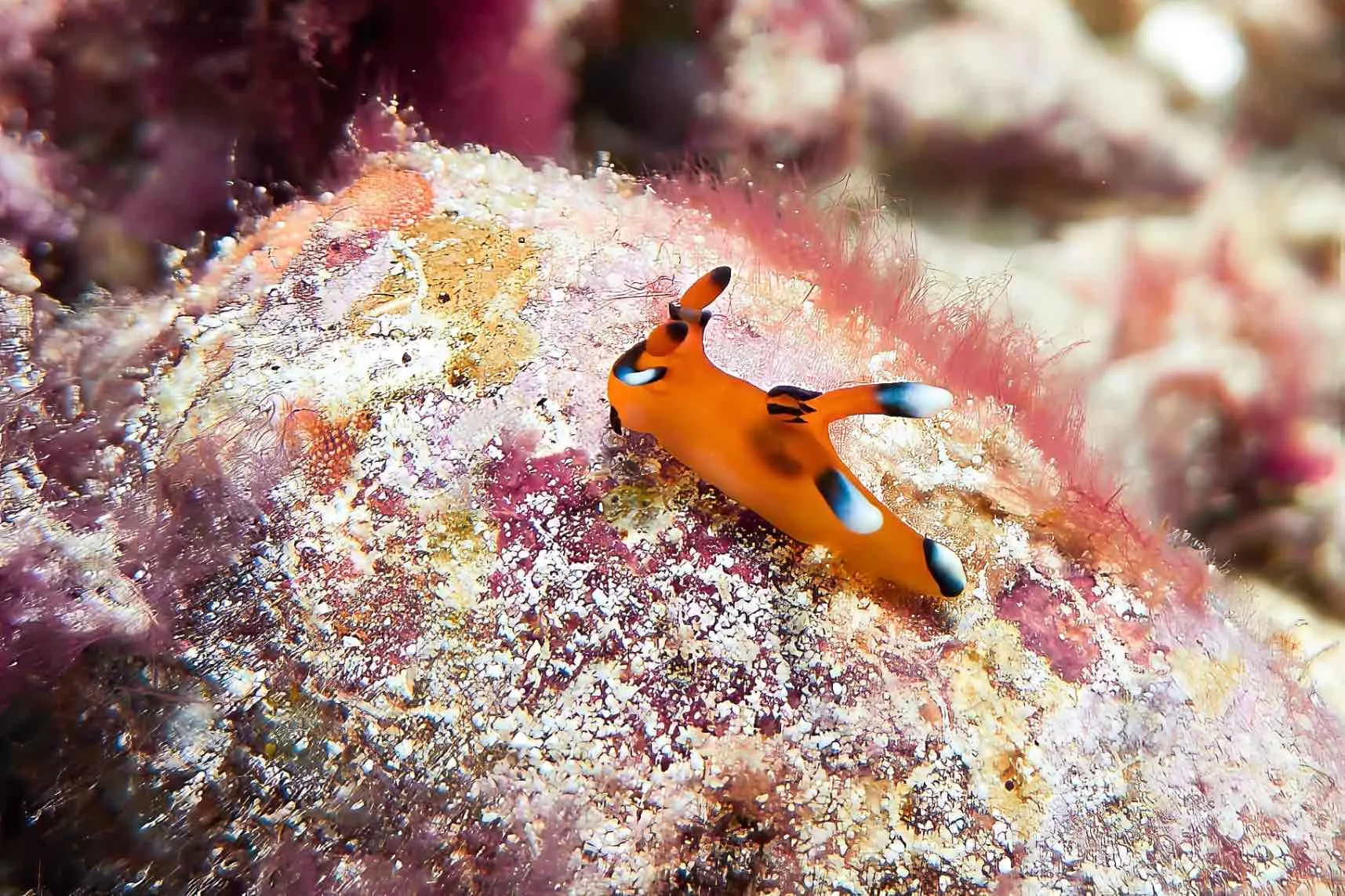
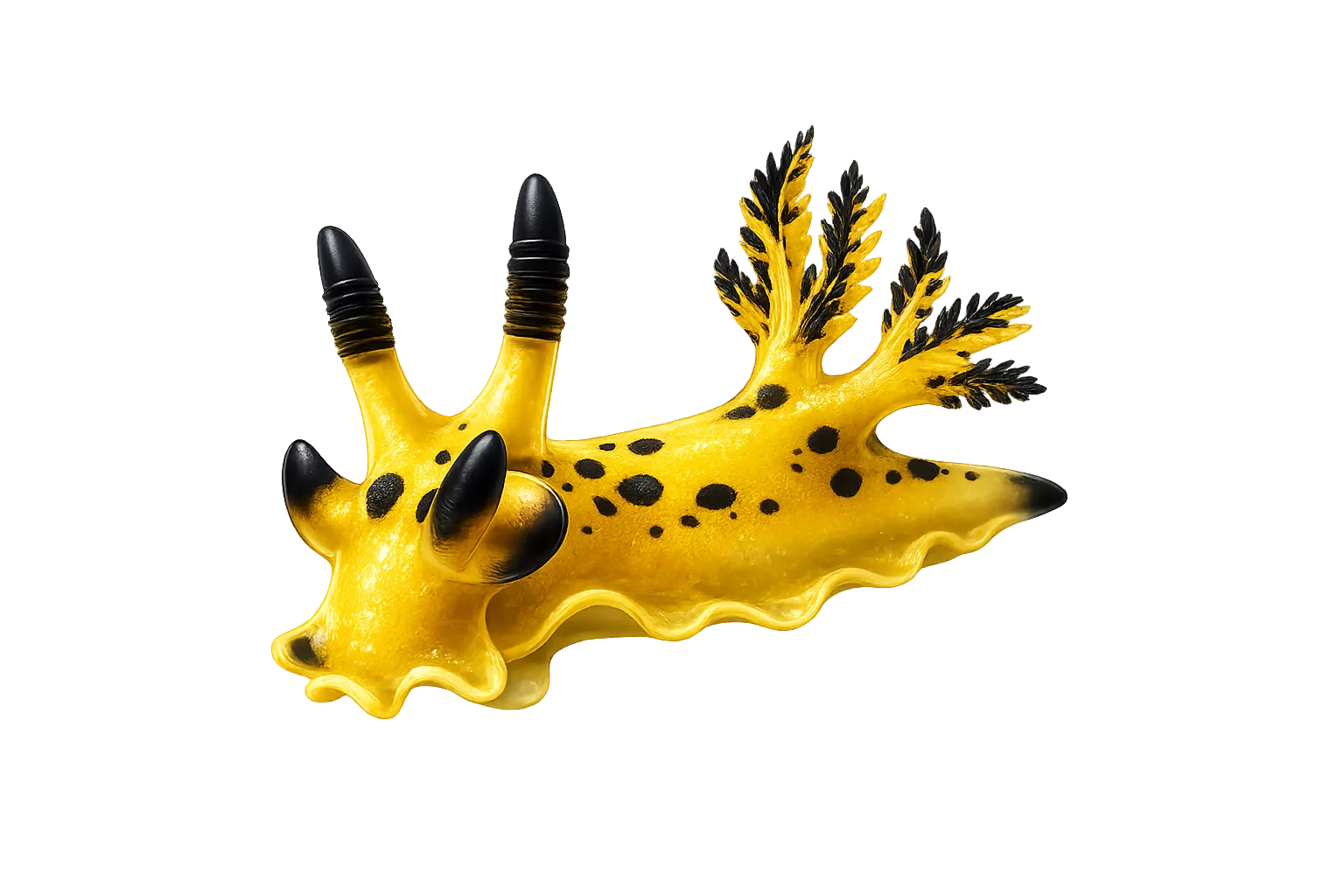
The most memorable undoubtedly remains our meeting with the famous “nudi Pikachu”. Real name Thecacera pacifica, this small bright yellow mollusk decorated with black and orange touches looks exactly like the famous Pokémon, with its two small pointy ears. Barely three centimeters, but an immediate visual impact. Seeing it in real life, resting on a piece of coral, will remain one of the great moments of our dives in Indonesia.
Nudibranchs will have taught us to change our perspective while diving. Instead of always looking bigger, we now take the time to examine the reefs, the rocks, the bits of algae. And often, that's where the most beautiful surprises are hidden.